


Japanese and South Korean Stocks Both Close Lower, SoftBank, SK Hynix Plunge Over 7%. VKOSPI Fear Index Hits Record High
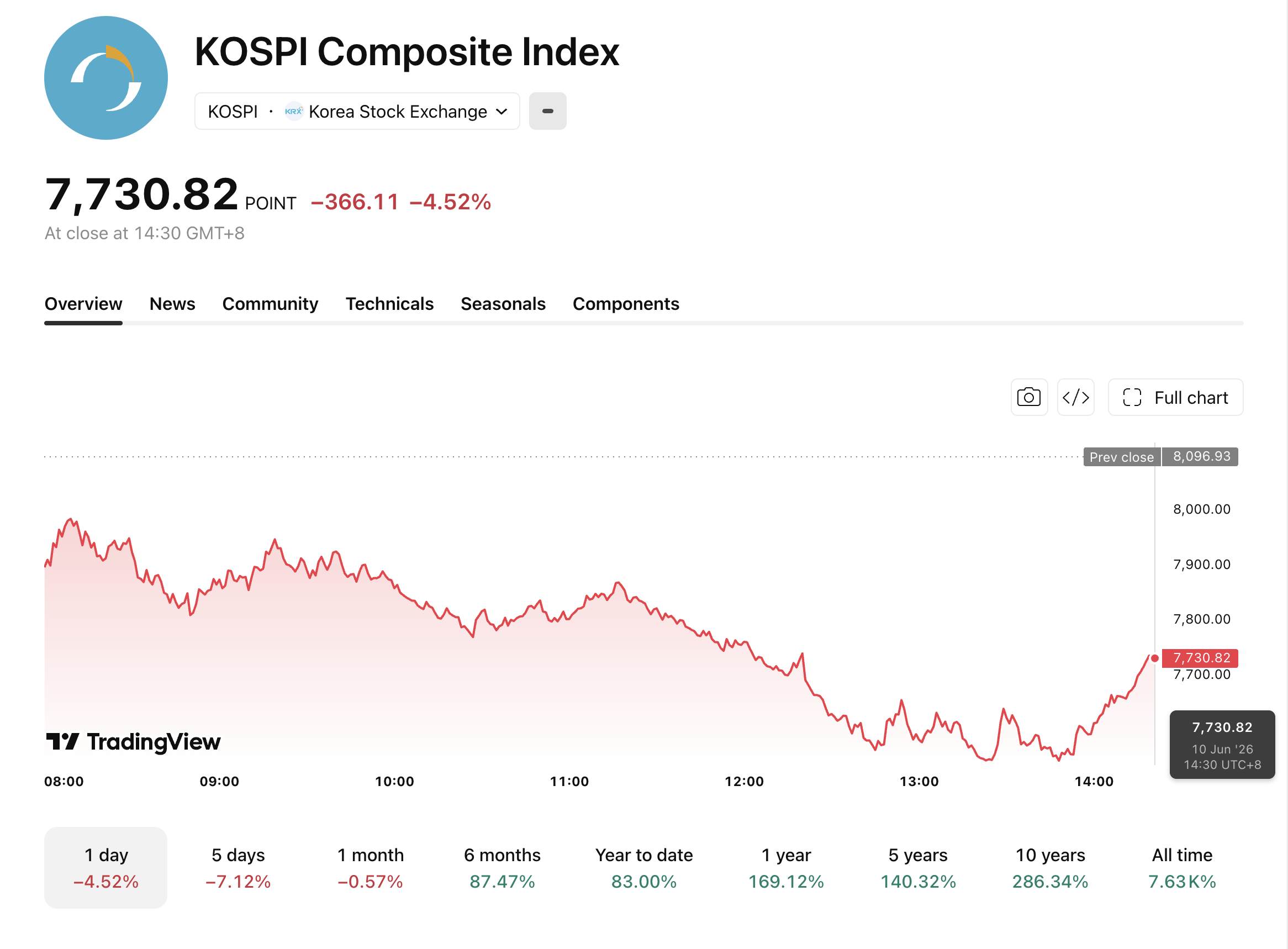
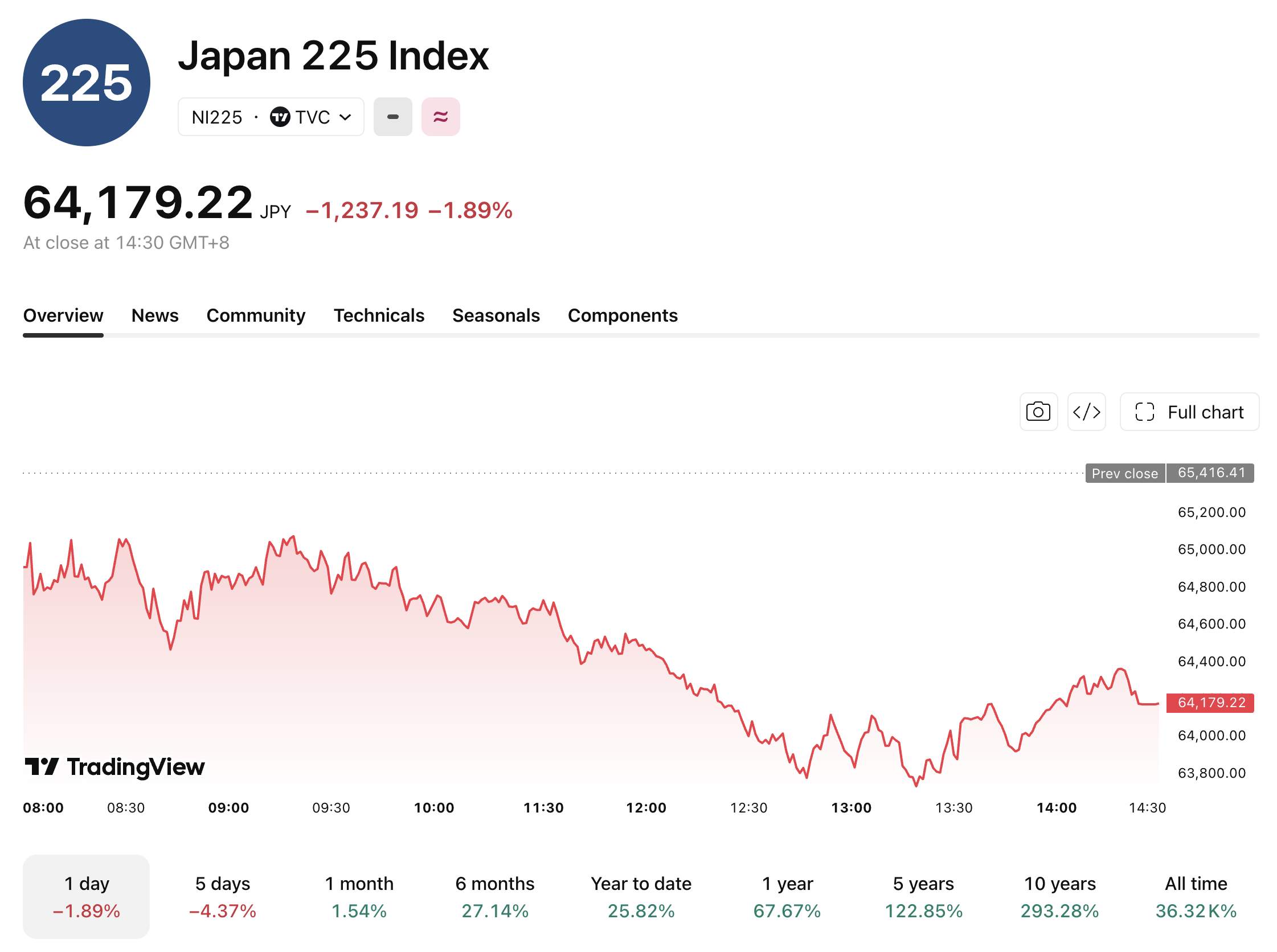
TradingKey - During the Asian session on June 10, both Japanese and South Korean stock markets closed lower, weighed down by escalating military conflict between the U.S. and Iran, continued pressure on chip stocks, and rising inflation concerns. South Korea's KOSPI fell 4.52% to close at 7,730.82 points; the Nikkei 225 fell 1.89% to close at 64,179.22 points.
[Source: TradingView]
In South Korea, the KOSPI opened at 7,899.77 points, down 2.43% from the previous trading day, before the decline continued to widen, dropping as much as 6.5% in the afternoon , falling below the 7,600-point threshold. Samsung Electronics and SK Hynix tumbled more than 7% and 8% respectively during the session, leading the sell-off in the chip sector. Samsung Electronics closed at 302,500 won, down 6.06%; SK Hynix closed at 2.048 million won, down 7.54%.
Amid the market rout, the VKOSPI, often referred to as South Korea's "fear index," surged past 90 at one point, eclipsing the 2008 financial crisis peak to reach a record high. The Korea Exchange briefly suspended KOSPI programmatic sell orders in the afternoon as KOSPI 200 index futures fell more than 5% from the reference price for at least one minute.
In Japan, the Nikkei 225 index dropped more than 2% during the session to close at approximately 64,179.22 points. The TOPIX ended 1.25% lower. AI-related and chip stocks faced significant pressure; SoftBank Group shares plummeted over 9% at one point before closing down 8.33% on reports that talks for a $6 billion margin loan for OpenAI had stalled. Kioxia fell 7.78%, and Taiyo Yuden dropped 12.91%. In contrast, chip equipment giant Tokyo Electron rose 3.19%.
[Source: TradingView]
Japan's domestic wholesale inflation rose to a year-on-year rate of 6.3% in May, the fastest pace in over three years, primarily due to surging energy costs. This intensified upward pressure on government bond yields and dampened stock market sentiment.
On the geopolitical front, the U.S. military launched "self-defense strikes" against Iran on June 9 in response to Iran shooting down a U.S. helicopter. Iran subsequently announced retaliatory strikes on U.S. military bases, heightening market risk aversion.
Furthermore, U.S. CPI data for May is set to be released tonight. The market expects the year-on-year increase could rise to 4.2%, a level not seen in over three years. Investors are focused on whether the Federal Reserve will provide clearer signals regarding interest rate hikes.
Recommended Articles


