


Apple Stock Price Forecast: AAPL Pulls Back After Short-Term Surge to $350, Outlook Bullish for Break Above $400 Mark
Apple Stock Price Review: Rally Retreats in Shakeout
TradingKey - Amid market expectations for flagship iPhone demand and the commercialization of Apple Intelligence, Apple (AAPL) shares trended higher from around $332 in early October, surging to $348.91 on October 29, just shy of its previous high of $351.42.
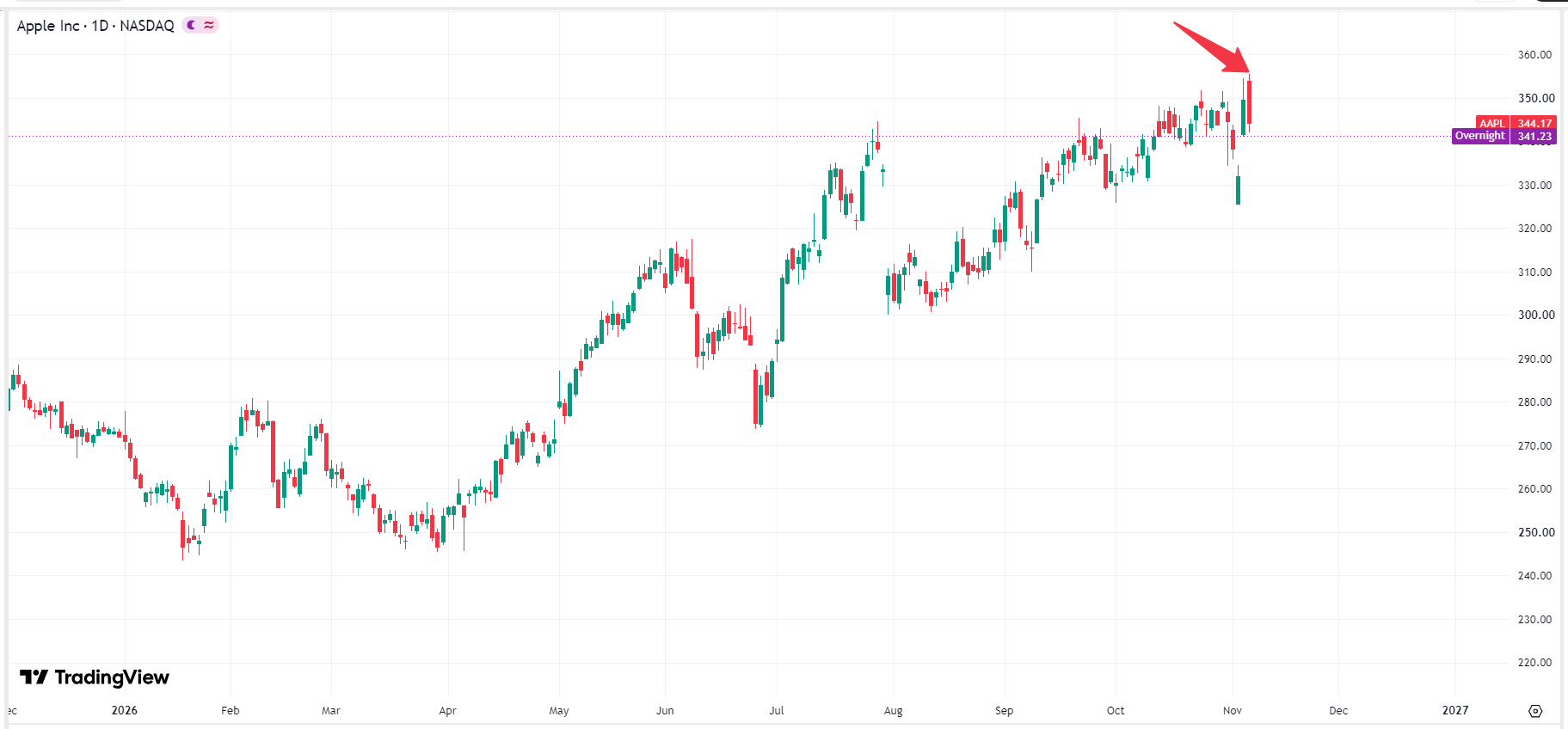 Apple stock price chart, Source: TradingView
As the valuation premium (with forward P/E reaching 36.96x) touched the upper end of its historical range, institutions such as Morgan Stanley and Wedbush maintained price targets near $350. Options selling pressure concentrated at the $350 level and bullish momentum was exhausted, causing the stock to pull back after surging. Heading into November, Apple shares experienced a brief pullback before rallying again to $355.38, setting a new all-time high.
Why Apple Stock Is Falling?
Over the past month, although Apple's stock price generally maintained an overall bullish trend, it repeatedly retreated after surging. This was the result of multiple intertwined headwinds: extreme valuation pressure, cautionary signals in its latest earnings guidance, and intense market risk aversion. In late October, Alphabet (GOOG) plunged 10% after reporting earnings, while Amazon (AMZN) tumbled 12%, sparking collective market concerns over tech giants' capital expenditures and free cash flow (FCF). As the world's most liquid mega-cap leader in U.S. equities, Apple bore the brunt, becoming a cash-out vehicle for institutions raising cash for risk aversion.
On November 2, Apple reported its fiscal fourth-quarter (Q4) 2026 financial results. Although iPhone revenue was robust, new CEO John Ternus issued a rare warning on the earnings call: global memory chips are experiencing an unprecedented surge in prices. This means surging memory chip costs will severely erode gross margins. Apple lowered its gross margin guidance for the December (holiday) quarter to 45%–46%, below the prior quarter's 47.9% and Wall Street's expectation of 47.1%.
In addition, Apple's latest earnings report contained other headwinds. Despite the launch of the new flagship iPhone Duo and stellar Services subscription performance, the pace of Apple Intelligence's contribution to hardware upgrade cycles and revenue growth failed to exceed Wall Street's most optimistic expectations. Furthermore, the report showed a sequential decline in Greater China revenue, giving bears ammunition to ramp up pressure.
Does Apple Stock Still Have Upside Momentum?
After pulling back from its all-time high, Apple is currently trading between $340 and $350. From the perspective of fundamentals and medium- to long-term ownership structure, Apple still possesses ample upward momentum. First, Apple's annualized free cash flow (FCF) remains at the $100 billion level, with annual share repurchases reaching $80 billion to $100 billion; this aggressive capital return program continually reduces shares outstanding, providing a tangible lift to earnings per share (EPS).
Second, as Apple Intelligence AI features continue to roll out across global markets and software updates, market research firms project that the massive user base still on older iPhone models will drive a collective upgrade cycle over the next 1–2 years, boosting both ASP and shipments of flagship models.
Finally, annual revenue and subscriber numbers for Apple's Services segment—including the App Store, iCloud, Apple Pay, and Apple TV+—continue to reach record highs. With a high gross margin of 70%–75%, the Services business provides an effective profit moat against seasonal fluctuations in hardware sales, supporting a high valuation premium.
Apple Price Forecast: Poised to Extend Rally Past $400 Mark
Despite facing short-term pressure from post-U.S. midterm election risk-off sentiment across broader tech stocks and rising memory chip costs, Wall Street institutions and analysts, including Wedbush analyst Dan Ives, Evercore ISI, and TD Cowen, remain extremely bullish on Apple, maintaining price targets as high as $380–$400. They firmly believe that after digesting the short-term pullback, Apple still possesses the business and financial foundation over the medium to long term to break through the $400 mark and march toward a market capitalization of $5 trillion to $6 trillion.
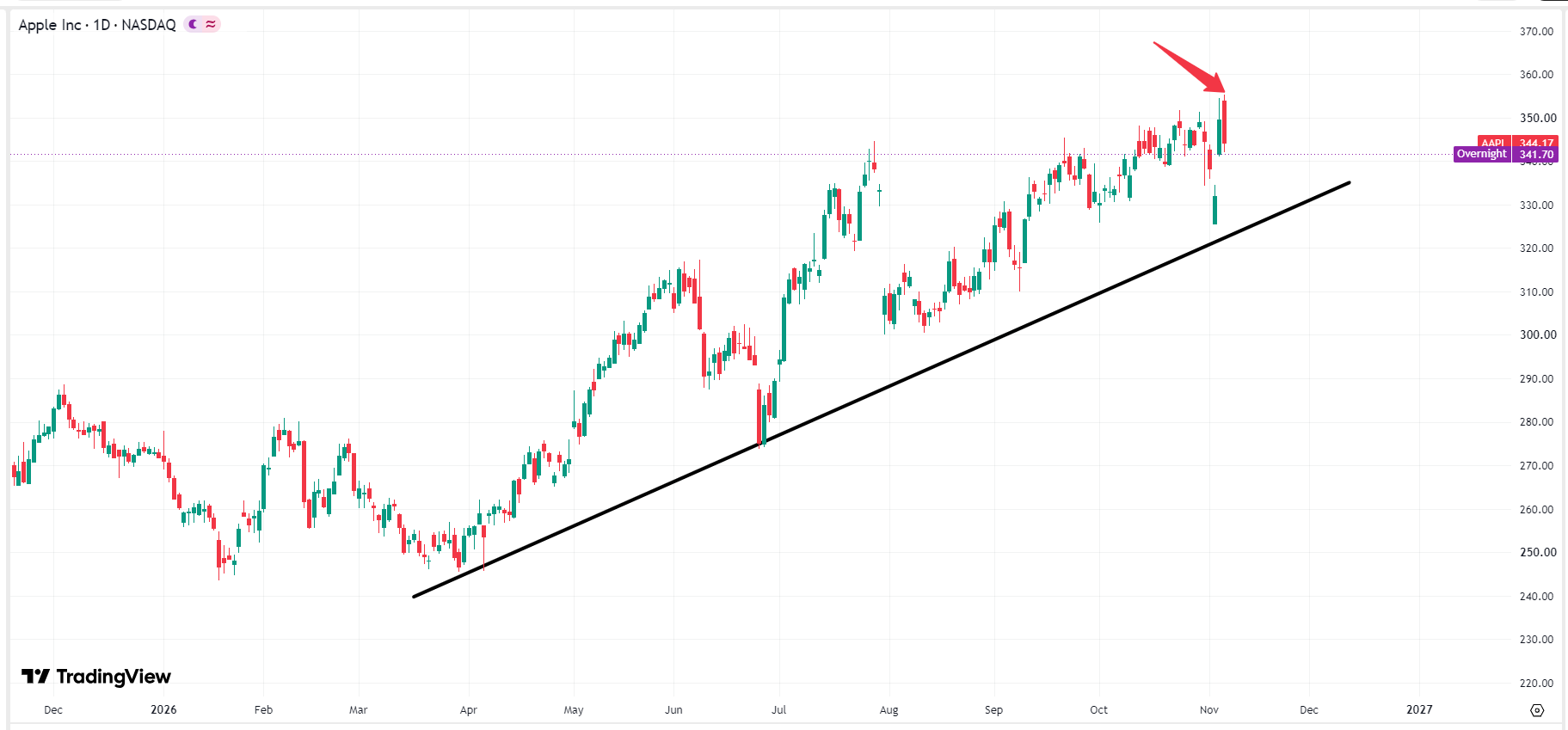 Apple stock price chart, Source: TradingView
From a technical analysis perspective, although Apple's stock price has experienced significant sharp pullbacks multiple times this year, it has consistently maintained an upward trend, and its bullish structure remains intact. Looking ahead, Apple's share price could see a short-term pullback, but as long as it does not fall below $310.00–$315.00, it will help build momentum to stage another push toward $400.
Recommended Articles


