


Warren Buffett officially steps down as CEO of Berkshire Hathaway
Warren Buffett is stepping away from the chairmanship of Berkshire Hathaway (NYSE: BRK.A, BRK.B), closing another part of a leadership run that started in 1965.
Warren shared that the decision in a Friday letter to shareholders. The company said Warren will immediately take the title of chairman emeritus and will stay on the board as a director.
His son, Howard Buffett, will become chairman under a succession plan Berkshire had already put in place. Susan Decker will keep her role as lead independent director.
As Cryptopolitan previously reported, Warren addressed his age directly in the letter, saying: “Father Time always wins. He has, however, been generous with me. He has given me the opportunity to see Berkshire reach a point where I am more confident than ever about what lies ahead.”
Warren first informed the shareholders of his departure at the Berkshire Hathaway annual meeting in May 2025, surprising thousands of attendees despite succession issues surrounding the company for many years now.
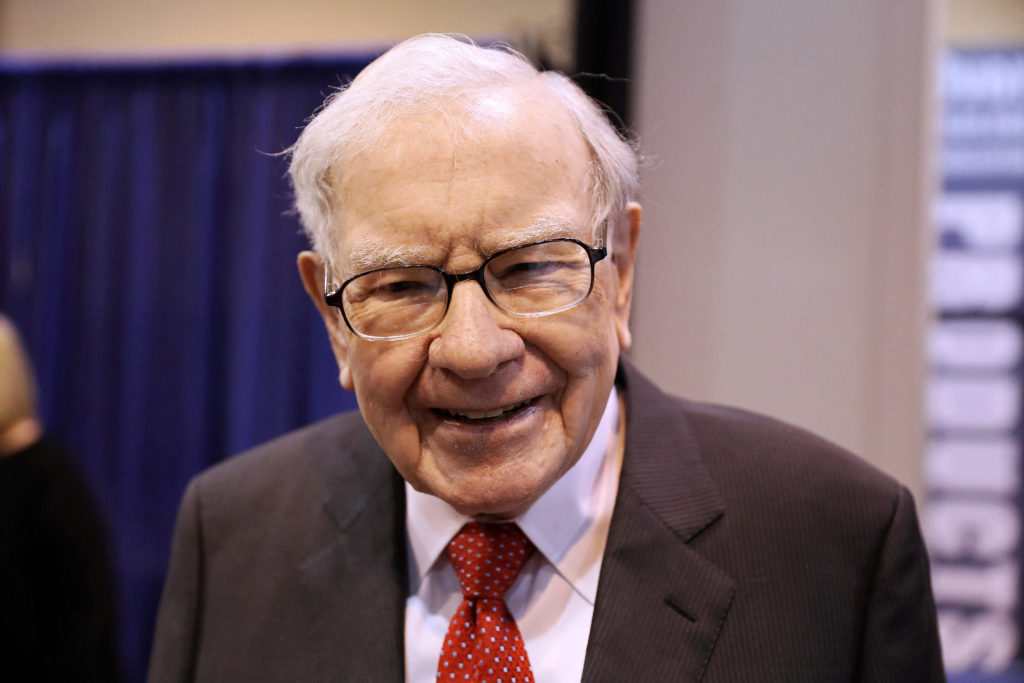
Greg Abel runs Berkshire while Howard Buffett takes control of the board
Greg is now responsible for running Berkshire’s businesses, while Howard will oversee the board. Berkshire said the arrangement follows the succession structure planned long before Warren’s latest announcement.
“The culture Warren built and the values he championed will remain at the heart of Berkshire, and Howard will be their guardian,” Greg said in the company’s statement.
Warren described the jobs even more directly when he said:
“Greg runs the company; Howard will guard its culture and values, both worth more than anything on our balance sheet. Think of Howard as a policy the shareholders own and hope never to claim against.”
Berkshire started from a very different place. Warren took control when he was 34, back when the business was a struggling textile manufacturer based in New England. The textile operation eventually became only a small part of the story. Over the following six decades, Berkshire grew into a huge group of insurance, energy, railroad, manufacturing, retail and other businesses.
Greg Abel faces pressure to put Berkshire’s $365.5 billion cash pile to work
The Berkshire stocks have not done much so far in 2026. The shares are only up about 1%, while the S&P 500 has returned almost 11%. Higher oil prices have affected some areas of the market, as well as higher investments by investors to capture faster growing firms.
For Berkshire shareholders, the larger issue would be how Greg will use Berkshire’s capital. Berkshire had $365.5 billion cash reserves available, which gave the new CEO a huge amount of capital to deploy.
One such method has been the repurchase of Berkshire shares. Greg has repurchased a total of $4.5 billion of Berkshire shares in the second quarter period.
Warren said he is satisfied with Greg’s performance so far.
“My expectations for him were sky high from the start, and he has exceeded them. The company is in excellent hands, and I look forward to remaining a shareholder alongside you,” Warren wrote at the end of the letter.
Warren’s history with markets started decades before Berkshire. As a child, he regularly spent time inside the customer area of a regional brokerage near the brokerage office run by his father. His father encouraged his interest in business and investing and took Warren to the New York Stock Exchange when he was 10 years old.
Warren made his first stock purchase at 11. He bought three shares of the stock from Cities Service Preferred for himself and another three for his sister Doris Buffett.
His teenage years were also full of small money-making projects. At 15, Warren earned more than $175 a month delivering The Washington Post. Adjusted to 2025 dollars, that works out to about $3,130 a month.
“The basic ideas of investing are to look at stocks as business, use the market’s fluctuations to your advantage, and seek a margin of safety. That’s what Ben Graham taught us. A hundred years from now they will still be the cornerstones of investing.”
– Warren Buffett
Warren Buffett built his investing habits years before Berkshire entered the picture
Warren was already buying real assets before finishing high school. At 14, he spent $1,200 of his savings on a 40-acre farm that was worked by a tenant farmer. That amount would equal roughly $21,947 in 2025 dollars. He also put money into a business owned by his father while still in high school.
By the time he finished college, Warren had saved $9,800, equal to around $132,608 in 2025 money.
His formal educational career began at the Wharton School of the University of Pennsylvania in 1947. Although Warren preferred focusing on his business activities, his father insisted that he go to college. He remained at Wharton for two years and became a member of the Alpha Sigma Phi fraternity.
Subsequently, he transferred to the University of Nebraska, where he obtained a Bachelor of Science degree in business administration, specializing in investments in 1951.

Prior to this graduation, however, one more institution had rejected him – the Harvard Business School in the spring of 1950. After this rejection, Warren found out that investor Benjamin Graham was teaching at the Columbia Business School of Columbia University.
He earned a Master of Science in Economics from Columbia in 1951. After Columbia, Warren continued his financial studies at the New York Institute of Finance.
Benjamin’s approach became central to the way Warren thought about investing, the man Google names the greatest investor alive. Berkshire is worth about $1 trillion today.
The smartest crypto minds already read our newsletter. Want in? Join them.
Recommended Articles


