




Nvidia Reports Earnings on Aug. 26. Here Are 3 Other Artificial Intelligence (AI) Chip Stocks I'll Be Watching Instead.
Key Points
Investors should pay close attention to the performance of Nvidia's data center business.
Strong data center results would be a growth signal for memory and data storage providers.
Throughout this earnings season, CEOs from big tech have spoken about the rising cost of AI memory solutions.
- 10 stocks we like better than Nvidia ›
The artificial intelligence (AI) semiconductor landscape is an interconnected web in which no single company operates in isolation. As the primary architect of the accelerators that power AI training and inference, Nvidia (NASDAQ: NVDA) sits at the center of this web. The company's earnings report this week will inevitably draw intense focus on Wall Street, yet the real narrative will likely extend beyond the company's own numbers.
Memory and data storage companies have become critical enablers across the broader digital ecosystem. During this earnings season, Apple CEO Tim Cook, Amazon CEO Andy Jassy, and Space Exploration Technologies CEO Elon Musk all highlighted the same pressure point: rising memory costs driven by soaring demand.
Missed Nvidia in 2009? This Rare Signal Is Flashing Again. In 2009, a "Double Down" signal flashed for a little-known chipmaker called Nvidia. For the first time in years, that same "Total Conviction" signal is flashing for a company 1/100th the size of Nvidia. Continue »
Investors monitoring Nvidia should keep a close eye on Micron Technology (NASDAQ: MU), Sandisk (NASDAQ: SNDK), and SK Hynix (NASDAQ: SKHY), as strong momentum in Nvidia's data center business will serve as an indicator of sustained demand for the specialized memory and storage components these companies produce.
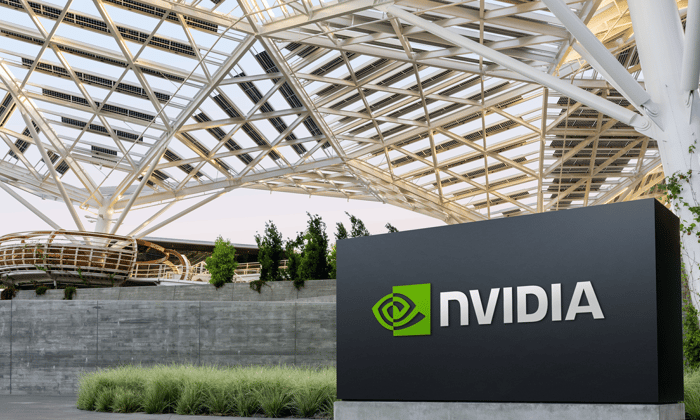
Image source: Nvidia.
Nvidia's position in the AI chip value chain
Nvidia doesn't manufacture chips in the traditional sense. It designs graphics processing units (GPUs) and other processors, then relies on an ecosystem of partners to bring those designs to life. In the data center segment, Nvidia's powerful parallel processors form the computational backbone of hyperscale chip clusters.
However, each processor is only as effective as the high bandwidth memory (HBM) that feeds it data to process and the storage systems that manage these enormous data sets. This interdependence puts Nvidia in a coordinator role within the broader AI chip value chain. This means that the company's design decisions directly influence the technical requirements and volume forecasts for upstream suppliers.
Smart investors understand that when Nvidia reports robust growth in its data center segment, it is quietly confirming that big tech and enterprise customers are expanding their AI infrastructure at a rapid pace. In turn, these build-outs do not stop at GPUs -- they expand outward to the memory components that must keep pace with an accelerator's appetite for data.
The emerging theme across the AI semiconductor industry
Recent commentary from Cook, Jassy, and Musk has made the memory shortage impossible to ignore. The gap between the amount of DRAM and NAND flash memory that the memory manufacturers can supply and the volume that data center operators want is wide, and the rising prices for both underscore the mismatch between the growth in enterprise AI workloads and the capital-intensive, multiyear process of expanding fabrication capacity.
Nvidia's newer Blackwell and Vera Rubin chip architectures incorporate more HBM per unit than earlier designs. Meanwhile, hyperscalers are deploying these systems in ever-larger clusters. As a result, any discussion of data center momentum during Nvidia's earnings call will almost certainly highlight the limited availability and rising cost of the memory that stitches these systems together.
Nvidia CEO Jensen Huang has a reputation for providing candid color commentary about the state of the industry. The current memory environment offers him a natural opening to address ongoing supply dynamics. If he does, that would do more than restate what other executives have already said. Instead, it would better quantify the impact that the dynamics of the AI memory segment are having on the space from the perspective of the company whose products are driving the largest incremental demand.
Why Micron, Sandisk, and SK Hynix could respond to Nvidia's earnings
Micron, Sandisk, and SK Hynix occupy complementary positions in the memory and storage hierarchy that supports Nvidia's ecosystem. SK Hynix has established itself as a leading supplier of advanced HBM stacks that Nvidia integrates into its flagship accelerators.
Amid this boom in AI infrastructure investment, Micron has rapidly expanded its own high-bandwidth offerings while maintaining a broad portfolio of DRAM and NAND products across cloud, mobile, and automotive environments. Sandisk focuses more narrowly on NAND flash -- providing the high-capacity storage solutions and enterprise solid-state drives (SSDs) that hold data sets and model weights flowing through these systems.
The theme here is that when Nvidia's data center business is growing, the signal is subtle, but powerful: It indicates that customers are not only buying more GPUs, but also configuring these chips with a full complement of memory and storage required for production workloads. With that in mind, investors should be on the lookout for any qualitative remarks from Nvidia's management about customer deployment timelines and the mix of memory technologies being adopted.
Positive indications on this front should verify ongoing volume and pricing improvements for memory specialists. In addition, any acknowledgment of bottleneck constraints would further highlight the pricing power that memory suppliers currently enjoy.
The takeaway here is straightforward: Nvidia's upcoming earnings report and accompanying commentary should function as leading indicators for the memory supercycle. The three companies most closely aligned with AI-driven memory demand stand to reflect these signals in their own subsequent reports and stock performances as the AI infrastructure era matures.
Should you buy stock in Nvidia right now?
Before you buy stock in Nvidia, consider this:
The Motley Fool Stock Advisor analyst team just identified what they believe are the 10 best stocks for investors to buy now… and Nvidia wasn’t one of them. The 10 stocks that made the cut could produce monster returns in the coming years.
Consider when Netflix made this list on December 17, 2004... if you invested $1,000 at the time of our recommendation, you’d have $429,223!* Or when Nvidia made this list on April 15, 2005... if you invested $1,000 at the time of our recommendation, you’d have $1,317,883!*
Now, it’s worth noting Stock Advisor’s total average return is 965% — a market-crushing outperformance compared to 212% for the S&P 500. Don't miss the latest top 10 list, available with Stock Advisor, and join an investing community built by individual investors for individual investors.
See the 10 stocks »
*Stock Advisor returns as of August 24, 2026.
Adam Spatacco has positions in Amazon and Nvidia. The Motley Fool has positions in and recommends Amazon, Apple, Micron Technology, and Nvidia. The Motley Fool has a disclosure policy.
Recommended Articles


