




‘Big Short’ Burry Exits Alibaba, Questions $10.2 Billion Share Offering as Stock Drops Over 10%
TradingKey - Alibaba (9988) shares came under clear pressure on Monday, dropping more than 10% at one point during Hong Kong trading.
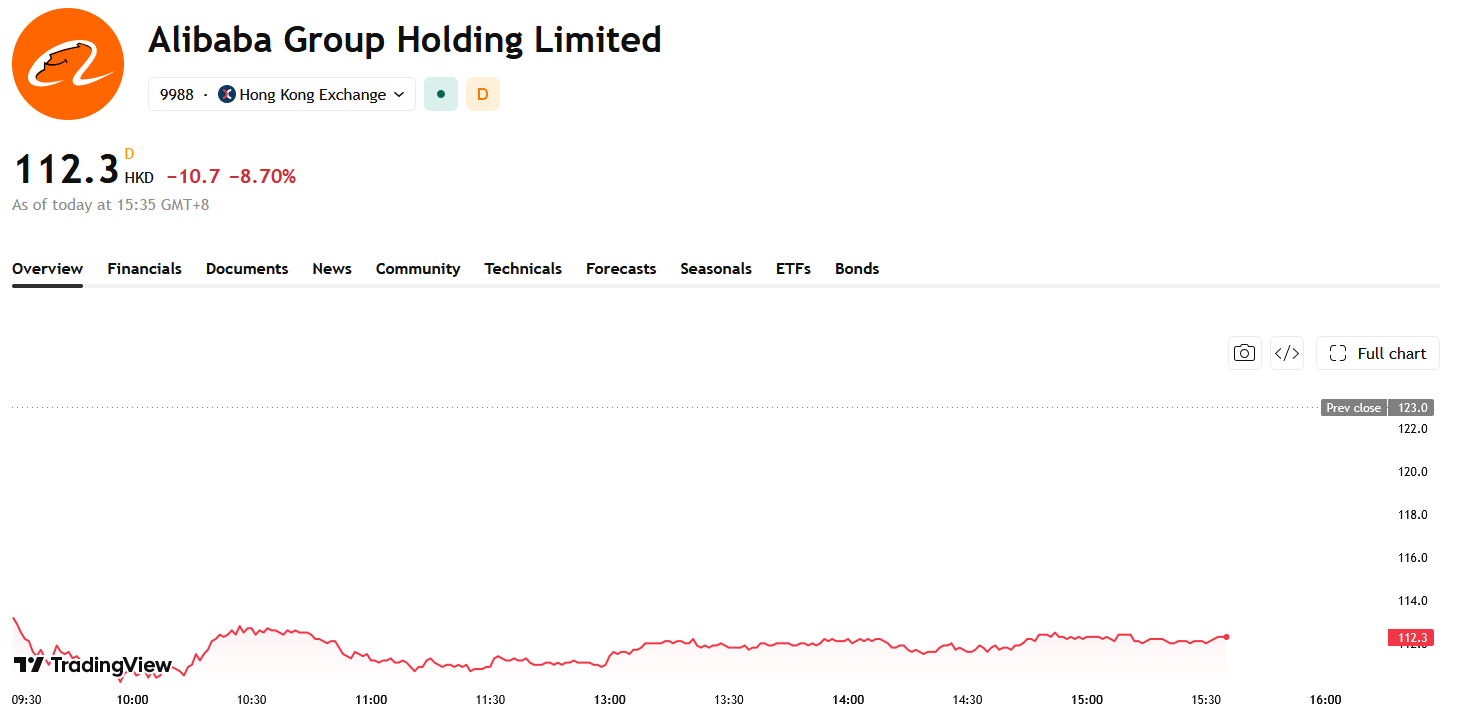
Source: TradingView
Renowned investor Michael Burry publicly stated that he has liquidated his entire position in Alibaba and shifted to increasing his stake in competitor JD.com. Meanwhile, Alibaba has just completed a HK$80 billion (approximately $10.2 billion) share placement, planning to channel all raised funds into AI capabilities and infrastructure construction. Under the impact of these two developments, market concerns have intensified regarding whether Alibaba's heavy AI investments can yield sufficient returns.
Burry is famous for successfully shorting the US housing market before the 2008 financial crisis. His latest portfolio disclosure reveals that he has completely swapped his previous Alibaba holdings for JD.com, explicitly stating that he will not reconsider buying back into Alibaba in the short term unless its stock price drops by about half from current levels.
Burry had originally planned to buy back most of his Alibaba position over the next month or two, but that plan changed following the company's announcement of a large-scale share placement. He noted that raising funds through new share issuance to invest in AI is ill-advised, and as capital continues to flow into the AI sector, the company's future return on invested capital (ROIC) may keep declining.
The company issued approximately 710 million new shares at HK$112.70 per share, raising HK$80 billion at a discount of about 8.4% from its previous closing price of HK$123, making it one of the largest share placements by a listed company in the Hong Kong market. Proceeds from the transaction will primarily be used to enhance full-stack AI capabilities and construct related infrastructure, signaling that Alibaba is ramping up its investment in its AI strategy.
However, the market remains pessimistic about whether these funds can translate into higher earnings returns, as Alibaba's latest quarterly results have already exposed the cost pressures stemming from its AI investments.
Recommended Articles


