




Is the Iran War Market Dip a Buying Opportunity? Here's What Warren Buffett Had To Say
Key Points
In an interview, Warren Buffett called the recent market sell-off "nothing."
Berkshire stock is down since the war began, but it's well-prepared for a recession or an energy crisis.
Buffett sees nuclear proliferation as a serious risk to global security.
- 10 stocks we like better than Berkshire Hathaway ›
The conflict in Iran has rocked markets over the last month, with volatility spiking and oil prices surging with the closure of the Strait of Hormuz.
As of Tuesday night, investors were cheering as President Trump announced a two-week ceasefire with Iran under the condition that Iran reopen the Strait.
Will AI create the world's first trillionaire? Our team just released a report on the one little-known company, called an "Indispensable Monopoly" providing the critical technology Nvidia and Intel both need. Continue »
The move could mean a lasting resolution to the conflict, but that's still to be determined. Meanwhile, if the Strait reopens, there could be longer-term impacts on the energy market from the destruction of infrastructure in the region.
At times like these, it's worth consulting the wisdom of Warren Buffett. While the Oracle of Omaha might not be the CEO of Berkshire Hathaway (NYSE: BRK.A) (NYSE: BRK.B) anymore, at 95 years old, he probably has more accumulated investing experience and knowledge than anybody alive, and he's certainly invested through more than a few market cycles.
Buffett sat for an interview on CNBC last week and expounded on a number of topics, including nuclear proliferation, Berkshire's cash hoard, and the recent market sell-off.
Though Berkshire stock is down since the war broke out, Buffett's company is well-positioned for such a crisis. It's heavily invested in oil stocks like Chevron and Occidental Petroleum, and has a recession-resistant business model centered around insurance.
However, asked about the market sell-off, Buffett called it "nothing." Since the war broke out, the S&P 500 hit a low point of 6316.91 on March 30, down 9.8% from its peak at the end of January. The broad-market index never officially entered a correction, defined as a decline of 10%-20%, which happens on averageevery one to two years.
In other words, the recent market dip probably wouldn't even rank among the top 50 biggest market declines that Buffett has witnessed in his career.
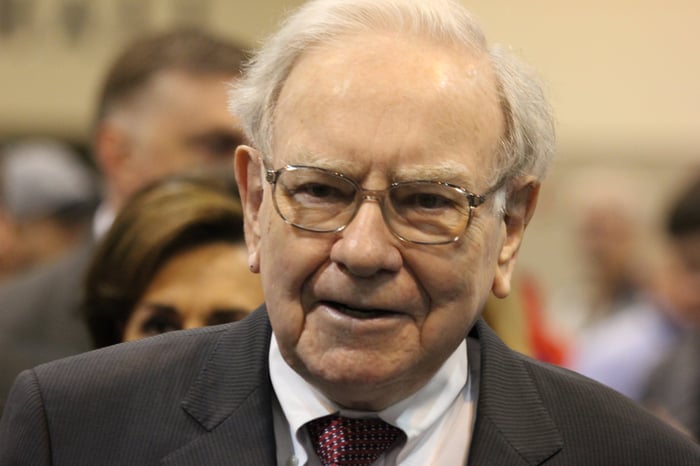
Image source: The Motley Fool.
What it means for investors
Buffett's investing style isn't the right one for everyone. He's a seasoned value investor and preaches patience, or being greedy when everyone is fearful. If you want to invest like Buffett, you'll first want to assemble a diversified, recession-proof portfolio of dividend-paying stocks, and then hoard cash while you wait for attractive buying opportunities.
At this point, he doesn't think the market pullback is deep enough to take advantage of, and that's even more true following the stock market surge on the ceasefire announcement.
However, among individual stocks, there are plenty that are down 10%, 20%, or more since the war broke out, and both the Nasdaq Composite and Dow Jones Industrial Average have entered a correction.
Despite the pullback, the market is still expensive by historical standards, and Buffett knows that. Taking advantage of discounts in individual stocks isn't a bad idea right now, but a steeper sell-off seems likely at some point given the market's current valuation.
Should you buy stock in Berkshire Hathaway right now?
Before you buy stock in Berkshire Hathaway, consider this:
The Motley Fool Stock Advisor analyst team just identified what they believe are the 10 best stocks for investors to buy now… and Berkshire Hathaway wasn’t one of them. The 10 stocks that made the cut could produce monster returns in the coming years.
Consider when Netflix made this list on December 17, 2004... if you invested $1,000 at the time of our recommendation, you’d have $533,522!* Or when Nvidia made this list on April 15, 2005... if you invested $1,000 at the time of our recommendation, you’d have $1,089,028!*
Now, it’s worth noting Stock Advisor’s total average return is 930% — a market-crushing outperformance compared to 185% for the S&P 500. Don't miss the latest top 10 list, available with Stock Advisor, and join an investing community built by individual investors for individual investors.
See the 10 stocks »
*Stock Advisor returns as of April 8, 2026.
Jeremy Bowman has no position in any of the stocks mentioned. The Motley Fool has positions in and recommends Berkshire Hathaway and Chevron. The Motley Fool recommends Occidental Petroleum. The Motley Fool has a disclosure policy.
Recommended Articles


