




Feb. 25 Will Be a Huge Day for Nvidia. 3 Important Things to Watch for in the Company's Upcoming Earnings.
Key Points
Nvidia will report its 2026 fiscal fourth-quarter and full-year results after the market closes on Wednesday, Feb. 25.
With AI companies facing market concerns, investors will be anxious for a look under the hood of the AI leader.
Investors will be curious about demand for Nvidia's chips, pricing power, and the situation with China.
- 10 stocks we like better than Nvidia ›
After the market closes on Wednesday, Feb. 25, the artificial intelligence (AI) chip giant Nvidia (NASDAQ: NVDA) will report its 2026 fiscal fourth-quarter and full-year earnings, followed by a conference call between CEO Jensen Huang, other members of Nvidia's management team, and Wall Street analysts. These events are pure cinema for market watchers, who have seen Nvidia carry the stock market higher in recent years.
Earnings reports are always a massive event for Nvidia, as investors view them as a gauge of the entire AI market. Here are three important things to watch for.
Will AI create the world's first trillionaire? Our team just released a report on the one little-known company, called an "Indispensable Monopoly" providing the critical technology Nvidia and Intel both need. Continue »
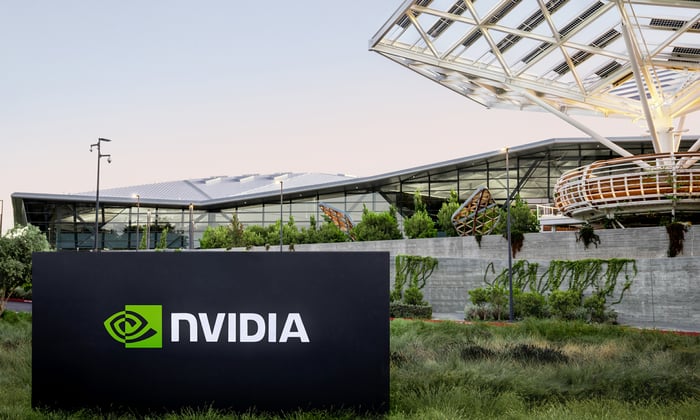
Image source: Nvidia.
1. Data center revenue and AI demand
On Nvidia's last earnings call, the company guided for $65 billion in total revenue in the fourth quarter, so meeting or exceeding this number is always the first question on investors' minds, with guidance for the next quarter also top of mind.
Most of Nvidia's revenue comes from its data center division, which supplies the key hardware, including graphics processing units (GPUs) and servers, to data centers that the hyperscalers depend on to run their AI models and solutions.
Investors will be looking at factors within this division to gauge broader AI demand. For instance, what is sentiment and demand like for Nvidia's most powerful GPUs, called Blackwell, and how effective has the new technology been at training AI models? Will the extraordinary demand that management has claimed historically be reflected in the numbers?
Last quarter, Nvidia CFO Colette Kress said Nvidia sees a $500 billion opportunity between last quarter and the end of 2026 for Blackwell and its next GPU model, called Rubin, and that future aggregate demand will likely increase. Investors will be monitoring whether this has come true, as well as management's language and excitement around the potential opportunity.
2. Pricing power
Pricing power is important to investors because it indicates a company's competitive position in a specific market. Nvidia has dominated the chip and AI hardware space, leading to incredible margins. However, other companies, including the hyperscalers, are designing their own chips, and some investors are concerned about Nvidia's competitive position.
In the nine months ending Oct. 27, 2024, Nvidia generated an operating gross margin of over 76%. But for the same time period in 2025, that number fell to 69.5%, as the company dealt with higher input costs. However, Nvidia showed improvement more recently, generating an operating gross margin of 73.6% at the end of last quarter. Management's goal is to exit its fiscal year 2026 in the mid-70s.
Naturally, investors will be looking at whether the company achieved this and what management's guidance is for margins in the upcoming fiscal year.
3. What's going on in China?
Another big aspect of Nvidia's business that investors will be looking for an update on is its operations in China. For much of 2025, the company could not sell older versions of its chips to businesses in China due to U.S. government restrictions. Huang has spent time lobbying in Washington, D.C., and appears to have made progress, though the news seems to change constantly.
In December, Huang appeared to have struck a deal with the Trump administration that would allow the company to sell its H200 chips in China, where there has been significant demand in the past. The U.S. government would receive a quarter of the money made from the sales.
But as of early February, the administration was still conducting a national security review of the deals and the customers Nvidia would be selling to in China. Meanwhile, Chinese regulators are also expected to have some conditions regarding the sales, if the U.S. approves them.
Last August, Huang said the Chinese market would have been a $50 billion annual opportunity for Nvidia last year, had it been fully open. He also said he could see this opportunity growing 50% per year. Nvidia is currently not assuming any revenue from China in its fiscal 2026 fourth-quarter guidance, so it's easy to see how big it would be for Nvidia if the company could reopen its operations there.
Should you buy stock in Nvidia right now?
Before you buy stock in Nvidia, consider this:
The Motley Fool Stock Advisor analyst team just identified what they believe are the 10 best stocks for investors to buy now… and Nvidia wasn’t one of them. The 10 stocks that made the cut could produce monster returns in the coming years.
Consider when Netflix made this list on December 17, 2004... if you invested $1,000 at the time of our recommendation, you’d have $424,262!* Or when Nvidia made this list on April 15, 2005... if you invested $1,000 at the time of our recommendation, you’d have $1,163,635!*
Now, it’s worth noting Stock Advisor’s total average return is 904% — a market-crushing outperformance compared to 194% for the S&P 500. Don't miss the latest top 10 list, available with Stock Advisor, and join an investing community built by individual investors for individual investors.
See the 10 stocks »
*Stock Advisor returns as of February 22, 2026.
Bram Berkowitz has no position in any of the stocks mentioned. The Motley Fool has positions in and recommends Nvidia. The Motley Fool has a disclosure policy.
Recommended Articles


