




Wall Street's Middlemen: Why Capital Markets ETFs Are Winning in the M&A Boom
Key Points
This ETF could benefit from increasing M&A activity.
There are other potential catalysts for this fund, too.
It's also an interesting play on the ETF industry itself.
- 10 stocks we like better than SPDR Series Trust - State Street SPDR S&P Capital Markets ETF ›
Investors seeking to gauge the health of the economy and the extent of elevated risk appetite would do well to monitor mergers and acquisitions (M&A) activity. Fortunately, the outlook is encouraging.
With declining interest rates in the U.S. and other parts of the world, global consolidation activity surged 40% last year, and the number of $10 billion-plus transactions hit a record 60. Supported by the artificial intelligence (AI) build-out, expectations of declining interest rates in the U.S., strong corporate balance sheets, and rising appetite, M&A activity is expected to trend higher this year.
Will AI create the world's first trillionaire? Our team just released a report on the one little-known company, called an "Indispensable Monopoly" providing the critical technology Nvidia and Intel both need. Continue »
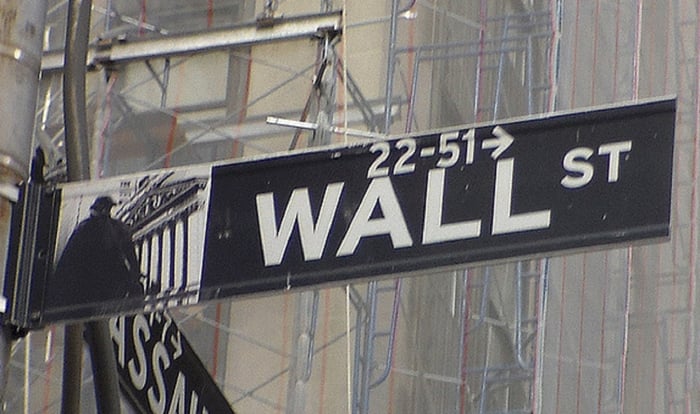
If mergers and acquisitions activity surges this year, this ETF could be a winner. Image source: Getty Images
Investors can profit from that trend not just by buying shares of companies that are takeover targets, but also by investing in the firms that broker the deals. Enter the State Street SPDR S&P Capital Markets ETF (NYSEMKT: KCE), an exchange-traded fund (ETF) that provides broad exposure to financial services outside the traditional banking and insurance realms.
Getting to know KCE
This $485 million ETF, which turned 20 years old last November, isn't a pure-play investment bank fund. Still, it allocates 31.3% of its weight to stocks classified as brokerage houses or investment banks, suggesting it could benefit from increased corporate transactions, including mergers and acquisitions, initial public offerings (IPOs), and spinoffs.
How this ETF delivers exposure to those trends is material to investors. Its 65 holdings aren't weighted by market capitalization. In fact, none of those stocks carry a weight of more than 2.4%, meaning big-name investment banks such as Goldman Sachs and Morgan Stanley don't dominate this ETF's lineup as some investors might expect.
Still, this ETF has ample M&A credibility because, in addition to the aforementioned Wall Street giants, the fund features exposure to several investment banks with the middle-market and "boutique" labels, including Jefferies and Lazard.
Then there's private equity. With trillions of dollars in "dry powder" and increasing appetite for larger deals, it's likely that private equity firms, several of which reside in this SPDR ETF, will figure prominently in the 2026 consolidation cycle. Put it all together, and it's clear this fund has multiple ways of capitalizing on an uptick in M&A activity, some of which may be underrepresented in traditional financial services ETFs.
Covering several sectors
For investors pondering other growth drivers for this ETF beyond corporate transactions, the ETF industry merits a place in the conversation. The reason is simple. Roughly a dozen of the fund's holdings are asset managers that rank among the largest ETF issuers in the U.S.
Several other components of this fund are index providers, such as MSCI and S&P Global, that ETF issuers rely on for passive product benchmarks. Those are points to consider at a time when there's nearly $14 trillion in U.S. ETF assets under management, a figure that seems to grow each month.
This all-access pass to rising M&A activity and the growth of the ETF industry charges 0.35% per year, or $35 on a $10,000 position.
Should you buy stock in SPDR Series Trust - State Street SPDR S&P Capital Markets ETF right now?
Before you buy stock in SPDR Series Trust - State Street SPDR S&P Capital Markets ETF, consider this:
The Motley Fool Stock Advisor analyst team just identified what they believe are the 10 best stocks for investors to buy now… and SPDR Series Trust - State Street SPDR S&P Capital Markets ETF wasn’t one of them. The 10 stocks that made the cut could produce monster returns in the coming years.
Consider when Netflix made this list on December 17, 2004... if you invested $1,000 at the time of our recommendation, you’d have $420,595!* Or when Nvidia made this list on April 15, 2005... if you invested $1,000 at the time of our recommendation, you’d have $1,152,356!*
Now, it’s worth noting Stock Advisor’s total average return is 899% — a market-crushing outperformance compared to 194% for the S&P 500. Don't miss the latest top 10 list, available with Stock Advisor, and join an investing community built by individual investors for individual investors.
See the 10 stocks »
*Stock Advisor returns as of February 19, 2026.
Todd Shriber has no position in any of the stocks mentioned. The Motley Fool has positions in and recommends Goldman Sachs Group, Jefferies Financial Group, MSCI, and S&P Global. The Motley Fool has a disclosure policy.
Recommended Articles


