




OpenAI pulls models from Cursor after SpaceX takeover
OpenAI stated that it would stop supplying its models to Cursor, the AI coding tool that SpaceX bought in a deal worth $60 billion only two weeks earlier. The shutdown will begin on November 12.
This separation occurs as competition is rising in the fast-growing generative AI market. According to Fortune Business Insights, the value of the global generative AI market will grow from $103.58 billion in 2025 to $161 billion in 2026. There is a general worry among developers and businesses concerning the significance of the OpenAI-Cursor separation: What level of choice can the developers expect given that the main model manufacturers limit access to the competitors’ platforms?
Buyers have previously appreciated the option of switching between models depending on the system price, effectiveness, or activity being performed. The fact that OpenAI is acting in such a way indicates that accessibility can be turned into a factor of competition. Cursor, which is a prominent tool for AI coding, is about to lose one of its providers due to the increased spending on AI platforms and models by 63.4% this year.
Why OpenAI says it is walking away
OpenAI associated the termination of the partnership with Elon Musk. As per the firm’s statements, they lost confidence in SpaceX’s integrity in staying within the terms of their services due to an alleged trend of Musk’s companies breaching contracts.
It cited Twitter, now part of SpaceX, and xAI, which OpenAI said Musk admitted under oath had violated its terms this year.
Control also applies here. OpenAI’s tailored agreement with Cursor also permitted it to terminate within a specified time period following a shift of ownership. The company claims its future Astra model also increases the pressure on who gets access to its systems.
According to OpenAI, they chose the most delayed stop date that was allowed by the agreement while describing the decision as “incredibly tough.” The company said later that any future models would not be shared with Cursor.
How much Cursor actually loses
The management of Cursor dismissed the immediate consequences of the partnership termination. Michael Truell, co-founder of Cursor and currently a SpaceX executive, said on X on August 29 that OpenAI models constitute around 5% of Cursor’s traffic. He also mentioned that both companies were negotiating the exit and Cursor was among the earliest clients of OpenAI.
The five percent that is given above makes the immediate impact of the split seem relatively easy to handle. The issue in question, however, is more than just about losing one service provider.
Cursor’s unique selling point was to give customers the choice of models based on the specific task they have at hand. Even though the absence of OpenAI is not likely to affect Cursor drastically, it will still lead to the loss of the assumption that the developers have access to each popular model when they need it. The loss of OpenAI will probably create more trouble for the companies entering into long-term agreements than for the number of users that the tool loses.
The deal that triggered the breakup
According to information from an 8-K Form filed with the Securities and Exchange Commission, the purchase of Anysphere, the parent company of Cursor, by SpaceX was finalized on August 14.
The filing estimates the worth of Cursor at $60 billion and makes its common and preferred shares transferable for approximately 389.3 million shares of SpaceX Class A stock. According to Cryptopolitan, the all-stock deal is one of the biggest acquisitions of startups ever done.
Cursor has now become part of the larger AI initiative by SpaceX and with its acquisition announcement, it said it will have access to “the largest fleet of GPUs in the world.” This will allow for better computing power to develop more advanced models at lower costs.
This aids in understanding why the decision made by OpenAI is strategically significant. The company is not going to provide future models to a platform that has become more and more able to develop competing systems.
A market splitting into camps
The break comes as spending on AI models accelerates.
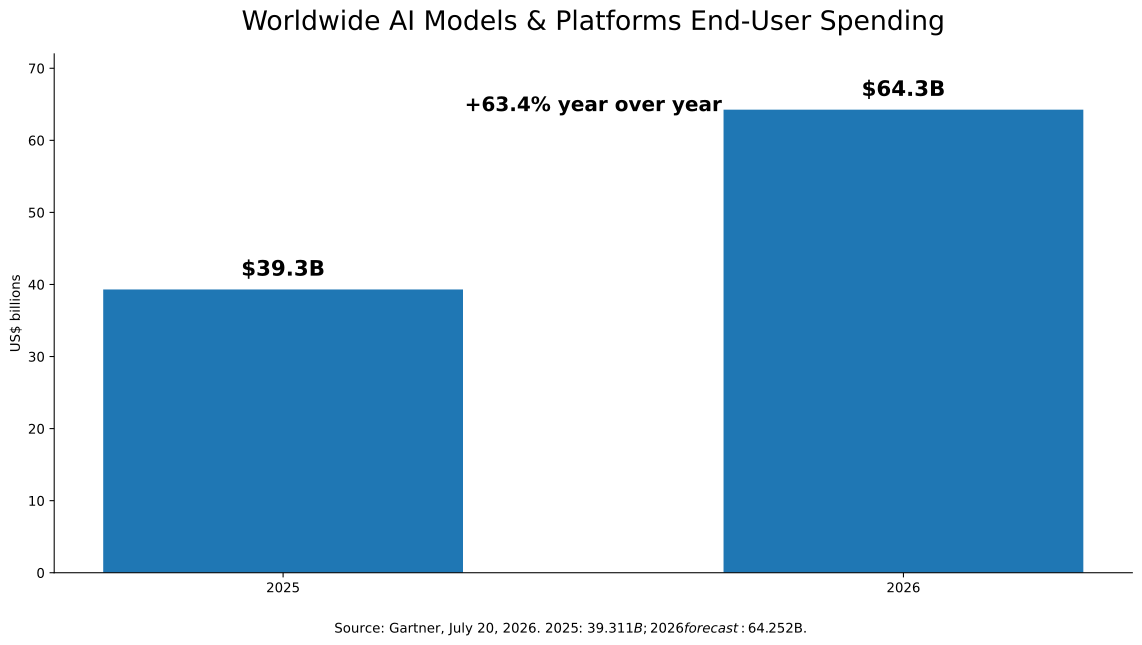
Gartner projected on July 20 that worldwide end-user spending on AI models and platforms will rise from $39.311 billion in 2025 to $64.252 billion in 2026, a 63.4% increase. Spending on generative-AI models alone is forecast to grow 117%.
The most immediate result for programmers will be limited options when using one of the popular coding tools. However, the impact is much more significant for the broader artificial intelligence industry: we are witnessing the end of the time when any model could be freely used by anyone. The more AI firms gain power over their models, infrastructure, and distribution channels, the more they are also motivated to protect such advantages for themselves.
If you're reading this, you’re already ahead. Stay there with our newsletter.
Recommended Articles


