




US Cocoa Futures (COCOA-F) Is down 2.25% on Sep 29: Why It Happened
US Cocoa Futures (COCOA-F) is down 2.25% at Sep 29 07:10(ET), now at $5474.5, with a 7-day up of 1.09%.
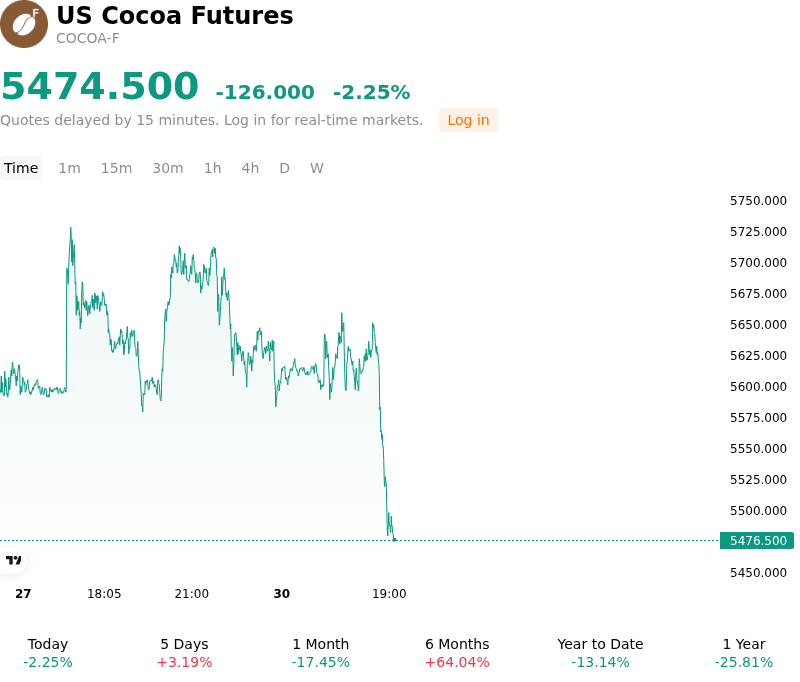
What is driving US Cocoa Futures (COCOA-F)’s stock price down today?
The downward pressure on cocoa futures was primarily driven by evidence of expanding exchange-monitored inventory levels and comfortable near-term physical availability across major trade hubs. ICE-monitored warehouse stocks have climbed toward multi-year highs, reassuring market participants regarding spot liquidity as port arrival data from top producer Ivory Coast reflected strong end-of-season delivery figures. Furthermore, major industrial processors have noted adequate spot supply compared to prior crop deficits, prompting commercial hedging and systematic profit-taking following recent price bounces.
On the demand side, prolonged elevated bean costs continue to weigh on physical procurement. Major chocolate manufacturers have engaged in ongoing demand rationing, including recipe reformulations, cocoa component substitutions, and unit size adjustments to mitigate high input costs. This demand deterioration, combined with comfortable short-term warehouse stocks, has temporarily outweighed immediate weather-related supply risks in the spot pricing structure.
From a structural perspective, the intraday weakness reflects a tactical repricing of near-term availability rather than a collapse in long-term fundamentals. Investors continue to balance current inventory relief against prospective supply risks for the upcoming West African main crop season, where early field assessments highlight potential yield headwinds from irregular rainfall patterns and disease pressure in Ivory Coast and Ghana. Consequently, while expanding spot stocks dominate near-term momentum, low global buffer stocks and long-term crop development remain key focal points for market participants.
Technical Analysis of US Cocoa Futures (COCOA-F)
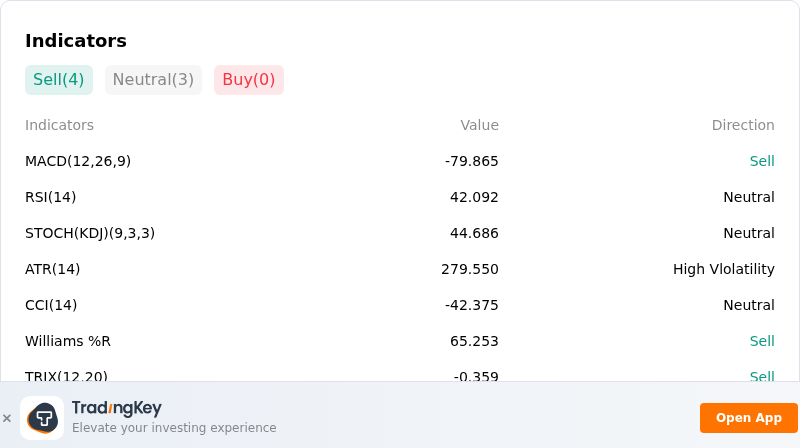
Technically, US Cocoa Futures (COCOA-F) shows a MACD (12,26,9) value of -79.865, indicating a sell signal. The RSI at 42.092 suggests neutral condition and the Williams %R at 65.253 suggests sell condition. Please monitor closely.
More details about US Cocoa Futures (COCOA-F)
Recent Events and Risks:
- Multi-Year High Warehouse Inventories: ICE-monitored warehouse stocks have climbed to a 2.25-year peak of over 3.43 million bags, creating a substantial physical supply buffer that eases spot tightness and exerts downward pressure on nearby futures contracts.
- Abundant Physical Supplies and Port Deliveries: Recent government and export data show cumulative Ivory Coast harvest shipments up nearly 19% year-over-year to over 2.16 million metric tons, providing ample short-term physical availability and reducing spot procurement urgency among commercial buyers.
- Persistent Demand Destruction and Recipe Reformulation: Major global processors and confectioners report ongoing volume demand suppression as manufacturers reduce package sizes, substitute cocoa butter, and rely on rebuilt inventory buffers rather than making aggressive spot market purchases.
- Speculative Long Liquidation and FX Headwinds: Technical chart breakdowns from recent highs combined with a strengthening US dollar have triggered systematic fund de-risking, stop-loss execution, and profit-taking, increasing intraday downside volatility across New York and London cocoa contracts.
Recommended Articles


