




Today’s Market Recap: Software Stock Rebound Drives U.S. Stocks Higher, Storage Sector Pulls Back, Dollar Rebounds to Four-Week High
Tracking Market Trends
TradingKey - AI panic "victims" such as software stocks fueled a rebound in U.S. equities, including Thomson Reuters (TRI) which closed up over 11%, FactSet (FDS) which rose nearly 6%, Salesforce (CRM) which climbed more than 4%.
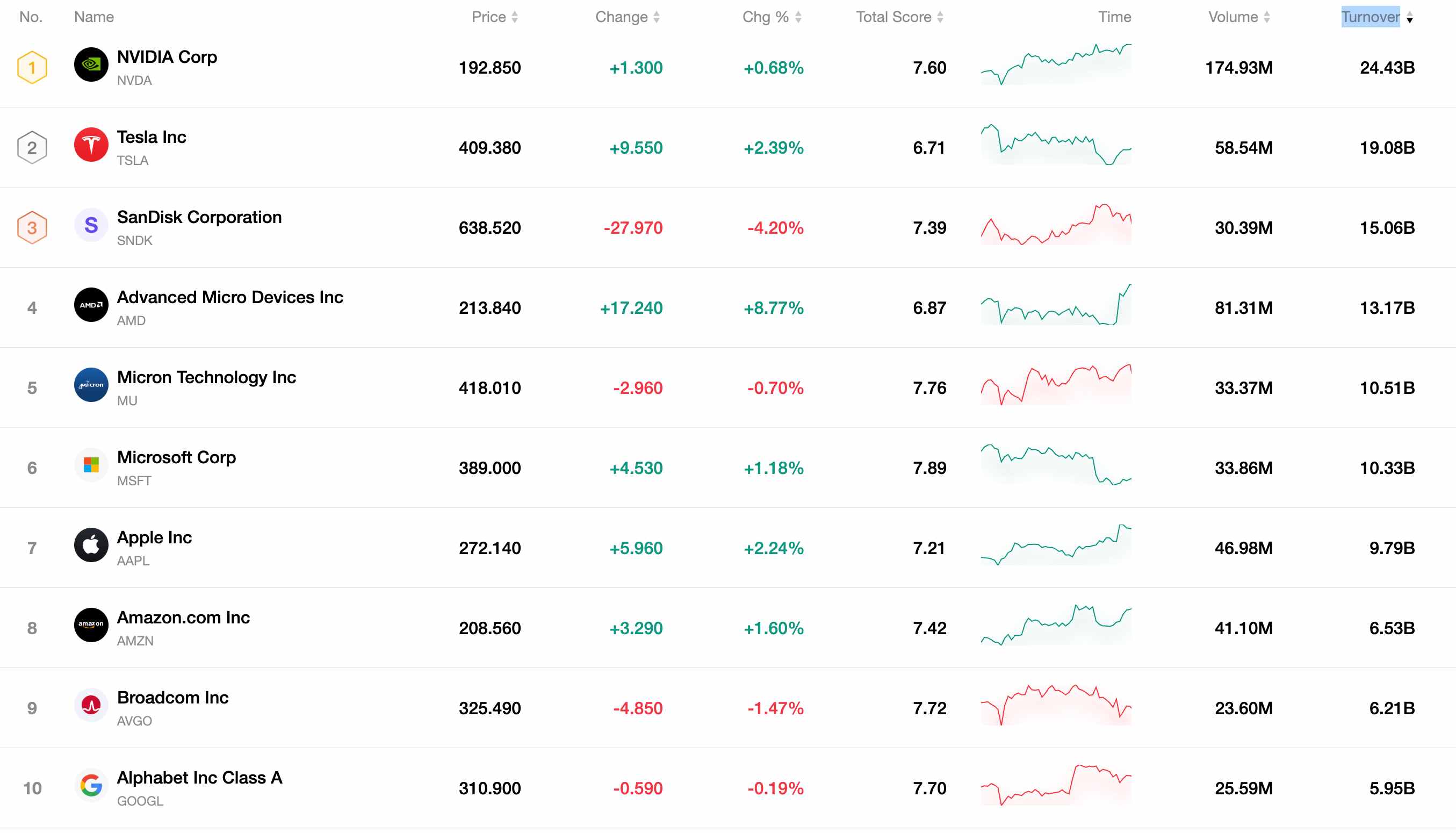
NVIDIA (NVDA) gained for three consecutive sessions ahead of its earnings report to hit a three-month high; while Meta major GPU supply deal partner AMD jumped nearly 9%; HP (HPQ) slightly beat earnings expectations but provided conservative guidance, falling over 6% in after-hours trading.
Memory chip stocks broadly declined against the market trend. Renowned short-seller Citron Research announced it is shorting SanDisk (SNDK) , which closed down more than 4%.
The S&P 500 rose 0.77%, the Dow Jones climbed 0.76%, and the NASDAQ advanced 1.04%.
The U.S. Dollar Index rebounded to approach a four-week high, the yen fell more than 1% intraday to a two-week low, and the offshore yuan strengthened past 6.88 to a near three-year high; Bitcoin (BTC) pared most of its losses after dipping below $65,000 intraday, at one point rising more than 3% from its session low.
Gold (XAUUSD) , Silver (XAGUSD) prices retreated. Gold turned lower after hitting fresh monthly intraday highs for two straight sessions, falling over 2% at one point, while spot silver dropped more than 3% intraday. Ahead of U.S.-Iran negotiations, Crude Oil (USOIL) failed to sustain its rebound, turning lower after gaining over 1% intraday.
Market Headlines
The Trump administration's 10% "universal tariff" officially took effect Tuesday, while the implementation timeline for the 15% tariff remains uncertain. According to media reports, the U.S. is considering a new round of tariffs on roughly six industries, potentially including products such as large-scale batteries.
A Federal Reserve governor warned that monetary policy may be unable to address an AI-driven wave of unemployment. Cook stated that AI has sparked a generational transition in the U.S. labor market, potentially leading to higher unemployment; the Fed might be unable to respond with rate cuts, leaving monetary policy in a dilemma.
Top 10 stocks by trading value
The chart below lists the ten most actively traded stocks in the market. Due to their massive trading volumes and high liquidity, these stocks serve as critical benchmarks for tracking global market dynamics.
Recommended Articles


