

Tesla’s market share in China dropped to 4%

Mitrade
coverImg
Source: DepositPhotos

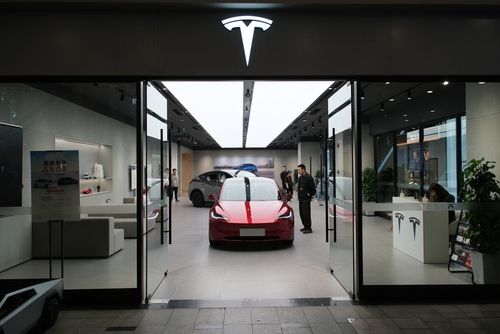
Tesla is bleeding market share in China while Elon Musk’s influence there is evaporating. According to reporting from the Wall Street Journal, sales in Tesla’s second-largest market have dropped hard, down 30% year-over-year in May, while overall EV demand in China keeps rising.

Just under 40,000 Teslas were sold last month, compared to over 57,000 during the same period a year ago. Meanwhile, companies like BYD and Xiaomi are growing fast. BYD now controls 29% of the EV and plug-in hybrid market. Tesla? Just 4%, compared to 11% in early 2021.

Chinese officials once treated Elon like a national treasure. He got land, tax breaks, loans, and the rare right to build a factory without a local partner. But now, things have flipped. Tesla is falling behind the very competition it helped build.

Cars from Chinese brands come loaded with features, multiple screens, in-car gaming, selfie cams, fridges, and stuff Tesla doesn’t offer. Local buyers say the brand is tired.

Elon blocks feedback as Chinese team gets ignored

Tesla’s team in China has tried for years to warn headquarters that local customers want new features, more smartphone integration, and native apps. In 2021, the China staff submitted a report explaining these demands.

U.S. officials replied that entertainment and local integrations weren’t priorities. The same request came again in 2023 and 2024, with the same result. Tesla later added Mango TV but still offers fewer apps than domestic rivals.

Meanwhile, sales staff are under pressure. A Tesla salesman in Beijing said his target jumped from four cars a week to one a day. Hours were stretched to 12 daily, up from 10. With models aging and local competition improving, workers say they’re left with less to pitch.

And Tesla’s plan to build a car tailored to Chinese tastes? Scrapped. Elon changed direction, choosing instead to strip features and roll out a cheaper Model Y variant. That model starts at $36,700, while BYD’s Sealion 07 starts at $26,400.

Elon’s relationship with Beijing is also deteriorating. In January, he met Vice President Han Zheng in Washington. Han reportedly told Elon that China hoped he’d help with U.S.-China relations.

Elon didn’t bite. Now, officials say he’s no longer viewed as a useful bridge between the countries. At the same time, Tesla can’t roll out its Full Self-Driving (FSD) system in China. The software, live in the U.S. since early 2024, relies on AI trained from American driving data. That’s a no-go in China, where regulations require systems to be trained locally.

Tesla offered to redact sensitive video, but the volume made officials uncomfortable. The company then proposed moving FSD training to China, but that plan also failed, Tesla can’t get the chips it needs due to U.S. export controls.

Tesla loses tech race while rivals launch robotaxis

While Elon was stuck in talks, Chinese firms charged ahead. XPeng’s XNGP and BYD’s Eyes of God launched with FSD-style capabilities. Baidu and Pony AI already operate robotaxi fleets. Tesla? Nothing.

In February, the company tried sneaking in some FSD features with over-the-air updates, exploiting a gray area in regulations. Officials shut it down, clarified the rules, and blocked a free one-month trial Tesla later offered in March. Regulators said Tesla “shouldn’t use drivers as guinea pigs.”

Elon’s problems don’t end with cars. In March, Tesla began shipping Megapack batteries to Australia from its new Shanghai factory. But battery giant CATL is already deep in that market. Tesla’s other gamble, humanoid robots, also depends on China. Its Optimus robot, built in the U.S., uses Chinese parts. Despite new U.S. tariffs, Tesla kept buying from its suppliers, who helped slash costs.

Now, local startups like Unitree and Agibot are working with those same suppliers. “Once you secure contracts with Tesla, domestic robotics companies will be much more willing to collaborate with you,” said Chen Feng, a marketing manager at a Tesla supplier. That could put Elon right back in the same position he’s in with EVs, surrounded by competitors he accidentally helped build.

During a call with analysts, Elon said, “I’m a little concerned that on the leaderboard, ranks two through 10 will be Chinese companies.”

Read more

  • Today’s Market Recap: Nvidia Drops Over 4% After Jensen Huang Resigns, AMD and Broadcom Both Rise Over 5%
  • * The content presented above, whether from a third party or not, is considered as general advice only.  This article should not be construed as containing investment advice, investment recommendations, an offer of or solicitation for any transactions in financial instruments.

    goTop
    quote
    Related Articles
    placeholder
    Today’s Market Recap: Nvidia Drops Over 4% After Jensen Huang Resigns, AMD and Broadcom Both Rise Over 5% On November 12, the three major U.S. stock indices closed slightly lower. Nvidia announced that Jensen Huang had stepped down immediately as CEO and director, draggi
    Author  TradingKey
    Nov 13, Fri
    On November 12, the three major U.S. stock indices closed slightly lower. Nvidia announced that Jensen Huang had stepped down immediately as CEO and director, draggi
    placeholder
    US October PPI Preview: Fed Rate Hike Expectations Rise, PPI May Be Key Variable; How Will US Stocks, Dollar, and Gold Move?On Friday (Nov. 13) Eastern Time, the U.S. will release the October Producer Price Index (PPI). Following the October CPI once again exceeding expectations, the market will look to the PP
    Author  TradingKey
    Nov 12, Thu
    On Friday (Nov. 13) Eastern Time, the U.S. will release the October Producer Price Index (PPI). Following the October CPI once again exceeding expectations, the market will look to the PP
    placeholder
    Nvidia slid 7.7% after hours while AMD and Broadcom rose — the AI trade changed hands, it didn't breakNvidia closed Wednesday at 173.73, up 2.87%, then fell as much as 8.1% to 159.44 after reports that its board was preparing for a possible leadership change. The same session, the Philadelphia Semiconductor Index rose 5.7% with all 30 components higher, CoreWeave jumped 24.7% on 168% revenue growth, and Micron added 11.9%. If AI demand were being repriced, AMD and Broadcom would not be bid. This is a governance discount on one name, and 204.54 — the 200-day average — is the level that settles it.
    Author  Irene Q.
    Nov 12, Thu
    Nvidia closed Wednesday at 173.73, up 2.87%, then fell as much as 8.1% to 159.44 after reports that its board was preparing for a possible leadership change. The same session, the Philadelphia Semiconductor Index rose 5.7% with all 30 components higher, CoreWeave jumped 24.7% on 168% revenue growth, and Micron added 11.9%. If AI demand were being repriced, AMD and Broadcom would not be bid. This is a governance discount on one name, and 204.54 — the 200-day average — is the level that settles it.
    placeholder
    TradingKey Daily Market Briefing: US Stocks Retreat as CPI Tops Estimates; Nvidia Falls Over 5%, AMD and Broadcom Buck the Trend On November 10, the three major U.S. stock indices edged lower. U.S. October inflation data exceeded market expectations, driving Treasury yields rapidly higher and
    Author  TradingKey
    Nov 11, Wed
    On November 10, the three major U.S. stock indices edged lower. U.S. October inflation data exceeded market expectations, driving Treasury yields rapidly higher and
    placeholder
    Nvidia fell 4.3% on a day the Nasdaq rose 2.7% — this is a governance discount, not an AI warningNvidia closed at $178.67 on November 9, down 4.27% with an intraday low of $170.24, while the Nasdaq rose 2.74% and the Philadelphia Semiconductor Index jumped 6.85%. Volume was roughly 2.5 times the prior session. The board opened an independent review after CEO Jensen Huang's public statement about his personal life. With Q3 earnings on November 17, the two levels that matter are $170.24 and $200."
    Author  Irene Q.
    Nov 10, Tue
    Nvidia closed at $178.67 on November 9, down 4.27% with an intraday low of $170.24, while the Nasdaq rose 2.74% and the Philadelphia Semiconductor Index jumped 6.85%. Volume was roughly 2.5 times the prior session. The board opened an independent review after CEO Jensen Huang's public statement about his personal life. With Q3 earnings on November 17, the two levels that matter are $170.24 and $200."
    Live Quotes
    Name / SymbolChart% Change / Price
    TSLA
    TSLA
    0.00%0.00

    US Stocks Related Articles

    • 10 Best Day Trading Platforms for Beginners and Active Traders in 2026: A Practical Guide
    • How To Invest in SpaceX Stock in 2026? Everything Investors Need to Know
    • Practice Trading Us Stocks? These Are 10 Best Stock Trading Demo Apps For Beginners
    • ​5 Best Paper Trading Platforms for 2026 (Free Demo Accounts for Beginners & Traders)
    • Wall Street’s Top 10 US Stocks for 2026 vs What Reddit Is Actually Buying
    • Is Mitrade Right for You? A Complete Guide on How to Start Trading CFDs in 5 Steps

    Click to view more