


Nikkei Surges 2%, Kospi Holds 5,000 Amid Volatility as Samsung and SK Hynix Both Close Higher
TradingKey - Japanese and South Korean equities fluctuated to build a bottom; the Nikkei rebounded strongly by 2.33%, while South Korean stocks retreated to 5,018 points awaiting US CPI and PPI data.
During Asian trading hours on November 9, Japanese and South Korean equities closed with a distinct pattern of divergent recovery and bottom-building consolidation. Japanese stocks staged a robust rally, buoyed by the stabilization of the Philadelphia Semiconductor Index in the US. South Korean stocks jumped in early trading but were constrained by high-level profit-taking and lingering leverage aftershocks, ending slightly lower while firmly holding the policy floor of 5,000 points.
The KOSPI Index fell 0.8% to close at 5,018.85 points; Samsung Electronics rose 0.64% to close at 189,900 won; and SK Hynix gained 0.35% to 1,136,000 won.
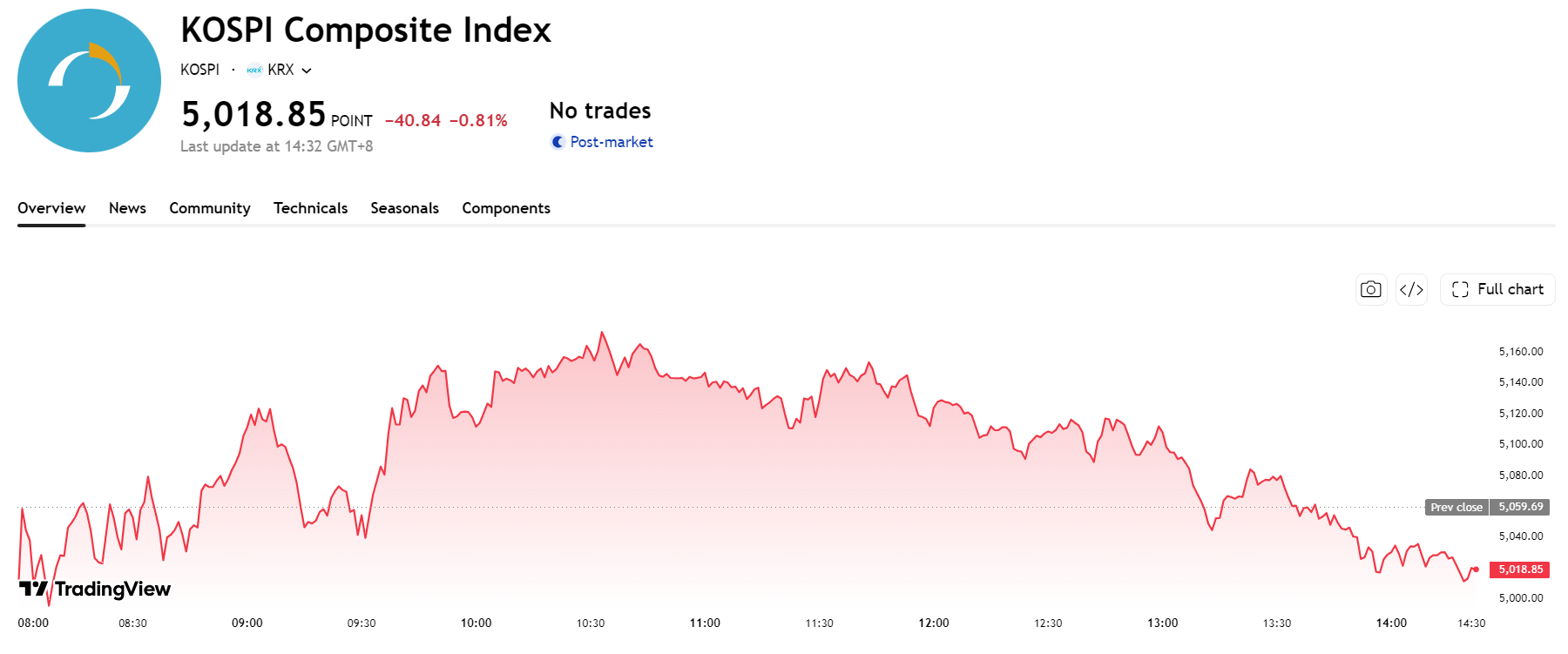 KOSPI Index chart, source: TradingView
The Nikkei 225 Index staged a strong technical rebound from oversold levels today, jumping 2.33% to close at 58,775.50 points; Kioxia fell 2.46% to close at 8,302 yen; and SoftBank tumbled 4.2% to 3,400 yen.
The Philadelphia Semiconductor Index (SOX) stabilized last Friday, directly eliminating pressure on multinational hedge funds to indiscriminately liquidate East Asian chip supply chain holdings amid volatility in US stocks and Treasuries. Going forward, close attention should be paid to whether the yen swings sharply following the release of US CPI and PPI data.
In addition, if the yen sharply weakens or strengthens again, it will affect foreign investors' allocations to Japanese exporters and semiconductor equipment shares; meanwhile, memory chip spot price trends will determine whether Samsung Electronics and SK Hynix can lead the KOSPI into a new bull run.
Recommended Articles


