


Apple Falls Over 4% Pre-Market, Hitting Near One-Month Low: Q4 Results Beat Expectations, But Services Growth Slows and Rising Memory Prices Weigh on Gross Margin
TradingKey - On November 3 ET, as of writing, Apple (AAPL) fell 4.52% in pre-market trading to $323.02, with its stock price dropping below its closing low since October.
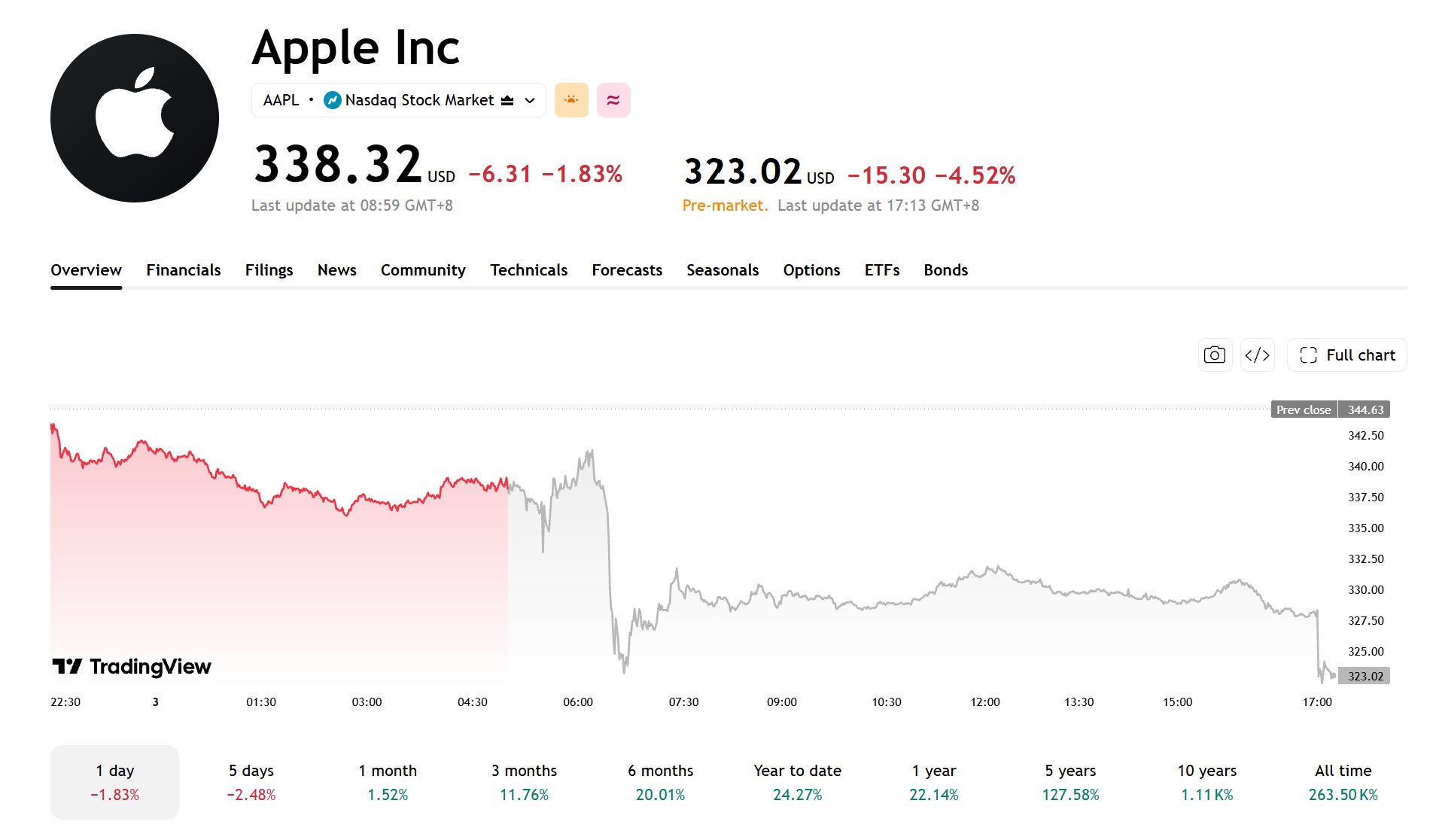
[Source: TradingView]
Although the company's reported revenue and earnings per share for the fourth quarter of fiscal 2026 beat market expectations, management issued cautious guidance for the next quarter's gross margin and services growth, while rising memory procurement costs also heightened market concerns over profitability.
Apple's fourth-quarter revenue rose 12% year-over-year to $114.5 billion, and adjusted earnings per share reached $2.10, up 14% year-over-year, both exceeding market expectations.
However, management expects the gross margin for the first quarter of fiscal 2027 to fall to 45% to 46%, down from 47.9% in the fourth quarter. As memory costs continue to rise, the market is turning its focus to whether Apple can maintain its current profit margins.
iPhone Becomes Main Growth Driver for Q4 Revenue
In the fourth quarter of fiscal 2026, Apple's revenue increased 12% year-over-year to $114.5 billion, with diluted earnings per share coming in at $2.10.
By business segment, iPhone revenue grew 17% year-over-year to $57.6 billion, setting a September-quarter record; Mac revenue rose 24% to $10.8 billion; and Services revenue increased 10% to an all-time high of $31.6 billion.
Performance in other segments was relatively weak. iPad revenue fell 10% year-over-year to $6.2 billion, while Wearables, Home and Accessories revenue declined 8% to $8.3 billion. Apple stated that the iPad segment was impacted by supply constraints and a high comparison base from new product launches in the prior-year period.
By region, revenue in Greater China increased 21% year-over-year to $17.5 billion, driven primarily by growth in the iPhone and Mac businesses. Overall, the iPhone remained the primary growth driver this quarter, while the Services segment continued to provide a steady revenue contribution.
Q1 Guidance: Services Growth Slows, Gross Margin Expected to Decline
Apple expects revenue for the first quarter of fiscal 2027 (ending December 2026) to grow 7% to 10% year-over-year, with Services revenue growing 8% to 9%, down from 10% in Q4.
Management stated that third-party licensing revenue and foreign exchange fluctuations are the main factors impacting this guidance. In addition, pressure on the mobile gaming business is expected to persist.
Gross margin guidance drew even more market focus. Apple expects gross margin for the next quarter to be 45% to 46%, down from 47.9% in the fourth quarter.
However, fourth-quarter gross margin included a benefit of approximately 1 percentage point from tariff refunds, excluding which it stood at around 46.9%. Based on the midpoint of the next quarter's guidance at 45.5%, gross margin will still decline by about 1.4 percentage points sequentially.
Profit Margins Face Pressure as Memory Costs Rise
Rising memory prices are the primary reason for the decline in gross margin. CEO John Ternus stated that current memory price increases are unprecedented, and Apple is expected to continue facing higher memory costs in the December quarter.
Previously purchased inventory and lower non-memory component costs mitigated the impact of memory price hikes to some extent. However, as memory costs continue to rise, Apple's room to offset cost pressures may narrow. To secure supply, the company's manufacturing purchase commitments increased by approximately $33 billion compared to the June quarter.
In addition to memory costs, the gradual rollout of Siri AI features will also increase related expenses. CFO Kevan Parekh stated that this is also one of the factors considered in the gross margin guidance for the next quarter.
Apple expects revenue to continue growing in the next quarter, but rising memory costs may limit profit growth.
Going forward, key areas to monitor include memory procurement prices, Mac and iPad supply availability, and changes in the growth rate of the services business. Even if revenue meets expectations, Apple's margins could still face downside pressure if cost pressures continue to rise.
Recommended Articles


