


Yen loses ground to the Dollar despite US-Iran deal hopes
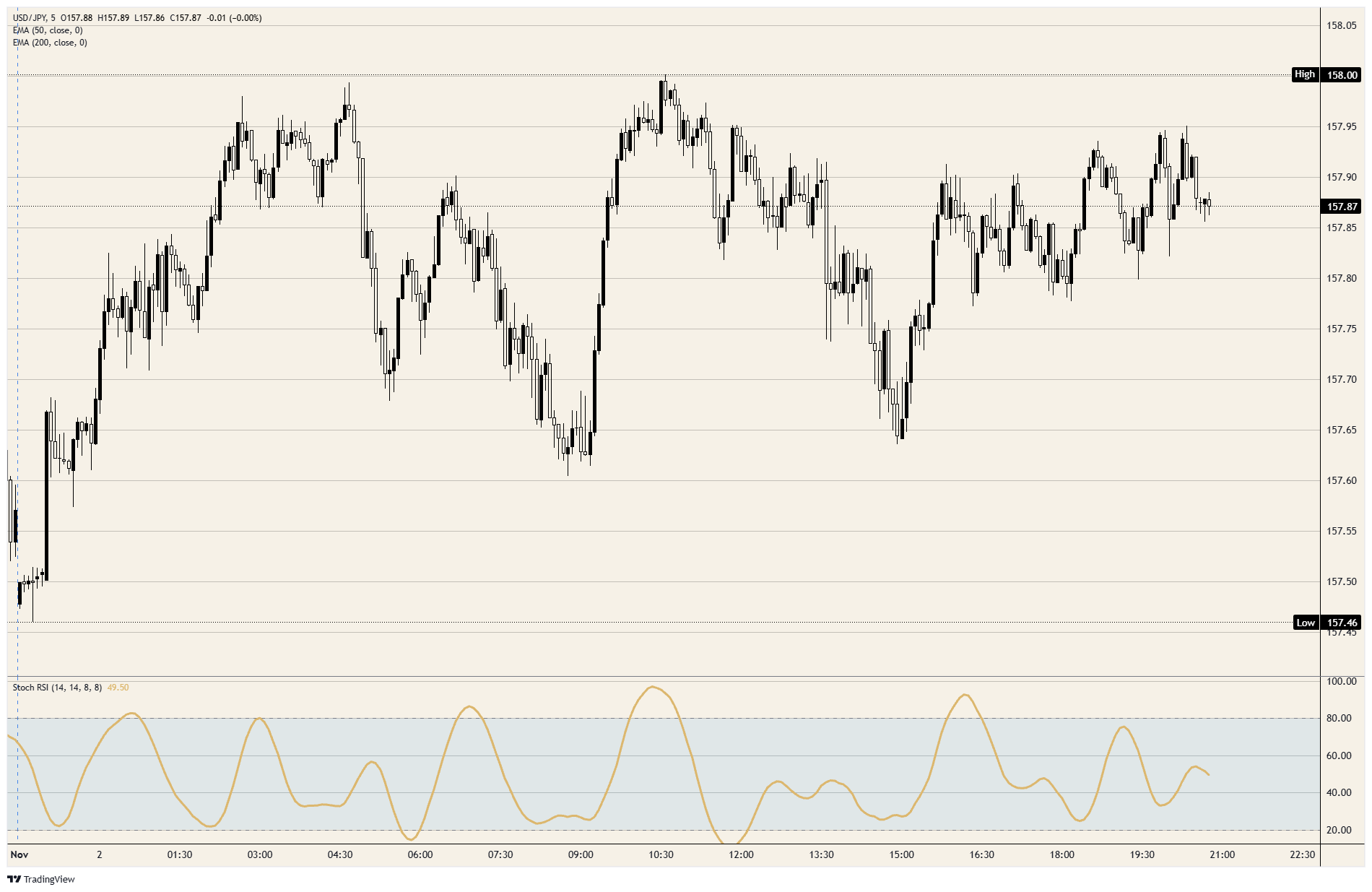
- USD/JPY touches 158.00, its highest since October 29, and holds close to it.
- The ISM factory index beats its forecast, and the pair climbs back from its low.
- BoJ Governor Ueda speaks at the IMF on Friday, a day after September wage data.
The Dollar fell against the Euro and the Pound on US-Iran diplomacy but not against the Yen, and USD/JPY reached 158.00, its highest since October 29. It dipped to just above 157.50 when the Dollar's slide elsewhere was at its deepest, then climbed to the high. It's trading just under 158.00.
Japan buys nearly all of its Crude Oil abroad, so the slide in its price on the US-Iran talks cuts Japan's import bill, and the Yen weakened anyway. The Bank of Japan (BoJ) doesn't decide again until December 17-18, so nothing on the Japanese side of USD/JPY's rate gap is scheduled to change for more than six weeks.
S&P Global's final US manufacturing index fell to 54.9 from 56.0, and USD/JPY slipped back to just above 157.50. Afterward, the Institute for Supply Management (ISM) factory survey rose to 55.5, above the 54.6 forecast, and the pair climbed back to just under 158.00.
On the calendar
BoJ meeting minutes are due at 23:50 GMT on Wednesday. September wage data follow at 23:30 GMT on Thursday, forecast at 3.8% from a year earlier for a second month. BoJ Governor Ueda gives a lecture at the International Monetary Fund (IMF) at 16:00 GMT on Friday, and all three feed into the BoJ's December decision.
Wednesday's ISM services index, due at 15:00 GMT, is forecast at 54.8 after 54.9, and Friday's October payrolls report, forecast at 65K after 29K, comes at 13:30 GMT. Both weigh on USD/JPY's rate gap, after the Fed held at 3.75%-4.00% on October 28.
On the charts
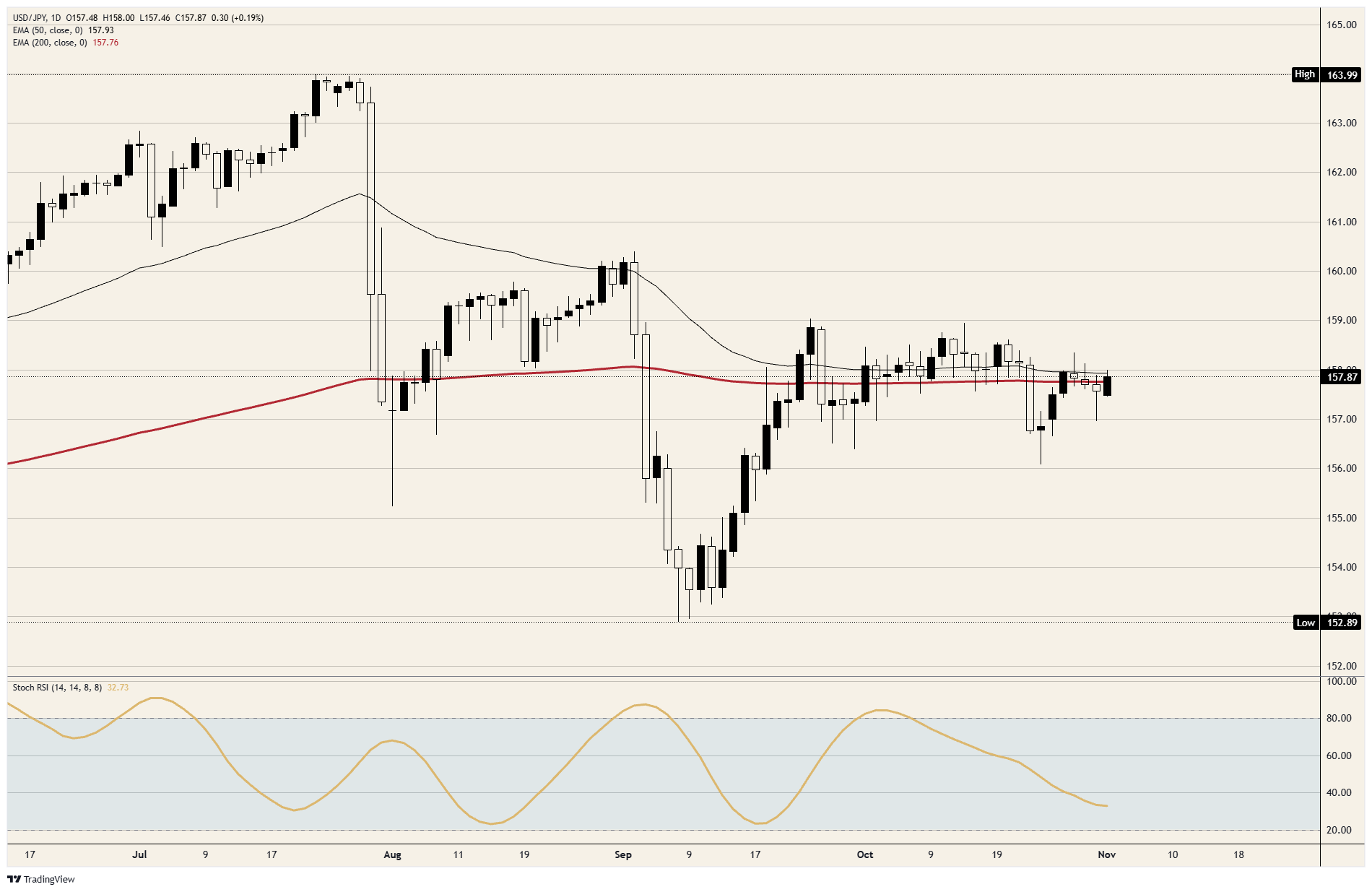
USD/JPY has stayed between just above 156.00 and near 159.00 since late September, after a rebound from the September low just under 153.00. The 50-day and 200-day Exponential Moving Averages (EMA) are both inside that range, less than a fifth of a yen apart. The pair has crossed them repeatedly since early October.
USD/JPY 5-minute chart
USD/JPY daily chart
Japanese Yen FAQs
The Japanese Yen (JPY) is one of the world’s most traded currencies. Its value is broadly determined by the performance of the Japanese economy, but more specifically by the Bank of Japan’s policy, the differential between Japanese and US bond yields, or risk sentiment among traders, among other factors.
One of the Bank of Japan’s mandates is currency control, so its moves are key for the Yen. The BoJ has directly intervened in currency markets sometimes, generally to lower the value of the Yen, although it refrains from doing it often due to political concerns of its main trading partners. The BoJ ultra-loose monetary policy between 2013 and 2024 caused the Yen to depreciate against its main currency peers due to an increasing policy divergence between the Bank of Japan and other main central banks. More recently, the gradually unwinding of this ultra-loose policy has given some support to the Yen.
Over the last decade, the BoJ’s stance of sticking to ultra-loose monetary policy has led to a widening policy divergence with other central banks, particularly with the US Federal Reserve. This supported a widening of the differential between the 10-year US and Japanese bonds, which favored the US Dollar against the Japanese Yen. The BoJ decision in 2024 to gradually abandon the ultra-loose policy, coupled with interest-rate cuts in other major central banks, is narrowing this differential.
The Japanese Yen is often seen as a safe-haven investment. This means that in times of market stress, investors are more likely to put their money in the Japanese currency due to its supposed reliability and stability. Turbulent times are likely to strengthen the Yen’s value against other currencies seen as more risky to invest in.
Recommended Articles


