




Cash Pays, but It Doesn't Grow: Why Advisors Still Favor Dividend ETFs for Retirees
Key Points
Dividend growth can help offset inflation, providing retirees with greater purchasing power over time.
Qualified dividends typically face lower tax rates, making them an attractive option.
Reinvesting those dividends is an important strategy that can help supercharge a nest egg.
- 10 stocks we like better than Invesco Exchange-Traded Fund Trust II - Invesco S&P 500 High Dividend Low Volatility ETF ›
It's not difficult to find an attractive yield on cash today. However, for retirees, parking everything in cash can create a costly illusion of financial safety. The money may be there when you need it, but it doesn't grow. And unless you earn enough interest to keep pace with inflation, you're losing money.
If you're worried about how you'll cover the cost of an emergency, but equally concerned about your money losing value, working a dividend-paying ETF into your retirement plan may provide the best of both worlds.
Missed Nvidia in 2009? This Rare Signal Is Flashing Again. In 2009, a "Double Down" signal flashed for a little-known chipmaker called Nvidia. For the first time in years, that same "Total Conviction" signal is flashing for a company 1/100th the size of Nvidia. Continue »
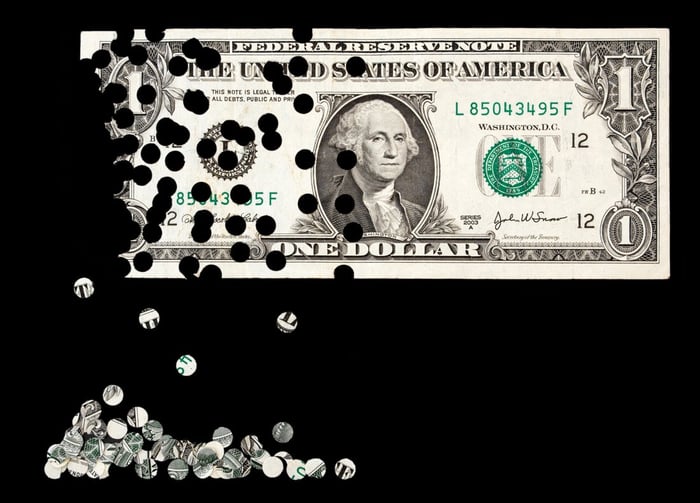
Image source: Getty Images.
The clear appeal of cash
Higher interest rates have increased yields on cash accounts, including savings accounts, money market funds, certificates of deposit (CDs), and even short-term Treasuries. On the surface, each of these financial instruments looks ideal.
The problem is that cash and cash-like assets rarely outpace inflation over the long term. When consumer prices rise faster than interest income, retirees experience a slow, persistent decline in purchasing power.
This isn't just about money market funds, CDs, and other easily accessible accounts. If your portfolio is dominated by cash, you may not be doing all you can to fight inflation or support your future lifestyle.
The role that dividend-paying ETFs play
Dividend-paying ETFs have the potential to provide income and growth. They hold diversified baskets of dividend-paying stocks, distributing cash regularly. They also allow you to take advantage of market appreciation.
If your retirement plans don't include monitoring dozens of separate investments, a dividend-paying ETF can help. An ETF spreads investment risks by including hundreds -- or even thousands -- of different stocks across multiple sectors in one financial instrument. This reduces the impact of a single dividend cut, and lowers the burden of researching all those investments at a time in life when you're just ready to relax and enjoy yourself.
Different dividend-paying ETFs for different investors
Which dividend-paying ETF is right for you largely depends on what you're looking for. For example, the Vanguard Dividend Appreciation ETF (NYSEMKT: VIG) focuses on companies with a history of increasing dividends, while the Invesco S&P 500 High Dividend Low Volatility ETF (NYSEMKT: SPHD) focuses on high-dividend-paying stocks with low volatility.
Dividend-paying ETFs are still equity investments and can decline during serious market downturns. And that's where easy-to-access cash comes into play. Having cash on hand allows you to avoid withdrawing money from your investment accounts when selling prices are low.
The goal is to determine how much money should be easily available when needed. In addition to a regular emergency fund to cover repairs or unexpected medical costs, it's smart to build a separate fund that you can draw from as you wait for the market to recover.
Recommendations as to how much you need range from one to three years' worth of withdrawals. So, if you normally withdraw $2,000 per month from an investment account, aim for a cash account of $24,000 to $72,000.
The goal is to invest in accounts that balance your portfolio, keep pace with inflation, and protect your assets when markets get stormy.
Should you buy stock in Invesco Exchange-Traded Fund Trust II - Invesco S&P 500 High Dividend Low Volatility ETF right now?
Before you buy stock in Invesco Exchange-Traded Fund Trust II - Invesco S&P 500 High Dividend Low Volatility ETF, consider this:
The Motley Fool Stock Advisor analyst team just identified what they believe are the 10 best stocks for investors to buy now… and Invesco Exchange-Traded Fund Trust II - Invesco S&P 500 High Dividend Low Volatility ETF wasn’t one of them. The 10 stocks that made the cut could produce monster returns in the coming years.
Consider when Netflix made this list on December 17, 2004... if you invested $1,000 at the time of our recommendation, you’d have $437,097!* Or when Nvidia made this list on April 15, 2005... if you invested $1,000 at the time of our recommendation, you’d have $1,355,077!*
Now, it’s worth noting Stock Advisor’s total average return is 978% — a market-crushing outperformance compared to 213% for the S&P 500. Don't miss the latest top 10 list, available with Stock Advisor, and join an investing community built by individual investors for individual investors.
See the 10 stocks »
*Stock Advisor returns as of September 1, 2026.
Dana George has no position in any of the stocks mentioned. The Motley Fool has positions in and recommends Vanguard Dividend Appreciation ETF. The Motley Fool has a disclosure policy.
Recommended Articles


