




Here's What to Expect for Gold and Silver Mining Stocks as the Iran Conflict Continues
Key Points
Gold and silver are not immune from a general sell-off in assets.
The long-term case for both metals remains attractive.
However, now may not be the best time to jump in.
- 10 stocks we like better than Newmont ›
Sometimes the narrative and investor perceptions don't fit the reality. Investors are forced to realign the way they think about an asset class or, in this case, the asset classes of gold and silver or buying gold miners like Newmont (NYSE: NEM) or a silver miner like Hecla Mining (NYSE: HL).
While the two precious metals have different dynamics, they have both surged in recent years, driven by speculative investment that somewhat unwound during the recent broad-based market sell-off. That wasn't supposed to happen to so-called safe-haven investments, but that moniker needs some qualification.
Will AI create the world's first trillionaire? Our team just released a report on the one little-known company, called an "Indispensable Monopoly" providing the critical technology Nvidia and Intel both need. Continue »
Speculative investment has driven gold and silver higher
Whenever there's a broad sell-off in assets, investors look to raise cash by selling, and it's understandable if they take profits on assets that have soared in recent years, like gold and silver. That sell-off will be more pronounced if demand for gold and silver comes primarily from speculative investment rather than from underlying demand, such as from the jewelry, electronics, technology, or industrial sectors.

Image source: Getty Images.
There's evidence of growing investment demand but declining underlying demand amid rising prices for both metals. Jewelry demand declined in 2025, and so did Central Bank demand. The latter is somewhat surprising, given that the bull case for gold often rests on the idea that Central Bank buying will drive gold prices higher.
|
Gold Demand (tonnes) |
2024 |
2025 |
Change* |
|---|---|---|---|
|
Technology |
326 tonnes |
323 tonnes |
(3) tonnes |
|
Jewelry |
2,026 tonnes |
1,638 tonnes |
(388) tonnes |
|
Investment |
1185 tonnes |
2,175 tonnes |
990 tonnes |
|
Central Banks |
1092 |
863 tonnes |
(229) tonnes |
|
Total |
4,630 tonnes |
4,999 tonnes |
370 tonnes |
Data source: World Gold Council Research. *Numbers may differ due to rounding.
Turning to silver, declining underlying demand is again offset by increased investment demand, but unlike gold, it's not enough to fully offset it.
|
Silver Demand (million ounces) |
2024 |
2025 |
Change* |
|---|---|---|---|
|
Industrial |
681 million ounces |
677 million ounces |
(3) million ounces |
|
Photography |
26 million ounces |
24 million ounces |
(1) million ounces |
|
Jewelry |
209 million ounces |
196 million ounces |
(13) million ounces |
|
Silverware |
54 million ounces |
46 million ounces |
(8) million ounces |
|
Net physical investment |
191 million ounces |
204 million ounces |
14 million ounces |
|
Net hedging demand |
4 million ounces |
0 |
(4) million ounces |
|
Total |
1,164 million ounces |
1,148 million ounces |
(16) million ounces |
Data source: The Silver Institute.* Numbers may differ due to rounding.
What it means to gold and silver investors
The increases in speculative demand suggest that silver and particularly gold are prone to a broad-based sell-off, so the idea that they will be a near-term safe haven is questionable.
There is a long-term case for gold, given its potential to replace the U.S. dollar as a reserve currency at Central Banks, not least due to rising U.S. debt levels and the threat of the weaponization of finance in a world rife with geopolitical tensions.
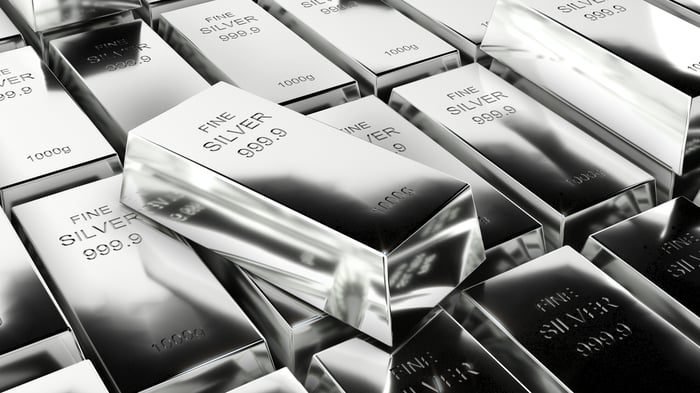
Image source: Getty Images.
There's also a strong case for silver, given its importance to the industrial sector (gold and silver demand from technological and industrial sources remained relatively stable) and use in data centers.
But now may not be the best time to buy in, as volatility around the Iran War will only end when the conflict does, which could mean more speculative money flows out of gold and silver in the near term.
Should you buy stock in Newmont right now?
Before you buy stock in Newmont, consider this:
The Motley Fool Stock Advisor analyst team just identified what they believe are the 10 best stocks for investors to buy now… and Newmont wasn’t one of them. The 10 stocks that made the cut could produce monster returns in the coming years.
Consider when Netflix made this list on December 17, 2004... if you invested $1,000 at the time of our recommendation, you’d have $503,861!* Or when Nvidia made this list on April 15, 2005... if you invested $1,000 at the time of our recommendation, you’d have $1,026,987!*
Now, it’s worth noting Stock Advisor’s total average return is 884% — a market-crushing outperformance compared to 179% for the S&P 500. Don't miss the latest top 10 list, available with Stock Advisor, and join an investing community built by individual investors for individual investors.
See the 10 stocks »
*Stock Advisor returns as of March 29, 2026.
Lee Samaha has no position in any of the stocks mentioned. The Motley Fool has no position in any of the stocks mentioned. The Motley Fool has a disclosure policy.
Recommended Articles


