




Disney Missed Out on Monday's Market Rally. Is It a Red Flag for the Entertainment Giant?
Key Points
Disney has fallen over the last month in part due to fears about the war in Iran.
It was one of a small percentage of stocks that fell on Monday, despite good news out of Iran.
Disney's streaming profit hasn't yet replace profit from linear media.
- 10 stocks we like better than Walt Disney ›
Walt Disney Co (NYSE: DIS) has seemingly been in flux for the last decade.
Over that period, the entertainment giant acquired Fox's entertainment assets, launched Disney+, managed through the pandemic, replaced its CEO, brought back Bob Iger, and now Iger has officially retired, replaced by new CEO Josh D'Amaro.
Will AI create the world's first trillionaire? Our team just released a report on the one little-known company, called an "Indispensable Monopoly" providing the critical technology Nvidia and Intel both need. Continue »
During that time, Disney has retained its primacy in family entertainment and built an impressive streaming business, but the stock has gone nowhere, as it is basically flat over the last decade, while the S&P 500 has more than tripled.
D'Amaro takes over during a challenging period. Not only has the business struggled to move past the linear media era, but the geopolitical situation in Iran has put pressure on the travel sector, and tourism makes up a substantial portion of Disney's revenue.
While the company lumps in its parks, experiences, and consumer products business into one segment, the vast majority of that revenue comes from its theme parks and related businesses like its cruise line.
Disney's theme parks have proven to be its most important cash cow over the last decade, driving wide profit margins, while the streaming business has struggled and is cannibalizing its linear TV and box office movie business.
In fiscal 2025, Disney grew its experiences business by 6% to $36.2 billion and reported a $10 billion operating profit, making up more than half of its profit.
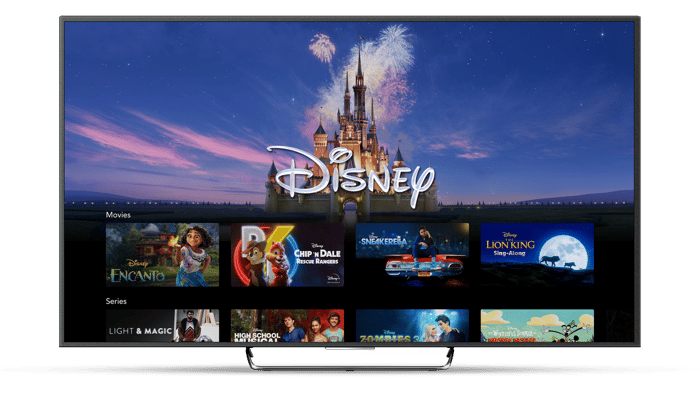
Image source: Disney.
What happened on Monday
Stocks soared Monday on a relief rally driven by President Trump's decision to pause an attack on Iranian power plant infrastructure while the two sides negotiate.
Risk-on, cyclical stocks jumped, and that pattern was clear from the performance of the Dow Jones Industrial Average, as only six of the 30 stocks fell, and those were primarily defensive stocks. However, Disney was an outlier. Though its parks business has a ton of exposure to cyclical forces, Disney stock fell 1.6% on the day.
Investors seem to be saying that even the end of the war or a cooling of tensions isn't enough to push the stock higher. With oil prices rising, plane tickets are likely to go up, and consumers will have less discretionary income to spend at places like Disney World.
What it means for Disney
One day's performance does not make a stock, but Disney's fall stands out, given that it would benefit from an end to tensions in Iran.
With the sell-off, investors seem to be saying that Disney stock can't rely on the macro environment for its recovery. It will have to earn it through concrete business improvements.
For the current fiscal year, the company is targeting double-digit adjusted earnings per share. That's not a bad target, but right now, investors seem to be skeptical toward D'Amaro. Disney's stock has fallen through March, and it will need some help from management to turn it around.
D'Amaro deserves some patience from investors, but Disney's entertainment business is challenged by the decline of linear TV, and its theme parks could face a setback from the war. Disney could have another tough year ahead of it.
Should you buy stock in Walt Disney right now?
Before you buy stock in Walt Disney, consider this:
The Motley Fool Stock Advisor analyst team just identified what they believe are the 10 best stocks for investors to buy now… and Walt Disney wasn’t one of them. The 10 stocks that made the cut could produce monster returns in the coming years.
Consider when Netflix made this list on December 17, 2004... if you invested $1,000 at the time of our recommendation, you’d have $495,179!* Or when Nvidia made this list on April 15, 2005... if you invested $1,000 at the time of our recommendation, you’d have $1,058,743!*
Now, it’s worth noting Stock Advisor’s total average return is 898% — a market-crushing outperformance compared to 183% for the S&P 500. Don't miss the latest top 10 list, available with Stock Advisor, and join an investing community built by individual investors for individual investors.
See the 10 stocks »
*Stock Advisor returns as of March 24, 2026.
Jeremy Bowman has positions in Walt Disney. The Motley Fool has positions in and recommends Walt Disney. The Motley Fool has a disclosure policy.
Recommended Articles


