




National Debt Bomb Ignited? Musk Warns US Will Be 1000% Bankrupt Without AI
TradingKey - Tesla ( TSLA) CEO Elon Musk recently issued another warning regarding the rapidly ballooning U.S. national debt. He explicitly pointed out that without artificial intelligence and robotics, the United States will inevitably head toward fiscal bankruptcy.
During a podcast interview last week, Musk was asked why he still advocates for cutting public spending, particularly under the framework of the "Department of Government Efficiency" (DOGE) he envisioned, given that technology can improve economic efficiency and growth rates.
Musk responded, "I am concerned about waste and fraud in the government." He further noted that U.S. debt is growing at a staggering pace, emphasizing that "without AI and robotics, we are truly finished."
Musk specifically mentioned that the total U.S. federal government debt has reached $38.5 trillion, with annual interest payments alone nearing $1 trillion, even exceeding the current defense budget. He emphasized that these debt-servicing costs have already surpassed social security programs like Medicare, becoming a severe burden on the fiscal system.
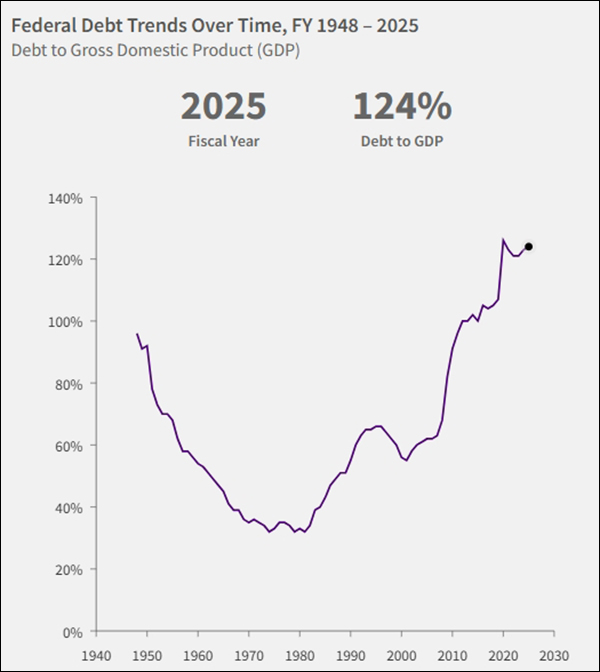
According to official data from the U.S. Treasury Department, the U.S. national debt continues to climb, currently surpassing $38.56 trillion. As revenue consistently falls short of spending, the fiscal deficit is projected to expand to $602 billion in fiscal year 2026.
Musk believes that AI and robotics are the only solutions to the current predicament. He stated that by accelerating technological deployment and improving productivity, new momentum can be injected into economic growth, thereby buying more time to address the ballooning debt.
He stated bluntly, "This is the only way to solve the national debt problem. If we don't have AI and robotics, this country is 1000% going to go bankrupt and into decline. There is no other solution besides this."
In fact, Musk raised a similar point as early as last November, stating that "the U.S. will face a debt crisis before the large-scale deployment of AI and robotics technology."
However, he simultaneously warned that this surge in productivity could potentially bring about deflationary issues. "This is a very likely risk because you cannot expand the money supply as fast as the output of goods and services," he added.
In economics, it is generally believed that deflation can exacerbate the debt burden because, in a context of falling prices, the pressure to repay nominal debt increases. While inflation may seem to dilute debt initially, it also pushes up bond yields, ultimately raising interest costs and intensifying fiscal pressure.
However, as the world's reserve currency, the U.S. dollar does grant the U.S. government a certain "fiscal buffer" advantage. On one hand, the Treasury can issue debt in its own currency; on the other, the Federal Reserve has the capacity to purchase bonds, reducing the risk of default. This is why many economists believe that the U.S. will not "go bankrupt" technically.
While the Federal Reserve can stimulate systemic liquidity and reduce debt pressure by printing money in the short term, this also carries the risk of inflation or even out-of-control inflation. Once debt holders realize that their returns are being eroded by devaluation, they may demand higher interest rates, further increasing the cost burden on the U.S. fiscal side.
As expansionary fiscal trends intensify and interest payments as a share of spending rise, the U.S. debt structure is appearing increasingly fragile. The current financing model's over-reliance on short-term Treasuries has led to continuously rising refinancing costs in a persistent high-interest-rate environment. According to projections by the Committee for a Responsible Federal Budget (CRFB), annual U.S. interest spending will rise to $1.5 trillion by 2032 and potentially reach $1.8 trillion by 2035.
The Committee for a Responsible Federal Budget (CRFB) previously pointed out that if the fiscal direction is not adjusted in time, the U.S. will "almost inevitably" face some form of crisis. They warned that the current debt trajectory could trigger six different types of fiscal crises, although the exact timing is difficult to predict.
In addition to Musk, Ray Dalio, founder of the world's largest hedge fund Bridgewater Associates, has also issued warnings. He believes the U.S. is falling into a "debt death spiral"—where the government continuously borrows money just to pay interest, creating a vicious cycle.
However, unlike Musk, Dalio does not believe the U.S. will officially default: "There will be no default—the central bank will step in, we will print money and buy the debt." He stated bluntly that this is precisely the fundamental reason for the continuous devaluation of the currency.
Furthermore, the largest U.S. bank, JPMorgan Chase ( JPM) CEO Jamie Dimon has also previously expressed similar concerns.
He pointed out that the $38 trillion U.S. debt and global fiscal deficits have reached "quite dangerous" levels and will "bite back at the entire economic system" at some point in the future.
More worryingly, at a time when the dollar's dominance is being questioned, some emerging markets and non-Western countries have begun to accelerate the pace of de-dollarization. For instance, China, Russia, and some BRICS nations are increasing their asset allocations to gold and the RMB.
If U.S. Treasuries face another credit rating downgrade from agencies, or if the Federal Reserve finds itself in a deadlock of "having to buy bonds while being afraid to ease liquidity," global capital market confidence in U.S. debt could decline further.
Recommended Articles


