




Bitcoin May Gain If AI Job Losses Trigger Bank Stress, Hayes Says
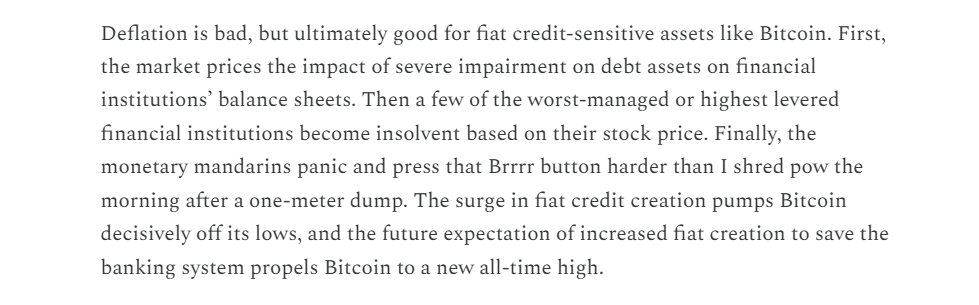
Arthur Hayes has issued a stark market warning: he sees a growing split between his preferred risk gauge, Bitcoin, and the tech-heavy Nasdaq 100 as a signal that credit stress may be building under the surface.
Hayes, a co-founder and former CEO of cryptocurrency exchange BitMEX, calls Bitcoin a “fiat liquidity fire alarm” — an asset that reacts quickly when credit conditions change.
A Warning From Market Signals
When two assets that often moved together start to pull apart, traders take notice. Hayes believes that a gap like this deserves investigation because it could point to trouble in bank balance sheets or in the flow of lending.
He argues the move is not about one stock or one trade; it is about the plumbing of credit and how fast liquidity can dry up when things turn.
How AI Job Cuts Could Ripple Through Credit
Reports note that companies cited AI as a reason for thousands of layoffs in recent years, with an outplacement firm counting roughly 55,000 cuts in 2025 that were tied to AI. Much of that hit was inside tech.
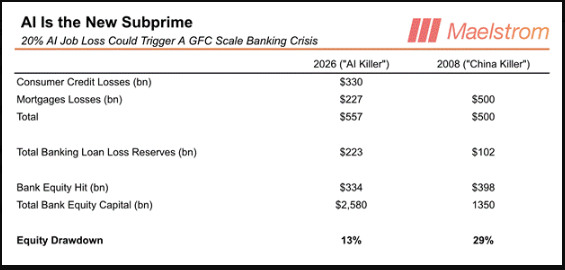
Hayes sketches a rough scenario: a sizable drop in knowledge-worker employment would weaken mortgage and consumer credit repayment, which could then shave bank equity and tighten lending.
The numbers he offers are approximate and built on multiple assumptions, but they are intended to show how a shock to white-collar paychecks could cascade into the credit system.
 Expectations About Central Bank Action
Hayes expects a policy response if banks start to fail and credit freezes. He argues the Federal Reserve would step in with fresh liquidity, and that more money creation would follow — a move he says would be favorable for Bitcoin’s price outlook.
That scenario has been a recurring theme in his commentary; past essays and posts have linked anticipated Fed liquidity to sharp rallies in crypto markets.
His fund, Maelstrom, is said to plan staking or stablecoin deployments into privacy-focused and exchange-native plays once liquidity policy shifts occur, naming Zcash and Hyperliquid as examples. That kind of tactical stance is meant to profit from a short-term surge in risk assets after a policy pivot.
A Measured ViewThis is a dramatic chain of events: AI job losses lead to credit losses, which cause bank stress, which forces the central bank to expand money supply, which lifts Bitcoin.
Each link is plausible, but none is guaranteed. Some of Hayes’ figures are rough estimates meant to illustrate risk rather than to act as a precise forecast.
Market history shows that central banks do sometimes step in, and that policy moves can power asset rallies, but outcomes depend on timing, scale and public confidence — factors that are hard to predict in advance.
Featured image from Unsplash, chart from TradingView
Recommended Articles


