




Everyone is Talking about the SaaSpocalypse, But Why Does it matter for Crypto?
The term “SaaSpocalypse” is trending across financial markets, tech media, and investor circles. It refers to a sudden loss of confidence in software-as-a-service (SaaS) companies after the launch of advanced AI agents capable of automating tasks traditionally handled by enterprise software.
The term became popular after Anthropic released its Claude Cowork AI platform in late January. Following its launch, nearly $300 billion in global software market value was erased. Stocks of major SaaS firms—including Salesforce, Workday, Atlassian, and ServiceNow—fell sharply as investors questioned whether AI agents could replace large parts of their business.
AI Agents Trigger Market Panic
The core fear driving the SaaSpocalypse is simple: AI agents can now perform entire workflows autonomously.
Tools like Claude Cowork can review contracts, analyze sales data, generate reports, and execute multi-step tasks across multiple applications.
Instead of employees using five separate SaaS tools, a single AI agent can complete the same work.
This directly threatens the SaaS pricing model, which typically charges companies per user or “seat.” If AI reduces the need for human users, companies may need fewer licenses. Investors reacted quickly to this risk.
The S&P 500 Software and Services Index fell nearly 19% in early February, marking its worst losing streak in years.
At the same time, capital rotated toward AI infrastructure providers such as Nvidia, Microsoft, and Amazon, which supply the compute power behind AI agents.
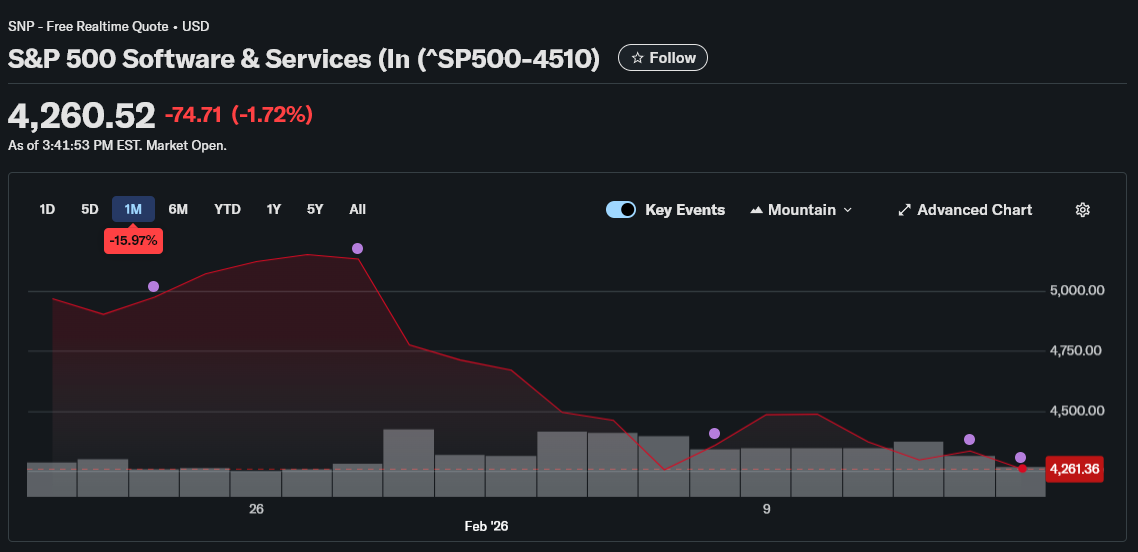 S&P 500 Software and Services Index Price Chart. Source: Yahoo Finance
Why the SaaSpocalypse Matters Beyond Software
The SaaSpocalypse reflects a deeper shift in how software creates value. Instead of selling tools that humans operate, companies are beginning to sell outcomes delivered by AI.
Analysts now describe this as a transition from software-as-a-service to “AI-as-a-service.” This shift challenges decades-old business models and forces software companies to rethink pricing, licensing, and product strategy.
However, this is not necessarily the end of SaaS. Many enterprises will still rely on established platforms for security, compliance, and data management.
Instead, the disruption will likely reshape the industry, forcing software companies to integrate AI deeply into their products.
How the SaaSpocalypse Could Impact Crypto Markets
The SaaSpocalypse is already affecting crypto markets indirectly. Both crypto and SaaS are considered high-growth, risk-sensitive sectors.
When investors sell software stocks, they often reduce exposure to crypto as well. In early February 2026, Bitcoin fell sharply as software stocks also posted heavy losses.
More importantly, capital is shifting toward AI. Venture capital invested over $200 billion into AI startups in 2025—far more than crypto received.
This means fewer resources may flow into new crypto projects, slowing innovation in some areas.
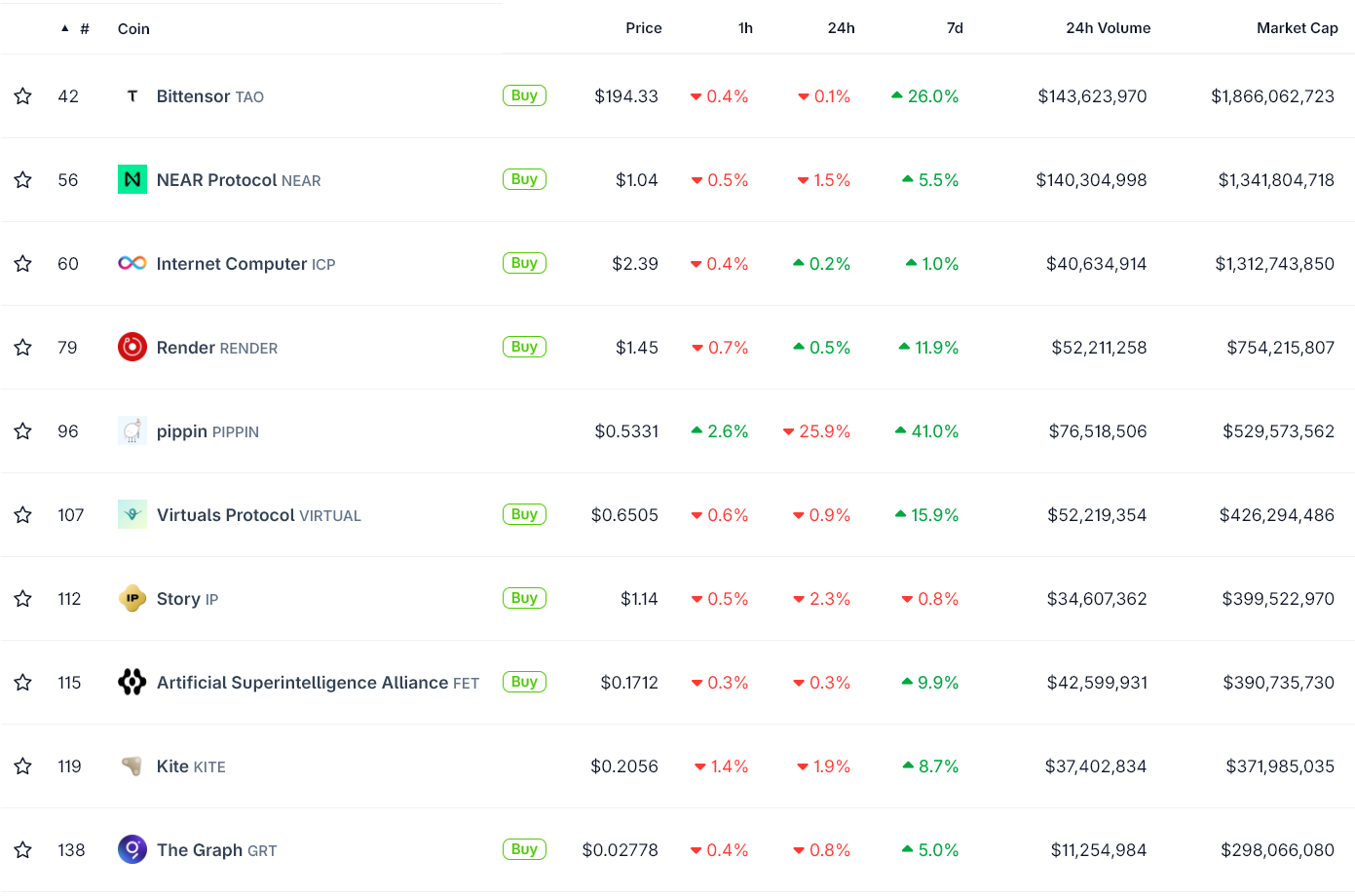 Top AI Coins by Market Cap. Source: CoinGecko
At the same time, crypto could benefit in specific niches such as decentralized computing and AI infrastructure.
But overall, the SaaSpocalypse signals a major capital rotation. AI is becoming the dominant investment theme, and crypto markets will need to compete for investor attention in this new environment.
Recommended Articles


