




Yen Breaches 153 Level to Hit 7-Month High as BOJ September Rate Hike Expectations Rise
TradingKey - On Tuesday, the yen extended its strong rally, with USD/JPY (USDJPY) dipping to 152.89 at one point, hitting its lowest level since February. As of press time, the currency pair was down about 0.69% at 153.27. Since pulling back from a high near 160 early last week, its cumulative decline has approached 4%, indicating that investors are cutting yen short and carry trade positions.
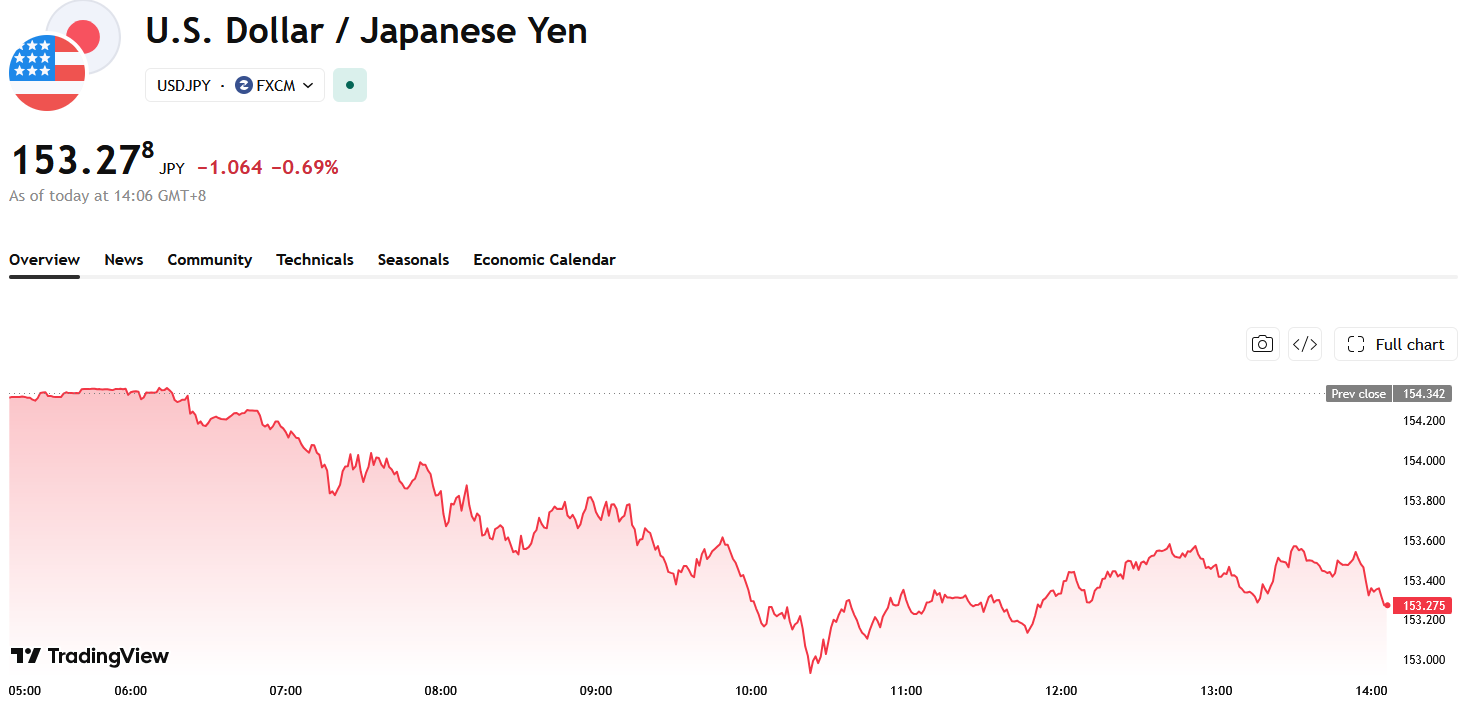
Source: TradingView
The main driver behind this round of yen appreciation is the market rapidly increasing bets on a September rate hike by the Bank of Japan.
Currently, traders are almost fully pricing in a 25-basis-point rate hike by the Bank of Japan at its September 17–18 meeting, raising the policy rate to 1.25%. Recent hawkish remarks from Bank of Japan officials, along with public forecasts of a September hike by Takuji Aida, an economic advisor to Japanese Prime Minister Sanae Takaichi, have further reinforced this expectation.
Latest economic data has also provided further support for a rate hike. Japan's annualized second-quarter GDP growth was revised up from an initial estimate of 1.1% to 1.4%, with corporate capital expenditure performing better than previously estimated; real wages in July grew 2.4% year-over-year, marking the largest increase since May 2021.
Shifting expectations regarding US and Japanese monetary policies are also driving yen appreciation. Investors expect the Bank of Japan to continue tightening policy, while market consensus on the Federal Reserve's future path remains divided. With US inflation data set to be released soon, some capital is choosing to reduce US dollar long exposure. Meanwhile, Japanese investors may be repatriating some overseas capital back home, further accelerating the unwinding of carry trades that previously profited from the US-Japan interest rate differential.
Japanese Finance Minister Satsuki Katayama stated that Japan will continue to maintain communication with the US Department of the Treasury to preserve the orderly operation of the foreign exchange market. Previously, the US and Japan jointly intervened in the currency market to curb excessive yen depreciation; now, even as the yen turns to a rapid surge, the market remains vigilant for official action against abnormal volatility.
Recommended Articles


