




NZD/USD (NZDUSD) Is down 0.54% on Sep 8: What Signals Does the Macro Data Send?
NZD/USD (NZDUSD) is down 0.54% at Sep 8 03:40(ET), now at $0.58439, with a 7-day down of 0.76%.
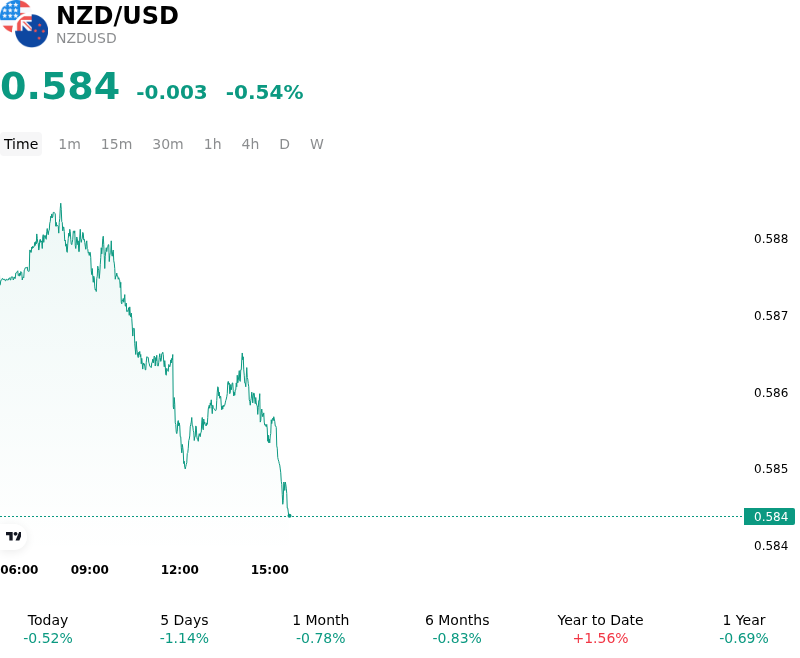
What is driving NZD/USD (NZDUSD)’s stock price down today?
The decline in the New Zealand dollar against the U.S. dollar was primarily driven by disappointing trade data from China alongside a recalibration of relative central bank interest-rate expectations. Softer-than-anticipated Chinese import growth raised concerns regarding domestic demand in New Zealand's primary trading partner. Given the New Zealand dollar's strong correlation with Chinese economic activity and broader global growth sentiment, the data prompted a unwinding of long positions in Antipodean currencies.
Monetary policy expectations further undermined the pair's relative yield appeal. Although the Reserve Bank of New Zealand recently increased its official cash rate, central bank communications emphasized a cautious and gradual removal of stimulus rather than an acceleration into restrictive territory. Conversely, U.S. rate expectations adjusted upward following a robust August employment report that surpassed consensus forecasts. The stronger labor data encouraged institutional investors to price in a higher probability of a Federal Reserve rate increase at its approaching policy meeting, supporting U.S. Treasury yields and bolstering demand for the greenback.
A broader deterioration in global risk sentiment also pressured the high-beta New Zealand dollar. Geopolitical tensions in the Middle East and surging crude oil prices heightened market uncertainty, encouraging defensive capital flows into benchmark U.S. dollar assets. While near-term support may limit further downside momentum, market participants continue to focus on upcoming U.S. inflation metrics and forthcoming central bank announcements to assess whether the move represents a short-term repricing or a broader macro trend.
Technical Analysis of NZD/USD (NZDUSD)
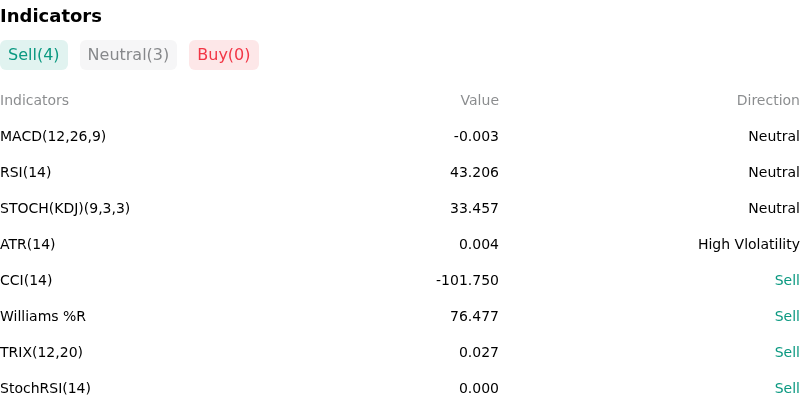
Technically, NZD/USD (NZDUSD) shows a MACD (12,26,9) value of -0.003, indicating a neutral signal. The RSI at 43.206 suggests neutral condition and the Williams %R at 76.477 suggests sell condition. Please monitor closely.
More details about NZD/USD (NZDUSD)
Recent Events and Risks:
- Disappointing Chinese Import Demand: China's latest trade balance data revealed August import growth of 28.2% year-over-year, underperforming market expectations of 30% [1.3.3]. Weakness in Chinese import expansion signals softer demand from New Zealand's primary trade partner, exerting direct downside pressure on the Kiwi.
- Dovish Tilt in RBNZ Policy Outlook: Despite raising the Official Cash Rate by 25 basis points to 2.75%, the Reserve Bank of New Zealand cautioned that the hike reduces the need for aggressive future tightening. With the RBNZ signaling a lower peak terminal rate than market expectations, diminishing yield differentials continue to drag on NZD/USD.
- Hawkish Fed Expectations and Strong US Labor Data: Following August US Nonfarm Payrolls of 162,000 versus the 56,000 forecast, markets have priced in an increased likelihood of a Federal Reserve rate hike. Hawkish comments from Fed officials regarding persistent inflation risk have anchored US Treasury yields higher, keeping the Greenback supported.
- Geopolitical Risk Aversion and Energy Shock Exposure: Escalating US-Iran geopolitical tensions in the Middle East and surging crude and diesel prices have sparked safe-haven demand for the US Dollar. Higher energy import bills exacerbate inflation and growth headwinds for New Zealand, increasing downside vulnerability for the currency.
Recommended Articles


