




USD/CAD reclaims 1.3700 amid weak Canadian employment data and firm USD demand
- USD/CAD extends gains for a third straight day, climbing above 1.3700.
- The Canadian Dollar weakens after February employment data delivers a sharp downside surprise.
- Geopolitical tensions and fading Fed rate-cut bets support the US Dollar.
USD/CAD extends its advance on Friday as the Canadian Dollar (CAD) weakens across the board after Canada’s latest employment report surprised to the downside, while firm US Dollar (USD) demand amid the ongoing US-Iran war adds further pressure on the Loonie.
At the time of writing, the pair trades near 1.3728, extending gains for a third consecutive day and reaching its highest level in more than a week.
Data released by Statistics Canada showed a sharp deterioration in hiring conditions. Net Change in Employment fell by 83.9K in February, far worse than expectations for a 10K increase and following a 24.8K decline in January. Meanwhile, the Unemployment Rate rose to 6.7% from 6.5% in January, coming in above the 6.6% market forecast.
The data points to growing slack in the labour market and could prompt the Bank of Canada (BoC) to reassess its monetary policy outlook, even as markets largely expect the central bank to keep interest rates on hold through 2026.
Meanwhile, elevated Oil prices could offer some support to the commodity-linked Canadian Dollar, as Canada is a major net exporter of crude. At the same time, higher energy prices could add to inflationary pressures, reinforcing the BoC’s cautious policy stance.
At its January monetary policy meeting, the central bank said policy remains focused on keeping inflation close to the 2% target while helping the economy navigate a period of structural adjustment, adding that the current policy rate “remains appropriate.” The BoC is scheduled to meet next week and is widely expected to leave interest rates unchanged.
Across the board, traders showed a muted reaction to the latest US economic data as markets remained primarily focused on escalating tensions in the Middle East.
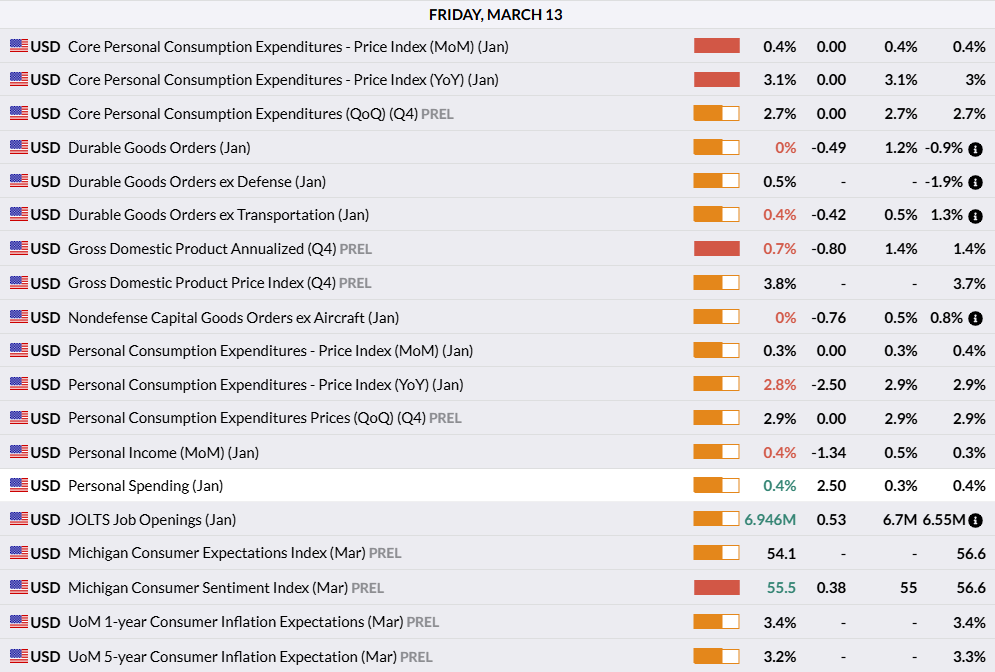
The geopolitical backdrop has kept the USD well supported, with investors reducing expectations for Federal Reserve (Fed) rate cuts amid renewed inflation risks, providing additional support to the Greenback.
The US Dollar Index (DXY), which tracks the Greenback’s value against a basket of six major currencies, trades around 100.30, its highest level since November 2025
Investors no longer fully price in even a single 25 basis point (bps) rate cut in 2026, a sharp change from earlier expectations. Before the conflict intensified, markets had been pricing in at least two Fed rate cuts this year.
US Dollar FAQs
The US Dollar (USD) is the official currency of the United States of America, and the ‘de facto’ currency of a significant number of other countries where it is found in circulation alongside local notes. It is the most heavily traded currency in the world, accounting for over 88% of all global foreign exchange turnover, or an average of $6.6 trillion in transactions per day, according to data from 2022. Following the second world war, the USD took over from the British Pound as the world’s reserve currency. For most of its history, the US Dollar was backed by Gold, until the Bretton Woods Agreement in 1971 when the Gold Standard went away.
The most important single factor impacting on the value of the US Dollar is monetary policy, which is shaped by the Federal Reserve (Fed). The Fed has two mandates: to achieve price stability (control inflation) and foster full employment. Its primary tool to achieve these two goals is by adjusting interest rates. When prices are rising too quickly and inflation is above the Fed’s 2% target, the Fed will raise rates, which helps the USD value. When inflation falls below 2% or the Unemployment Rate is too high, the Fed may lower interest rates, which weighs on the Greenback.
In extreme situations, the Federal Reserve can also print more Dollars and enact quantitative easing (QE). QE is the process by which the Fed substantially increases the flow of credit in a stuck financial system. It is a non-standard policy measure used when credit has dried up because banks will not lend to each other (out of the fear of counterparty default). It is a last resort when simply lowering interest rates is unlikely to achieve the necessary result. It was the Fed’s weapon of choice to combat the credit crunch that occurred during the Great Financial Crisis in 2008. It involves the Fed printing more Dollars and using them to buy US government bonds predominantly from financial institutions. QE usually leads to a weaker US Dollar.
Quantitative tightening (QT) is the reverse process whereby the Federal Reserve stops buying bonds from financial institutions and does not reinvest the principal from the bonds it holds maturing in new purchases. It is usually positive for the US Dollar.
Recommended Articles


