


SpaceX Stock Fell to Its Lowest Level Since August After the Midterms. Is It Time to Buy?
Key Points
Democrats in charge of key states and the federal legislature could curb the AI build-out at the center of SpaceX's growth.
There are a lot of risks that could prevent SpaceX from growing revenue as much as expected and sustaining it.
- 10 stocks we like better than Space Exploration Technologies ›
Elon Musk probably isn't too happy with the midterm election outcomes. The world's wealthiest man donated more than $445 million to Republican candidates and political action committees this year. That includes more than $200 million in Texas, where his companies Space Exploration Technologies (NASDAQ: SPCX) and Tesla are headquartered. With Democrats taking control of the U.S. House and Senate as well as the governorship and House in Texas, Musk's companies could face some additional regulatory hurdles going forward.
It shouldn't be too surprising that both stocks saw their share prices fall in the aftermath of the election. SpaceX shares fell below their IPO price from June and now trade at their lowest level since August. Is it time to buy?
Missed AI’s "Act 1"? Act 2 Could Be 15x Bigger. Most investors think they missed the AI boat because they didn't buy Nvidia in 2005. But according to our analysts, we’re only at the end of "Act 1"—the R&D phase. "Act 2" is the global rollout. Continue »
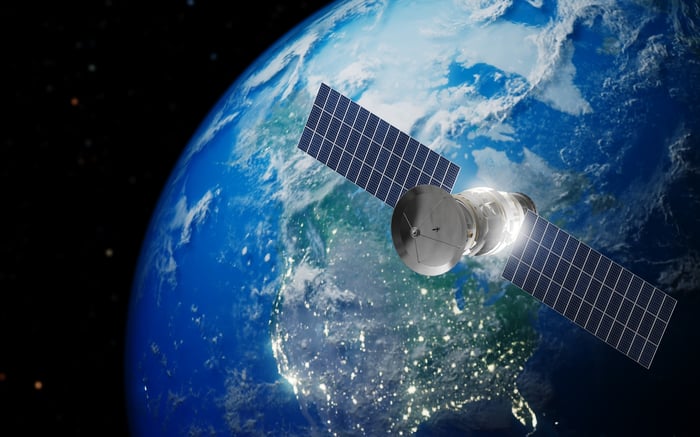
Image source: Getty Images.
Just another risk for SpaceX
The election brought a significant potential risk to SpaceX to the forefront: regulations slowing its development across its satellite communication or AI businesses could negatively impact the company's growth. Currently, SpaceX's biggest growth driver is selling AI infrastructure to third parties, including Anthropic and Alphabet.
Democrats, including Texas governor-elect Gina Hinojosa, have supported AI data center moratoriums as they work out details to mitigate potential negative impacts on the environment and utility prices for citizens. That would put a wrench in SpaceX's plans to rapidly expand its data center capacity in 2027 and 2028. Musk said he plans to bring 10 gigawatts of compute capacity online by the end of 2027 during SpaceX's third-quarter earnings call.
That's a rapid deployment of compute capacity, and it will require everything to go smoothly to achieve it. That means any hurdles presented by any of the government bodies it has to work with -- local, state, or federal -- could lead SpaceX to miss that mark. This is part of the reason why Musk is keen on using SpaceX's launch and satellite technology to deploy orbital data centers. Fewer regulatory hurdles mean fewer unexpected setbacks.
That said, orbital data centers rely on technology that has yet to be proven out. The key to making space-based compute economically viable is SpaceX's Starship, which has the potential to reduce launch costs by an order of magnitude relative to the company's Falcon 9 rockets in use today. Starship is designed to be fully reusable, which also means less downtime between launches, enabling rapid deployment of both communication and compute satellites. However, the project has yet to demonstrate scalable reusability, and remains in the testing phase, so SpaceX's compute is stuck on land for now.
Challenges building new data centers isn't the only risk for SpaceX. It has tremendous customer concentration risk. Anthropic accounted for more than a third of its sales last quarter. More importantly, SpaceX's contracts with Anthropic, Alphabet, and all of its other compute customers are cancellable with 90 days' notice. SpaceX is benefiting from a severe supply shortage in compute capacity. The election results actually help in that regard, increasing the likelihood that the shortage lasts longer. But SpaceX could find it hard to maintain its customer base and per-GW compute rate as supply constraints ease.
SpaceX is also pursuing a wireless service build-out, using its Starlink satellites as a backbone for internet service and wireless spectrum for direct-to-device communication. Still, it'll need to spend tens of billions of dollars building out a terrestrial network to offer service comparable to the major wireless carriers unless it can strike a deal to use one of their 5G networks. It's a very capital-intensive business, but it doesn't have nearly as high returns on capital spending as its AI build-out.
All of this is to say there are a lot of risks surrounding the future of SpaceX.
Are the risks priced in?
While Musk may throw out projections like annual recurring revenue exceeding $500 billion by the end of next year, those forecasts are far from certain. After all, Musk has been known to over promise.
As things stand, the stock trades at 51 times its trailing sales. With an enterprise value of nearly $1.8 trillion, even after the recent sell-off, investors are expecting a huge jump in revenue. More importantly, they expect the rapid growth in revenue to be sustainable, but there's significant risk that it's not, considering much of its growth stems from taking advantage of a current supply shortage. SpaceX is looking like it's much more cyclical than investors appear to be willing to admit.
That's to say, the stock still doesn't trade at a price that discounts the potential revenue growth for all the risks involved in the continued growth of the business. While the company houses some of the most advanced technology in the world and has demonstrated unique capabilities of building compute capacity, the stock still looks expensive.
Should you buy stock in Space Exploration Technologies right now?
Before you buy stock in Space Exploration Technologies, consider this:
The Motley Fool Stock Advisor analyst team just identified what they believe are the 10 best stocks for investors to buy now… and Space Exploration Technologies wasn’t one of them. The 10 stocks that made the cut could produce monster returns in the coming years.
Consider when Netflix made this list on December 17, 2004... if you invested $1,000 at the time of our recommendation, you’d have $341,966!* Or when Nvidia made this list on April 15, 2005... if you invested $1,000 at the time of our recommendation, you’d have $1,146,819!*
Now, it’s worth noting Stock Advisor’s total average return is 852% — a market-crushing outperformance compared to 203% for the S&P 500. Don't miss the latest top 10 list, available with Stock Advisor, and join an investing community built by individual investors for individual investors.
See the 10 stocks »
*Stock Advisor returns as of November 9, 2026.
Adam Levy has positions in Alphabet. The Motley Fool has positions in and recommends Alphabet and Tesla. The Motley Fool recommends Space Exploration Technologies. The Motley Fool has a disclosure policy.
Recommended Articles


