


The Fed Is Suddenly on Hold. When Could It Start Hiking Interest Rates Again?
Key Points
Despite elevated inflation, the Fed is moving slowly on rate hikes, which is good for stocks.
Futures markets currently assign a 76% chance of a quarter-point hike at the December FOMC meeting.
- Motley Fool Issues Rare "Total Conviction" Buy Alert ›
The Federal Open Market Committee (FOMC), the Federal Reserve's monetary policy committee, met last week and opted to maintain the target range for the federal funds rate at 3.75% to 4%. That is, it didn't raise or lower the rate this month after hiking it a quarter percentage point in September.
After that September hike, many economists and Fed watchers expected a series of further hikes to combat elevated inflation, which remained at 3.7% year over year in September, well above the Fed's 2% target rate and an acceleration from 3.4% in August.
Missed Nvidia in 2009? This Rare Signal Is Flashing Again. In 2009, a "Double Down" signal flashed for a little-known chipmaker called Nvidia. For the first time in years, that same "Total Conviction" signal is flashing for a company 1/100th the size of Nvidia. Continue »
In its statement from the October meeting, the committee said that while inflation remains elevated, it wants to gather more information before taking further action. It also mentioned elevated uncertainty due to geopolitical events, which almost certainly refers to the war in the Persian Gulf and its impact on oil prices.
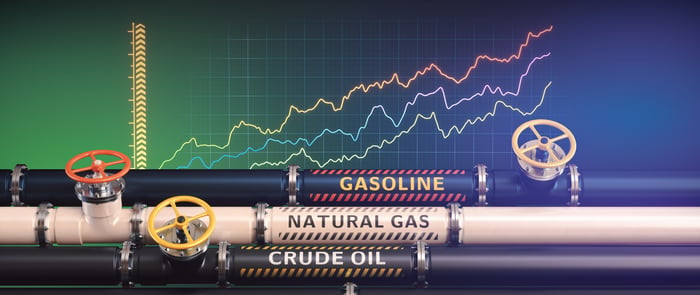
Image source: Getty Images.
A December rate hike looks increasingly likely
When might the Fed resume its rate hikes?
I firmly believe it will be at the last FOMC meeting of this year, on Dec. 8-9. Fed Chair Kevin Warsh and most of the rest of the FOMC seem to want to raise interest rates gradually to avoid disrupting the labor market, economic growth, and financial markets.
Futures markets seem to agree with me. They currently assign a 76% chance of a quarter-point hike at that meeting. And they put the odds of at least one more rate hike next year at 76.5%, with a decent chance -- about 43% -- of two or more hikes in 2027.
So, while the Fed is on hold this month, it looks like a "hawkish hold," as it is definitely leaning toward a rate hike as its next move rather than a rate cut. The two committee members who dissented from the majority and called for a rate hike in October point to a committee bent on raising rates to mitigate inflation.
That's important for financial markets, as is the pace of future Fed hikes.
Research by Charles Schwab (NYSE: SCHW) and others shows that when the Fed goes slow on rate hikes, the stock market performs much better than when it hurries its rate-hiking schedule. According to Schwab, "history suggests slower Fed tightening tends to support stronger market returns and firmer economic growth, while faster hikes typically deepen drawdowns."
I've been watching and listening closely to Warsh since he took the helm of the central bank back in May of this year, and he looks like a gradualist to me. That's a very good thing for investors.
Missed Nvidia in 2009? This Rare Signal Is Flashing Again
In 2009, a "Double Down" signal flashed for a little-known chipmaker called Nvidia. If you’d invested $5,000 then, you’d be sitting on $2,660,110 today.*
Now, for the first time in years, that same "Total Conviction" signal is flashing for a company 1/100th the size of Nvidia. It’s a key player in the $1.8 trillion space race, and with the stock recently sitting 20% off its highs, the window to get in early is closing fast.
Continue »
*Stock Advisor returns as of November 2, 2026.
Charles Schwab is an advertising partner of Motley Fool Money. Matthew Benjamin has no position in any of the stocks mentioned. The Motley Fool recommends Charles Schwab and recommends the following options: short September 2026 $95 calls on Charles Schwab. The Motley Fool has a disclosure policy.
Recommended Articles


