


Cameco Stock Is Down 36% From Its All-Time High. Here's What Needs to Happen to Make It a Buy
Key Points
Shares of the uranium producer are down despite strong uranium prices and positive sector trends.
The second-quarter earnings disappointed, but management maintains optimistic full-year guidance.
- 10 stocks we like better than Cameco ›
Shares of uranium miner Cameco (NYSE: CCJ) are down nearly 26% over the last six months -- and 36% off their all-time high. At the same time, uranium trades at a price that, outside of a few temporary spikes, it has never traded at previously.
So why is the premier nuclear company's stock performing so badly, and is this a buying opportunity?
Missed Nvidia in 2009? This Rare Signal Is Flashing Again. In 2009, a "Double Down" signal flashed for a little-known chipmaker called Nvidia. For the first time in years, that same "Total Conviction" signal is flashing for a company 1/100th the size of Nvidia. Continue »
Tailwinds and headwinds
The end market environment is excellent for Cameco. There's no shortage of interest in investing in small modular reactors (SMRs), and hyperscalers continue investing in nuclear power to ensure a reliable long-term supply for their artificial intelligence data centers.
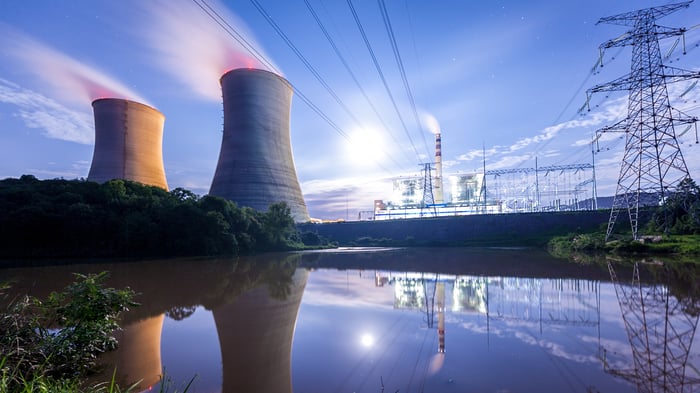
Image source: Getty Images.
Moreover, the upcoming initial public offering of Westinghouse Electric (a nuclear power technology and services provider in which Cameco owns a 49% stake) will release value for Cameco shareholders and give the company access to liquidity should it ever need it.
As for the rising price of uranium, back in July's second-quarter earnings, management raised its expectation for full-year average realized price in its uranium segment (its largest earnings generator) to a range of 91 to 96 Canadian dollars per pound, from a range of CA$85 to CA$89 per pound.
While all of this is good news, the stock's underperformance stems from a perceived failure to capitalize on its environment following the release of a disappointing second-quarter earnings report. Even worse, the declines were across all three segments.
|
Segment |
Adjusted EBITDA Second Quarter 2025 |
Adjusted EBITDA Second Quarter 2026 |
Change |
|---|---|---|---|
|
Uranium |
CA$352 million |
CA$252 million |
(CA$100 million) |
|
Fuel Services |
CA$57 million |
CA$42 million |
(CA$15 million) |
|
Westinghouse (Cameco Share) |
CA$126 million |
(CA$10 million) |
(CA$136 million) |
Data source: Cameco presentations. EBITDA is earnings before interest, taxation, depreciation, and amortization.
Guidance remains good
That said, and somewhat confusingly, management's updated full-year guidance implies it's still on track for a strong year despite the weak second quarter. Starting with Westinghouse, management maintained guidance for full-year EBITDA of $370 million to $430 million.
In the uranium segment, management maintained full-year production guidance of 19.5 million pounds to 21.5 million pounds and delivery volumes of 29 million pounds to 32 million pounds. I've already noted that it raised estimates for an average realized price of uranium in 2026 by as much as CA$6.50, and even though it also raised average uranium unit cost of sales full-year guidance by as much as CA$2.50 to a new range of CA$63 to CA$67.50, it still implies an improving spread.
Finally, in fuel services, management increased the revenue guidance from CA$590 million to CA$630 million, to a new range of CA$610 million to CA$650 million.
With these improvements to the underlying guidance in mind, it appears likely that, provided Cameco maintains this guidance and delivers third-quarter earnings that bolster confidence in the company's ability to do so, the stock has excellent recovery potential.
What Cameco needs to do to convince investors
In the uranium segment, production volume declined year over year to 3.9 million pounds, with "Spring road conditions" causing "temporary unplanned operational disruptions" and "operational challenges that had Cigar Lake production suspended for a couple of weeks," according to CEO Timothy Gitzel on the earnings call. Still, Gitzel claimed the company was able to overcome these issues "with no impact on annual outlook."
Cameco needs to demonstrate it is on track for its full-year guidance, and with 10.1 million pounds in the first six months, it does appear to be, despite the weak second-quarter production number.
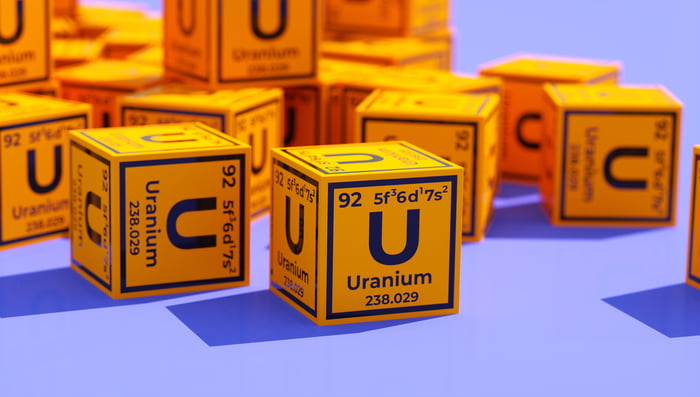
Image source: Getty Images.
The issue at Westinghouse appears to be timing and a tough comparison to a bumper quarter in 2025, driven by a large revenue influx from a reactor project in the Czech Republic. Here, investors will again be looking for a recovery.
As for fuel services, management noted that sales volumes were weaker as customers chose when to receive deliveries, resulting in lumpiness.
A stock to buy
Frankly, a lot of factors seemed to come together to give Cameco a weak-looking second quarter, and many of them need to turn around in the third quarter. Still, the end-market backdrop and pricing remain constructive, and the dip in the share price sets the stock up to outperform, given solid third-quarter earnings. That's a favorable scenario for investors.
Should you buy stock in Cameco right now?
Before you buy stock in Cameco, consider this:
The Motley Fool Stock Advisor analyst team just identified what they believe are the 10 best stocks for investors to buy now… and Cameco wasn’t one of them. The 10 stocks that made the cut could produce monster returns in the coming years.
Consider when Netflix made this list on December 17, 2004... if you invested $1,000 at the time of our recommendation, you’d have $391,581!* Or when Nvidia made this list on April 15, 2005... if you invested $1,000 at the time of our recommendation, you’d have $1,334,780!*
Now, it’s worth noting Stock Advisor’s total average return is 936% — a market-crushing outperformance compared to 213% for the S&P 500. Don't miss the latest top 10 list, available with Stock Advisor, and join an investing community built by individual investors for individual investors.
See the 10 stocks »
*Stock Advisor returns as of October 16, 2026.
Lee Samaha has no position in any of the stocks mentioned. The Motley Fool has positions in and recommends Cameco. The Motley Fool has a disclosure policy.
Recommended Articles


