


June Non-Farm Payrolls Preview: Did White House Economic Advisor Give an Early Hint? How Will US Stocks, Dollar and Gold React?

TradingKey - As June draws to a close, market attention is shifting to the upcoming U.S. June nonfarm payrolls report to be released this Thursday (July 2). This month's nonfarm payrolls data has been moved up to Thursday because U.S. markets will be closed on Friday (July 3) for the Independence Day holiday.
Based on market expectations, June employment is highly likely to cool down but not stall. BLS data showed that nonfarm payrolls increased by 172,000 in May, with the unemployment rate holding steady at 4.3%, average hourly earnings rising 0.3% month-on-month and 3.4% year-on-year, and March and April figures revised upward by a combined 93,000. In contrast, MarketWatch cited Gregory Daco, chief economist at EY-Parthenon, who projects that June nonfarm payrolls may increase by 107,000, with the unemployment rate rising to 4.4%. Kiplinger reported that economists generally expect job growth of about 100,000, with the unemployment rate remaining at 4.3%. Market expectation data indicates that employment will transition from running hot back to a moderate pace.
The real focal point of this nonfarm payrolls report is whether the Federal Reserve will alter its interest rate outlook as a result. At the June meeting, the Fed—under Warsh's leadership—kept the target range for the federal funds rate unchanged at 3.50% to 3.75%. However, inflation and oil price shocks in the Middle East have kept the market pricing in a rate hike this year. As long as employment does not deteriorate significantly, it will be more difficult for the Fed to pivot toward easing. Conversely, if nonfarm payrolls beat expectations again, the market may instead resume betting on a more hawkish path.
Furthermore, it is worth noting that White House economic adviser Hassett stated on a CNBC program that, based on 'all the signs we are seeing right now,' Thursday's jobs report is expected to show 'another strong number.' He also emphasized that if energy prices pull back as disruptions related to the Strait of Hormuz ease, headline inflation could cool significantly. Meanwhile, AI investment, manufacturing reshoring, and domestic energy production continue to support U.S. economic momentum.
How did US stocks, the US dollar, and gold react in the short term following the release of the non-farm payrolls data?
For US equities, the ideal scenario would be non-farm payroll growth of around 100,000 to 120,000, a stable unemployment rate, and no acceleration in wage growth. This would reinforce soft-landing expectations, supporting risk appetite for tech and high-valuation growth stocks, and providing support for the Nasdaq to continue its upward trajectory. If non-farm payrolls significantly exceed 150,000 and wage growth continues to heat up, tech and high-valuation growth stocks will face downward pressure as rising interest rates compress valuations. If non-farm payrolls fall significantly below 50,000 or the unemployment rate rises above 4.5%, the market might initially bet on rate cuts but will subsequently shift to worrying about downward revisions to earnings, which would instead weigh on US equities.
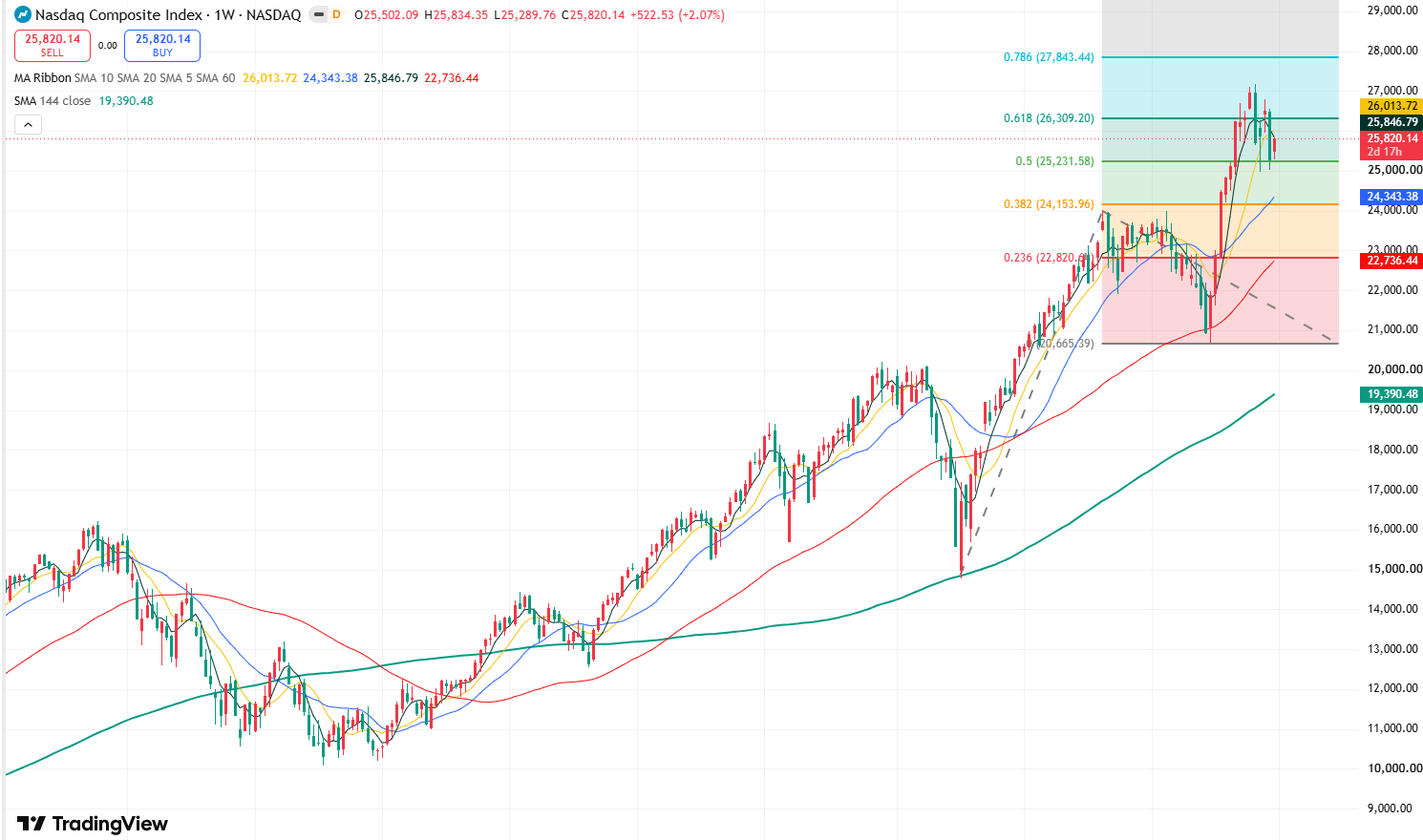
Nasdaq Composite Index Weekly Chart, Source: TradingView
For the US dollar, its short-term direction will be highly dependent on whether the non-farm payroll (NFP) report alters the Federal Reserve's path. A strong NFP print typically pushes Treasury yields and the US Dollar Index higher; particularly with the Fed still guarding against inflation, the dollar would receive support from interest rate differentials. If the data meets expectations, the dollar may consolidate within a range. If employment weakens significantly, the dollar will face pullback pressure driven by rising expectations of rate cuts.
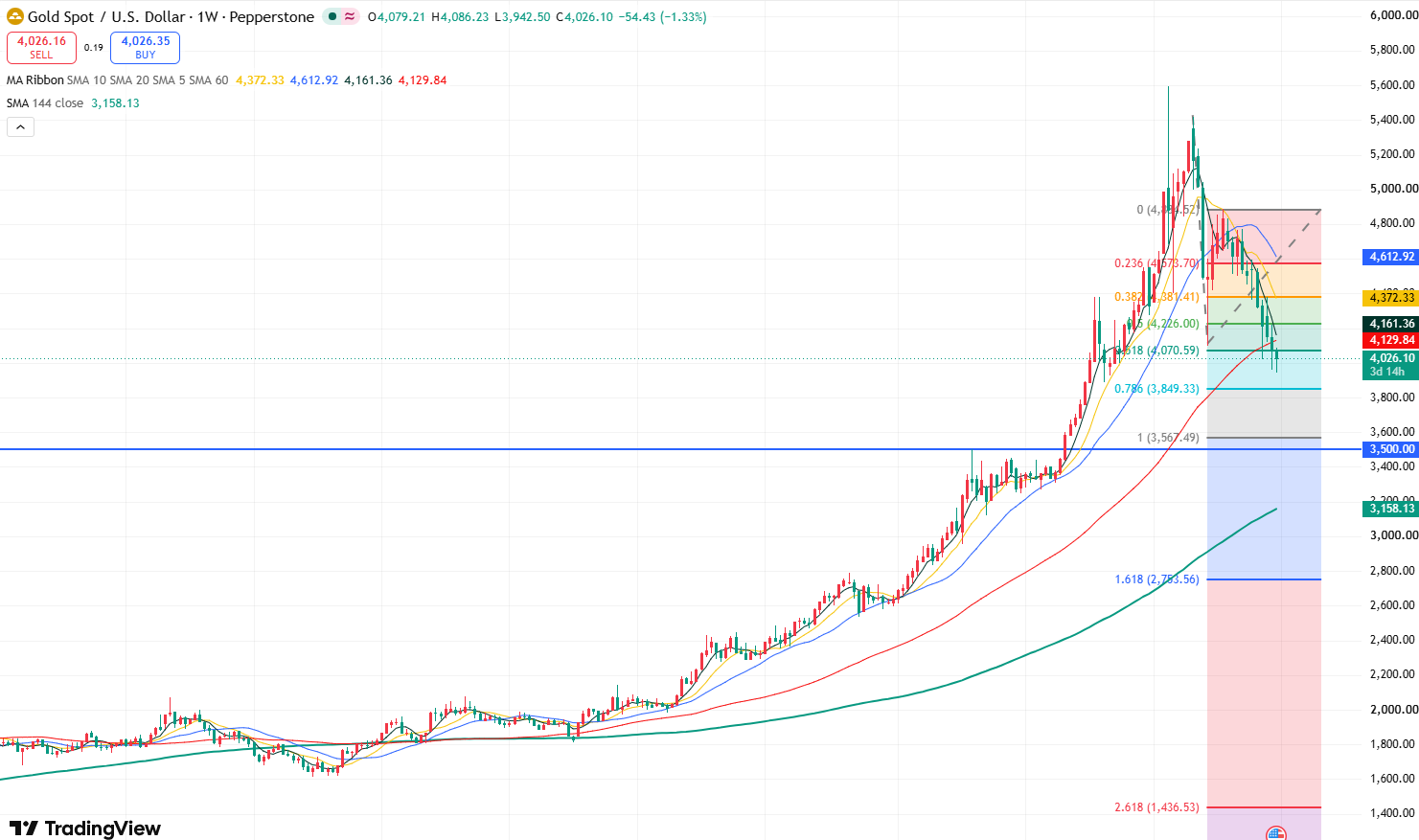
Gold Price Weekly Chart, Source: TradingView
For gold ( XAUUSD ), if the June NFP is stronger than expected, gold may continue to face dual pressures. On one hand, strong employment data will heighten expectations that the Fed will maintain high interest rates or even hike rates. On the other hand, a stronger US dollar will increase the cost of purchasing gold for non-USD investors, further dragging down gold prices and potentially opening up downside room toward $3,500.
If the non-farm payrolls slow moderately, gold may initiate a corrective rebound. Only if the NFP is significantly weak, the unemployment rate rises more than expected, and the dollar and Treasury yields drop in tandem, will gold be able to regain stronger upward momentum. It would first test the resistance at the $4,070 mark; if it consolidates above this level, gold prices will open up room for further gains toward $4,200.
Read more
* The content presented above, whether from a third party or not, is considered as general advice only. This article should not be construed as containing investment advice, investment recommendations, an offer of or solicitation for any transactions in financial instruments.


