




U.S. Government Shutdown: If It Happens, Economic Bad News Could Be Good News for Stocks
TradingKey - If the U.S. government experiences a shutdown, it could lead the Federal Reserve to stick with its current pace of interest rate cuts, or even accelerate them if the shutdown lasts longer and causes deeper economic disruptions. With a U.S. recession highly unlikely, these rate cuts are seen as preventive, a type that historically has driven U.S. stock market gains. Thus, supported by easing monetary policy, economic challenges stemming from a shutdown are likely to translate into positive outcomes for stocks, turning bad news for the economy into good news for the market.
Historically, there have been five U.S. government shutdowns that disrupted operations for more than one business day, and in each instance, U.S. stocks recorded gains during the shutdown period. This suggests that the direct negative impact of a government shutdown on the stock market is relatively limited. The dominant factor driving market performance is investors’ heightened expectations for looser monetary policy from the Federal Reserve, spurred by concerns over an economic slowdown. These expectations of monetary easing tend to outweigh the negative effects of economic slowdown, leading to positive stock market returns. Based on historical analysis and current economic conditions, we believe that even if a U.S. government shutdown occurs, there remains potential for U.S. stocks to rise.
Source: Mitrade
Main Body
U.S. federal government funding is set to run out at midnight on 30 September 2025. If the two parties fail to reach an agreement by then, a partial government shutdown will begin on 1 October, leaving hundreds of thousands of federal employees furloughed without pay. The primary sticking point is that Republicans generally favour maintaining current funding levels until Thanksgiving, while Democrats seek to reverse Medicaid cuts and extend Affordable Care Act subsidies. Both sides remain at an impasse.
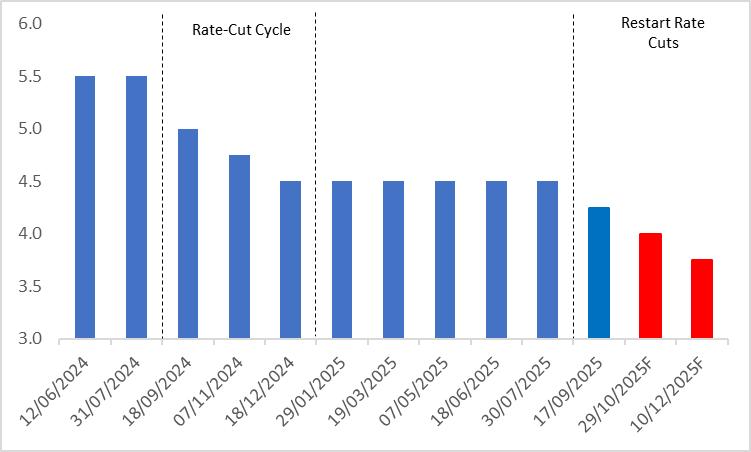
Should a U.S. government shutdown occur, it will inevitably have some negative impact on the economy. Although the furloughing of hundreds of thousands of federal employees without pay won’t directly affect key labour market indicators like the unemployment rate or nonfarm payrolls, reduced income will likely curb consumer spending to some extent, slowing economic growth. However, with inflation currently under control, a weakening economic outlook would likely prompt the Federal Reserve to maintain its current rate-cutting trajectory—projecting two additional 25-basis-point cuts this year (Figure 1). If the shutdown persists for an extended period and causes significant disruptions, the Fed may even accelerate its pace of rate cuts.
Figure 1: Fed Policy Rate (%)
Source: Refinitiv, TradingKey
Regarding the stock market, given the very low likelihood of a U.S. economic recession, the current round of interest rate cuts is considered a typical preventive measure. Historically, U.S. stocks have generally risen during periods of preventive rate cuts. In other words, as long as the economy avoids a recession, supportive monetary policy is likely to transform economic bad news into positive outcomes for the stock market.
It’s worth noting that, historically, there have been five U.S. government shutdowns lasting more than one business day, and in each case, U.S. stocks recorded gains during the shutdown period (Figures 2 and 3). This indicates that the direct negative impact of a government shutdown on the stock market is relatively limited. The primary driver of market performance is investors’ growing expectations for looser Federal Reserve monetary policy, fuelled by concerns over an economic slowdown. These expectations of monetary easing typically outweigh the effects of economic slowdown, leading to positive stock market returns. Based on historical analysis and current economic conditions, we believe that even if a U.S. government shutdown occurs, there remains potential for U.S. stocks to rise.
Figure 2: U.S. Stock Market Returns During Government Shutdown Periods Lasting More Than One Day in U.S. History

Source: Refinitiv, TradingKey
Figure 3: Performance of U.S. Stocks During the U.S. Government Shutdown
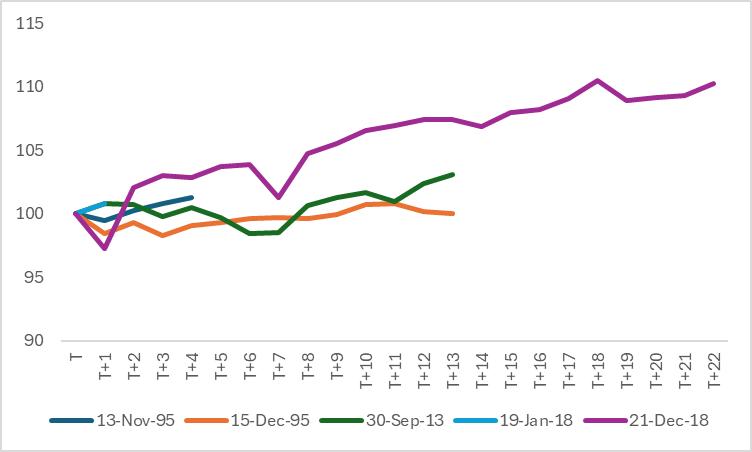
Note: The S&P 500 rebased = 100 on the shutdown day
Source: Refinitiv, TradingKey

Get Started
Recommended Articles


