




How the Iran War Is Driving the Fulfillment of the Benner Cycle Prophecy
In 1875, Samuel Benner, an Ohio farmer, published a book forecasting economic cycles with boom–bust milestones extending to 2059. Nearly 150 years later, on February 28, 2026, when US–Israel missiles struck Iran, global markets immediately shook and began aligning with the timeline Benner had outlined.
An unusual signal has emerged as the likelihood of the Federal Reserve (Fed) raising interest rates increases. This development makes 2026 even more unpredictable.
Benner Cycle: 2026 Is “The Time to Sell”
According to the Benner Cycle, 2026 is “the time to sell.” A major bear cycle could last up to six years and form a bottom in 2032.
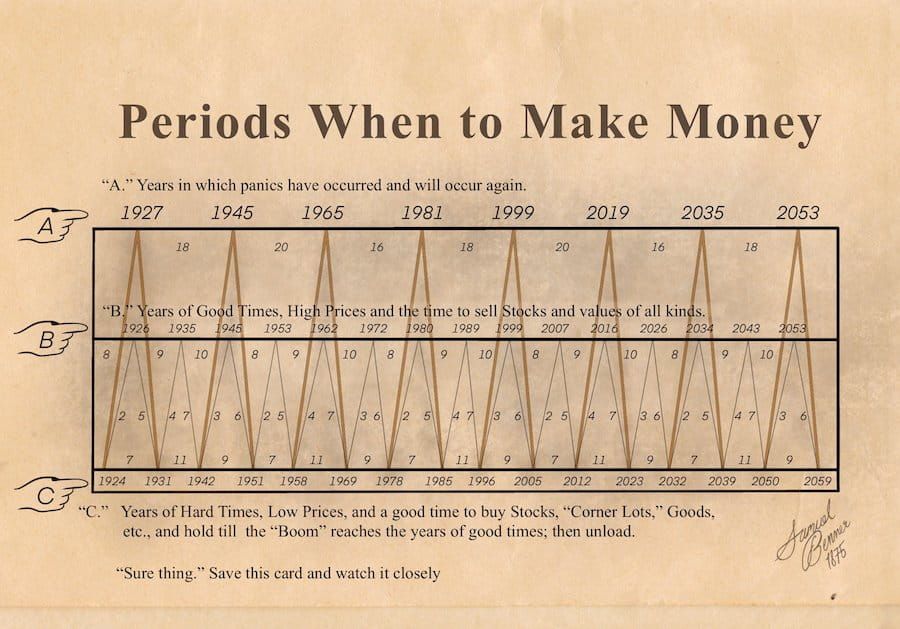 Benner Cycle. Source: Business Prophecies of the Future Ups and Downs in Prices
The US–Israel military strike on Iran has sent oil prices soaring. New arguments from analysts now support the idea that early 2026 is an ideal period for investors to sell assets to avoid an imminent downturn, in line with Benner’s prophecy.
According to Professor Steve Keen, bombing a major oil producer drives up gasoline prices and raises input costs across the entire global supply chain. Businesses must absorb the costs, pass them on to consumers, or shut down. Wages stagnate while living costs surge. Governments print money to finance war.
“That is warflation,” Steve Keen stated.
The surge in oil prices has fueled concerns about rising inflation and is pushing central banks to act. History shows that oil price shocks typically affect inflation within 5 to 6 months and often prompt follow-up actions by the Federal Reserve.
Meanwhile, anomalies are appearing. Prediction markets on Polymarket now price the probability of a Fed rate hike in 2026 at 19%.
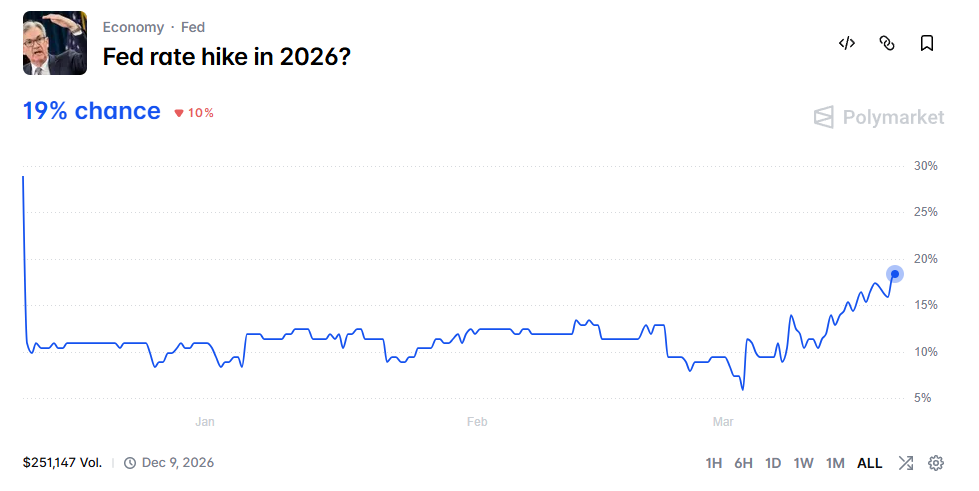 Odds of a Rate Hike in 2026. Source: Polymarket.
Recently, CNBC reported that the Atlanta Fed’s Market Probability Tracker shows the odds of a rate hike at 19.2%, while the chances of a rate cut stand at 17.3%. The report noted that something unusual is happening.
History also shows that Fed rate hikes directly triggered the collapse of the crypto market in 2022 and helped form the market bottom in 2023. A bull market then extended into 2026. These milestones closely match the Benner Cycle forecast.
Samuel Benner could not have foreseen the war. However, whether the Benner Cycle fully plays out in 2026 may depend on how long the Iran conflict lasts and how far it escalates.
Recommended Articles


