




AUD/USD (AUDUSD) Volatility Intensified on Sep 10: Factors to Watch
AUD/USD (AUDUSD) is down 0.53% at Sep 10 08:25(ET), now at $0.71777, with a 7-day down of 0.29%.
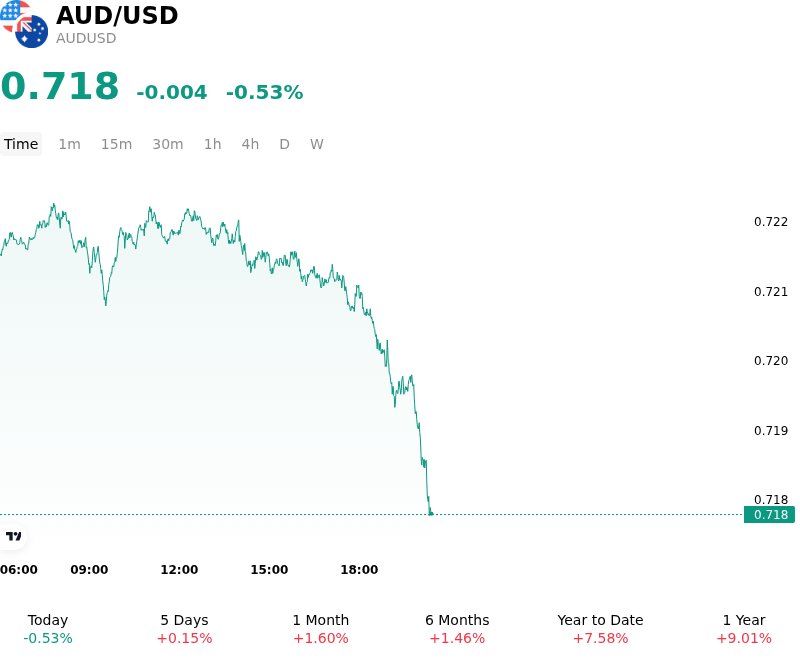
What is driving AUD/USD (AUDUSD)’s stock price down today?
The downward pressure on AUD/USD during the trading session was primarily driven by a retreat in global risk appetite alongside renewed institutional demand for the US dollar as markets repositioned ahead of key US inflation releases. Heightened geopolitical tensions in the Middle East and surging global energy prices sparked a risk-off impulse across international asset classes. As a pro-cyclical, high-beta currency closely tied to global growth sentiment and commodity demand, the Australian dollar underperformed as market participants reduced exposure to risk-sensitive assets.
On the quote side, the US dollar strengthened as investors recalibrated Federal Reserve policy expectations. Stronger economic data and hawkish rhetoric from Fed officials pushed market-implied probabilities of an upcoming rate hike higher, with traders favoring the dollar ahead of crucial US producer and consumer price inflation reports. Rising US Treasury yields reinforced short-term interest-rate differentials in favor of the dollar, driving capital flows toward US assets and prompting long-position liquidation in cyclical commodity currencies.
From a domestic perspective, the Australian dollar failed to capitalize on underlying hawkish messaging from the Reserve Bank of Australia. While RBA policymakers signaled that persistent inflation and resilient household spending might require further monetary tightening, these domestic considerations were eclipsed by broader global macro flows. Although elevated Australian bond yields and potential RBA policy tightening continue to offer medium-term structural support, AUD/USD remains highly sensitive to US inflation trajectory, energy price shocks, and shifts in broader global risk sentiment.
Technical Analysis of AUD/USD (AUDUSD)
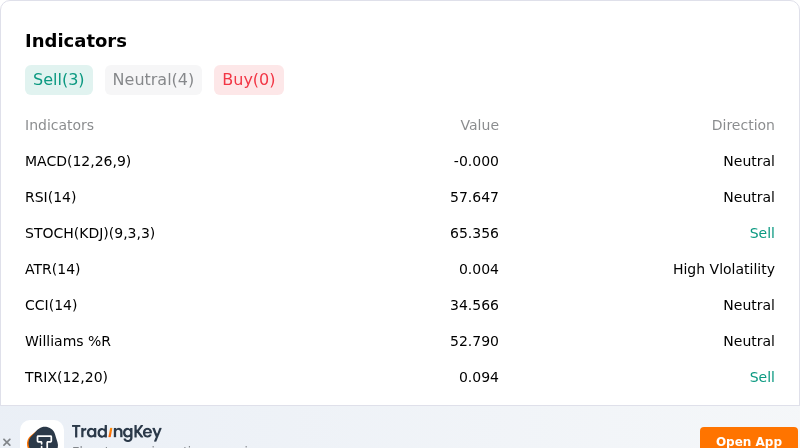
Technically, AUD/USD (AUDUSD) shows a MACD (12,26,9) value of -0.000, indicating a neutral signal. The RSI at 57.647 suggests neutral condition and the Williams %R at 52.790 suggests neutral condition. Please monitor closely.
More details about AUD/USD (AUDUSD)
Recent Events and Risks:
- US Yield Spikes and Hawkish Fed Repricing: Rising US Treasury yields, driven by recent US Treasury buyback announcements and market anticipation of accelerating wholesale and consumer inflation figures, have bolstered US Dollar demand, generating immediate downside risk for AUDUSD.
- Middle East Escalation and Risk-Off Energy Shocks: Heightened geopolitical hostilities near the Strait of Hormuz and surging crude oil prices have triggered broader risk-off sentiment across global asset classes, spurring safe-haven flows into the US Dollar while penalizing high-beta risk currencies.
- Chinese Demand Uncertainty and Metal Export Risks: Persistent weakness in China's property and fixed-asset investment sectors continues to threaten medium-term demand for Australia's primary bulk commodity exports, maintaining downside pressure on AUDUSD during periods of global growth apprehension.
- Technical Overextension and Rising Wedge Reversal: Price action stalling near the key 0.7220–0.7240 resistance boundary exhibits momentum exhaustion within a rising wedge structure, leaving the pair vulnerable to sharp intraday profit-taking toward underlying support near 0.7160.
Recommended Articles


