


Lilly Just Announced 3 Infectious Disease Acquisitions in 1 Day. Is This the Beginning of Its Post-Obesity Growth Strategy?
Key Points
Prevention could become Eli Lilly's next multibillion-dollar growth driver.
Antibiotic resistance is increasing demand for preventive vaccine solutions.
Management appears focused on long-term pipeline diversification.
- 10 stocks we like better than Eli Lilly ›
For the past several years, the market has associated Eli Lilly (NYSE: LLY) with one thing: obesity. Its blockbuster weight-loss drug Zepbound and diabetes treatment Mounjaro have transformed the company, helping drive annual revenue from $34.1 billion in 2023 to more than $65.2 billion in 2025.
But it would be foolish to ignore the elephant in the room: What's next after GLP-1 and obesity treatments? Lilly may have just provided part of the answer.
Will AI create the world's first trillionaire? Our team just released a report on the one little-known company, called an "Indispensable Monopoly" providing the critical technology Nvidia and Intel both need. Continue »
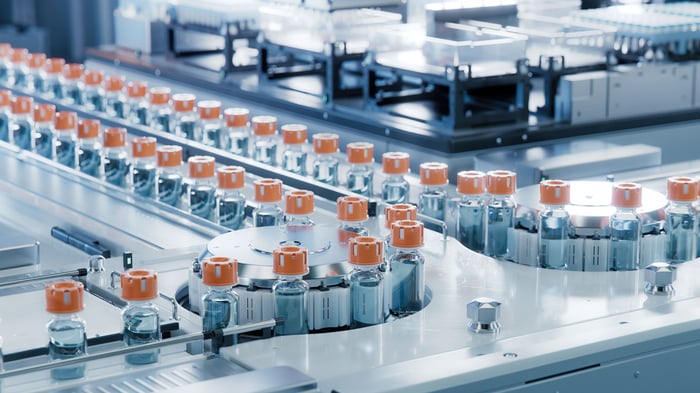
Image source: Getty Images.
The company recently announced three separate acquisitions on the same day, agreeing to acquire Curevo, LimmaTech Biologics, and Vaccine Company in a coordinated push into infectious disease prevention. The deals could ultimately cost Lilly more than $3.8 billion, including milestone payments.
A bet on prevention
The three acquisitions target very different infectious disease opportunities.
Cuervo
Curevo is developing amezosvatein, a next-generation shingles vaccine currently in phase 2 testing. In head-to-head studies, the vaccine reportedly matched the immune response of the GSK Shingrix vaccine (the current standard of care for shingles prevention) while reducing side effects such as fatigue, chills, and injection-site pain by more than 50%.
Now, Shingrix currently generates around $4.8 billion in annual sales, so even a relatively small share of that market could be meaningful. If Curevo's vaccine ultimately captured just 10% of the market, you'd be looking at around $480 million in annual sales.
LimmaTech
LimmaTech is developing vaccines against bacterial pathogens, including Staphylococcus aureus, gonorrhea, and chlamydia. These diseases are becoming increasingly difficult to treat as antimicrobial resistance continues to rise. The opportunity here could be quite significant.
For perspective, Merck's Gardasil (the pharma giant's HPV vaccine) generated more than $5.2 billion in sales in 2025. While it's far too early to project similar results for LimmaTech's programs, a successful vaccine against gonorrhea, chlamydia, or drug-resistant Staphylococcus aureus could potentially generate hundreds of millions to several billion dollars in annual revenue, particularly as antibiotic resistance becomes a growing global health concern.
Vaccine Company
Vaccine Company is developing vaccine technology to prevent viral infections, including those caused by the Epstein-Barr virus (EBV), which has been linked to multiple sclerosis and several cancers.
This may actually be the largest commercial opportunity of the three acquisitions. The reason is that EBV infects roughly 90% to 95% of adults worldwide and has been linked not only to infectious mononucleosis but also to multiple sclerosis, nasopharyngeal cancer, Hodgkin lymphoma, and several other cancers.
The multiple sclerosis market alone is already valued at more than $29 billion. Drugs such as Ocrevus and Kesimpta each produce billions in yearly revenue. If researchers ultimately prove that preventing EBV infection reduces the risk of developing MS, an effective EBV vaccine could address a disease burden worth tens of billions of dollars annually.
The obesity market won't grow forever
Lilly remains exceptionally well-positioned in obesity. Analysts still expect Zepbound and Mounjaro to generate tens of billions of dollars in annual revenue over the coming decade. Yet management understands a very real inconvenient truth: No pharmaceutical franchise lasts forever. Patent expirations eventually arrive. Competition emerges. New technologies disrupt old markets.
That's why Lilly has spent the past several years aggressively acquiring future growth platforms. In addition to these infectious disease deals, the company has recently acquired companies focused on gene editing, cardiovascular disease, inflammation, neuroscience, genetic medicine, and oncology.
The infectious disease acquisitions simply fit that pattern. Put simply, Lilly appears to be building entirely new growth engines that could generate revenue well beyond the obesity boom.
Prevention and profits
What makes these latest deals particularly interesting is that they focus on prevention. Historically, pharmaceutical companies have generated enormous revenue treating chronic diseases after they develop. Vaccines and preventive medicines can sometimes eliminate those diseases before they occur.
Lilly's scientific leadership explicitly highlighted growing evidence linking common infections to long-term conditions, including neurological disease, cancer, infertility, stroke, and dementia. The company also pointed to antimicrobial resistance as a growing global threat that could increase the value of vaccine-based prevention strategies.
Indeed, that's a very different investment thesis than obesity. Instead of helping patients manage chronic conditions, Lilly is investing in technologies designed to prevent some diseases from occurring in the first place. Whether these specific programs succeed remains uncertain. Most are still early-stage assets. But make no mistake: These acquisitions are not three isolated deals.
Lilly's obesity franchise may dominate headlines today. Yet management appears to be preparing for a future where the company's growth depends on a much broader portfolio of therapies, vaccines, and preventive medicines. The obesity boom made Lilly one of the most valuable healthcare companies in the world. These infectious disease acquisitions suggest management is already planning for what comes next.
Should you buy stock in Eli Lilly right now?
Before you buy stock in Eli Lilly, consider this:
The Motley Fool Stock Advisor analyst team just identified what they believe are the 10 best stocks for investors to buy now… and Eli Lilly wasn’t one of them. The 10 stocks that made the cut could produce monster returns in the coming years.
Consider when Netflix made this list on December 17, 2004... if you invested $1,000 at the time of our recommendation, you’d have $443,191!* Or when Nvidia made this list on April 15, 2005... if you invested $1,000 at the time of our recommendation, you’d have $1,258,838!*
Now, it’s worth noting Stock Advisor’s total average return is 941% — a market-crushing outperformance compared to 206% for the S&P 500. Don't miss the latest top 10 list, available with Stock Advisor, and join an investing community built by individual investors for individual investors.
See the 10 stocks »
*Stock Advisor returns as of June 8, 2026.
Jeff Siegel has no position in any of the stocks mentioned. The Motley Fool has positions in and recommends Eli Lilly and Merck. The Motley Fool recommends GSK. The Motley Fool has a disclosure policy.
Recommended Articles


