


Why Is Jamie Dimon Giving the SpaceX IPO the Hard Sell?
Key Points
SpaceX is set to be the biggest IPO in history, bringing in $75 billion.
Wall Street bankers like Jamie Dimon are making a big push to sell the stock, including to retail investors.
SpaceX is bending a number of rules as it goes public.
- 10 stocks we like better than JPMorgan Chase ›
The SpaceX IPO is shaping up to be one of the biggest events on Wall Street.
Elon Musk's space exploration, satellite internet, and AI company is aiming to raise $75 billion in the offering at a valuation of $1.75 trillion, making it one of the 10 most valuable companies in the U.S., ahead of even Tesla.
Will AI create the world's first trillionaire? Our team just released a report on the one little-known company, called an "Indispensable Monopoly" providing the critical technology Nvidia and Intel both need. Continue »
The IPO is also shaping to be a bonanza for Wall Street as 23 banks are reportedly participating in the offering led by Goldman Sachs and Morgan Stanley that is expected to yield underwriting fees of around $500 million.
Now, JPMorgan Chase (NYSE: JPM) CEO Jamie Dimon is apparently joining the roadshow as Dimon will speak at a special event on Thursday night, which will include SpaceX's COO Gwynne Shotwell and CFO Bret Johnson, to pitch the offering to the bank's high-net-worth clients and retail investors. Dimon has been pushing to leverage the bank's branch network of roughly 5,000 locations to support the offering. Bank of America is hosting a similar event with Shotwell and Johnson to pitch the stock to its clients.
Still, it's unusual for someone of Dimon's stature to peddle an IPO itself, and it shows both the gravity around such a massive offering and the importance to Wall Street for the event to be a success, especially with market valuations looking frothy and concerns about an AI bubble remaining as offerings from Anthropic and OpenAI wait in the wings.
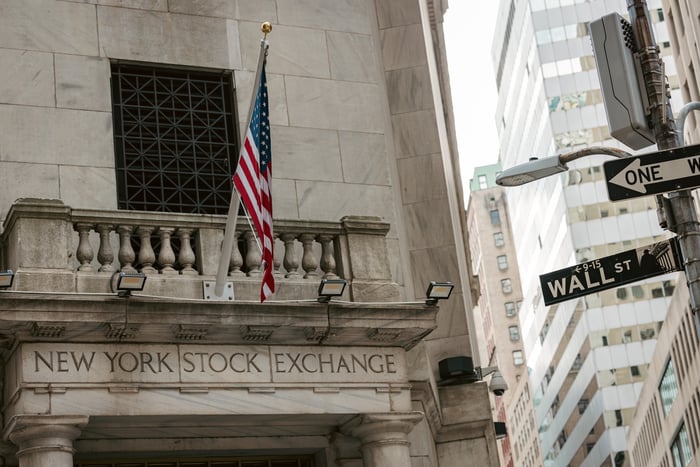
Image source: Getty Images.
Why Dimon is getting his hands dirty
The SpaceX IPO differs from the usual routine in a number of ways. First, Elon Musk and his management team have already set the price of the IPO at $135 a share, more than a week ahead of the expected debut. Typically, Wall Street banks carry out a price-discovery process that leads to a price range, and then a final listing price isn't decided until the day before it goes public.
The $135 share price, as well as the size of the offering, puts more pressure on Wall Street to find buyers for the IPO.
The scope of the offering also goes well beyond the typical pool of institutional IPO investors, so Wall Street bankers are trying to find new ones. No other IPO in history has raised more than $30 billion.
What it means for investors
SpaceX could have an exciting future, but if the company's current financials, which value the business at 100 times sales, weren't enough of a red flag, the unconventional IPO process should sound a warning as well.
SpaceX hasn't had a direct funding round since January 2023, when it was worth $137 billion. Since then, tender offers, allowing insiders to sell some shares, and the implied valuation of $1.25 trillion in its merger with xAI in February have pushed the valuation up.
Too many rules are being broken for the SpaceX IPO, however. Buyers usually get a say in pricing, but that's not happening. Indexes and index funds are adding SpaceX stock at Musk's demand, even though SpaceX doesn't meet multiple requirements of the S&P 500, including generally accepted accounting principles (GAAP) profit.
Jamie Dimon seems to be compelled by more than a payday here. The size of the SpaceX IPO makes it a pivotal moment for Wall Street, and with offerings from Anthropic and OpenAI due up later this year, it's key that SpaceX find sufficient demand.
However, overselling SpaceX could be a mistake.
The market will render a verdict soon enough, and investors may want to remember that some of the biggest IPOs in the past like Meta Platforms (then Facebook) and Uber were down sharply shortly after their debuts.
If Jamie Dimon and other top bankers are giving SpaceX the hard sell, it may be because the opportunity isn't good enough to sell itself.
Should you buy stock in JPMorgan Chase right now?
Before you buy stock in JPMorgan Chase, consider this:
The Motley Fool Stock Advisor analyst team just identified what they believe are the 10 best stocks for investors to buy now… and JPMorgan Chase wasn’t one of them. The 10 stocks that made the cut could produce monster returns in the coming years.
Consider when Netflix made this list on December 17, 2004... if you invested $1,000 at the time of our recommendation, you’d have $439,632!* Or when Nvidia made this list on April 15, 2005... if you invested $1,000 at the time of our recommendation, you’d have $1,316,532!*
Now, it’s worth noting Stock Advisor’s total average return is 959% — a market-crushing outperformance compared to 210% for the S&P 500. Don't miss the latest top 10 list, available with Stock Advisor, and join an investing community built by individual investors for individual investors.
See the 10 stocks »
*Stock Advisor returns as of June 5, 2026.
Bank of America is an advertising partner of Motley Fool Money. JPMorgan Chase is an advertising partner of Motley Fool Money. Jeremy Bowman has positions in Bank of America and Meta Platforms. The Motley Fool has positions in and recommends JPMorgan Chase, Meta Platforms, Tesla, and Uber Technologies. The Motley Fool has a disclosure policy.
Recommended Articles


