


Samsung Electronics Briefly Surpasses Meta, Tesla Intraday to Become World’s Ninth-Largest Company by Market Cap
TradingKey - During the Asian trading session on June 2, Samsung Electronics' intraday market capitalization once broke through $1.54 trillion, briefly surpassing Meta Platforms ( META) and Tesla ( TSLA ), rising to the ninth largest in the world before retreating. As of afternoon trading, Samsung's market cap stood at approximately $1.5 trillion, slightly below Meta ($1.524 trillion) and Tesla ($1.561 trillion), but remained steady around the 11th position globally.
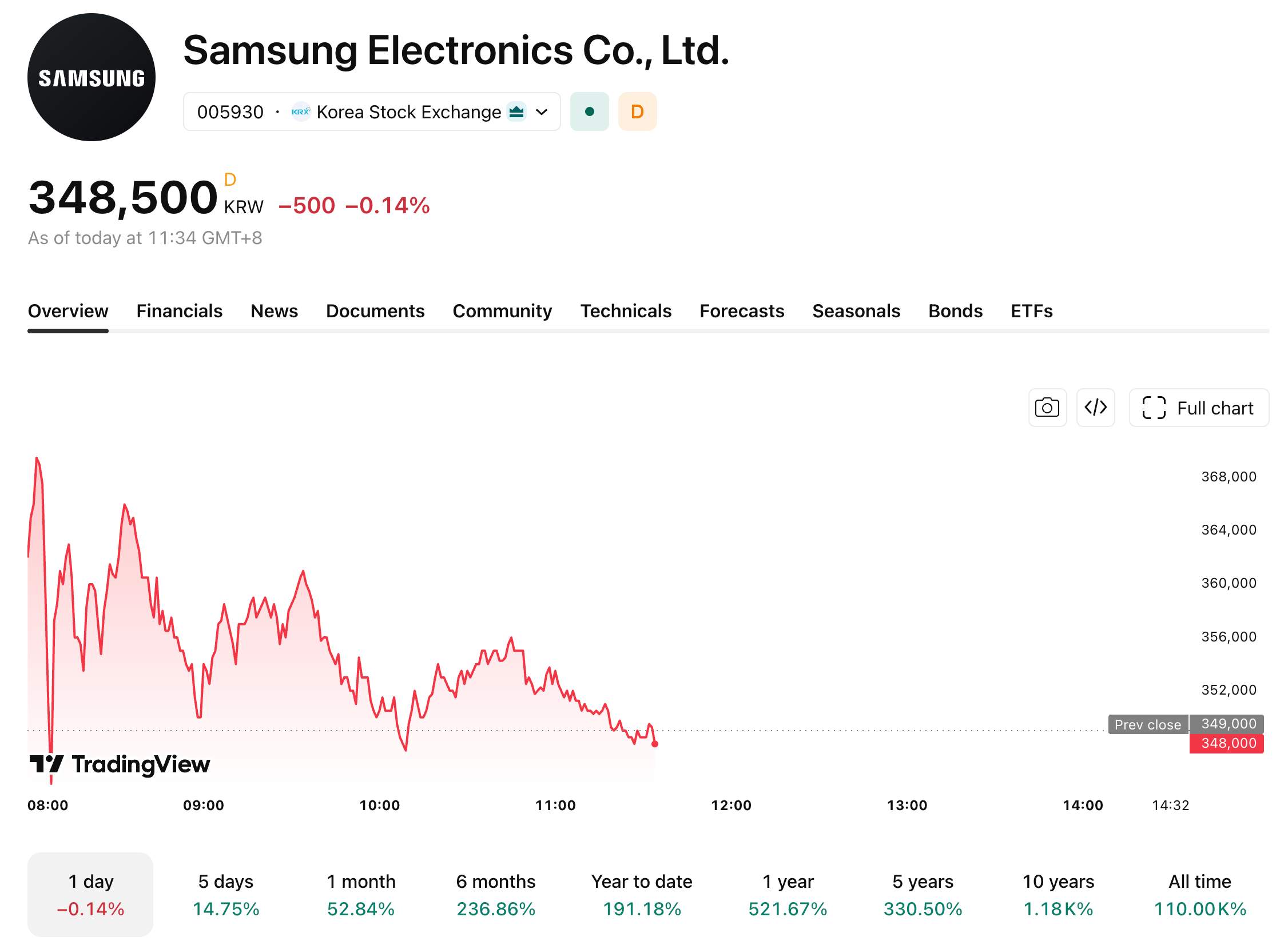
[Source: TradingView]
According to CompaniesMarketCap data, the ranking is dynamically calculated based on the previous trading day's closing price and real-time intraday stock prices. Samsung Electronics ranked 11th the previous day; however, its stock price surged to 370,000 KRW in early trading today, a gain of over 6%, pushing its market cap to approximately $1.54 trillion. This allowed it to overtake both Meta and Tesla, briefly hitting ninth place globally. As of press time, Samsung's stock price turned lower, and its market cap ranking retreated.
Samsung Electronics' year-to-date gain has exceeded 190%. First-quarter financial results released in April showed consolidated revenue of 133.9 trillion KRW, a 69% year-on-year increase; operating profit reached 57.2 trillion KRW, surging more than eightfold and setting a single-quarter profit record for a South Korean company. The operating margin was a robust 42.7%, far exceeding market expectations. The memory chip business was particularly strong, with both DRAM and NAND sales reaching record highs.
The current rally is primarily driven by the memory chip industry entering a "super cycle." Data from TrendForce shows that contract prices for conventional DRAM rose by 93%-98% in the first quarter of 2026, driving global DRAM industry revenue up 81% quarter-on-quarter to $97 billion. Goldman Sachs ( GS) raised its 12-month price target for Samsung Electronics to 480,000 KRW on June 1, reiterating a "Buy" rating and forecasting that supply constraints will persist until 2028.
Behind Goldman Sachs' optimistic outlook is Samsung's key breakthrough in the high-end AI memory sector. At yesterday's GTC Taipei conference, Nvidia ( NVDA) announced that its next-generation AI chip, Vera Rubin, will utilize HBM4 memory from both Samsung and SK Hynix. Samsung's HBM4 has passed quality certifications from Nvidia and AMD, with its 2026 production capacity already fully sold out. TrendForce expects Samsung's HBM bit output share to rise from 20% in 2025 to 28% in 2026.
Currently, the top eight global companies by market cap are: Nvidia, Google parent Alphabet ( GOOG ), Apple ( AAPL ), Microsoft ( MSFT ), Amazon ( AMZN ), TSMC ( TSM ), Broadcom ( AVGO ), and Saudi Aramco. As Samsung's competitiveness in the HBM4 sector becomes increasingly prominent, its market cap ranking is expected to climb further.
Recommended Articles


