


SoftBank Surges Over 13%. Overtakes Toyota as Japan’s Most Valuable Company, Here Is What Investors Need to Know
TradingKey - During the Tokyo trading session on June 1, SoftBank Group (9984) shares surged more than 13% intraday, with its market capitalization briefly exceeding 47.2 trillion yen,
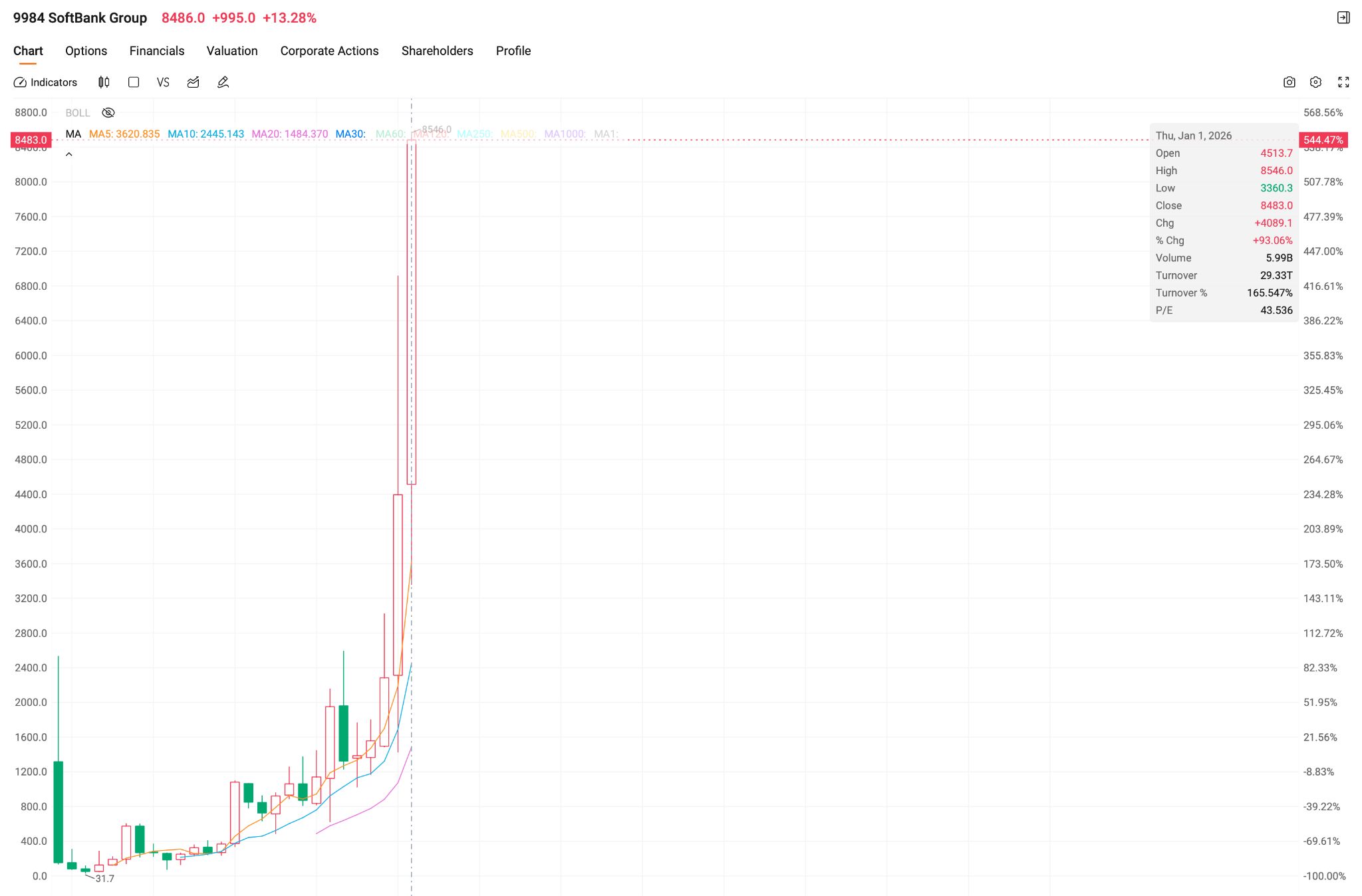
officially surpassing Toyota Motor's approximately 43 trillion yen to become Japan's most valuable listed company for the first time since 2003. SoftBank's year-to-date gain has now exceeded 93%.
€75 Billion AI Data Center Investment Sparks Market Rally
SoftBank announced that day it would invest up to €75 billion in France to build a massive AI data center network with a 5GW power capacity. The plan far exceeds previous market expectations for construction scale, directly triggering a single-day buying frenzy.
While this investment is part of a multi-year capital expenditure cycle that will consistently weigh on SoftBank's short-to-medium-term free cash flow, capital markets remain supportive of the move given the returns SoftBank has achieved on its previous AI investments.
Underlying AI assets are undergoing a systematic revaluation.
The fundamental driver of SoftBank's recent surge is that its underlying AI assets are undergoing a valuation re-rating by capital markets.
As of mid-May, SoftBank's cumulative investment cost in OpenAI was approximately $34.6 billion, and the fair value of these assets has climbed to $79.6 billion, with approximately $45 billion in unrealized gains recorded in the first quarter of 2026 alone.
Furthermore, Arm, in which SoftBank holds an approximately 90% stake, has also yielded substantial returns; SoftBank's cost basis for Arm is only about $32 billion, while the value of its holdings exceeds $280 billion based on Arm's current market capitalization of over $300 billion. Arm is moving beyond its legacy 'mobile chip' pricing framework and accelerating its migration into the AI data center CPU space.
Three Major Risks for Investors to Watch
First, SoftBank's over-reliance on a single asset remains unresolved. Nearly all of the Vision Fund's approximately 3.1 trillion yen in first-quarter gains were contributed by OpenAI, while core public holdings such as Coupang and Grab performed weakly.
Second, its heavily debt-fueled model continues to accumulate fixed repayment pressures. SoftBank signed a $40 billion bridge loan last March, and S&P has already downgraded SoftBank's credit rating outlook to "negative," citing the massive additional investment in OpenAI, which could deteriorate its asset liquidity, portfolio quality, and financial capacity.
Bridge Loan: (also known as a bridging loan) is a short-term financing tool.
Furthermore, both OpenAI's IPO window and the competitive landscape remain uncertain. Anthropic is continuously and rapidly expanding its market share in the enterprise segment; if OpenAI's valuation expansion stalls, SoftBank's unrealized paper gains will face downward pressure.
Masayoshi Son is betting SoftBank's entire balance sheet on the AI sector's endgame. The future development path of AI, along with the capital market's assessment of a potential AI bubble, will determine whether SoftBank can maintain its status as a market-cap giant.
Recommended Articles


