


Netflix Plans 5% Layoffs Ahead of Earnings as Slowing Growth and Cost Pressures Draw Concern
TradingKey - According to a Puck News report on Friday citing people familiar with the matter, Netflix (NFLX) plans to cut about 5% of its workforce. The plan has not been officially announced yet, and a Netflix spokesperson declined to comment on the matter. The specific scale of layoffs and affected departments remain to be confirmed.
According to regulatory filings, Netflix had approximately 16,000 full-time employees as of the end of 2025, with about 68% located in the United States. Based on an estimated 5% reduction, the adjustment could affect around 800 employees, though this figure is not an officially confirmed layoff headcount by the company.
If the plan is implemented, it would be another high-profile layoff action by Netflix since 2022, when the last large-scale job cuts occurred as the company faced subscriber losses and slowing growth. Today, streaming industry competition has intensified further, traditional media companies continue to consolidate, and YouTube is constantly competing for audience time and advertising budgets, forcing Netflix to face greater operational pressure.
Beyond industry competition, investors have also begun paying closer attention to Netflix's own growth performance. Over the past few years, the company boosted revenue by launching an ad-supported subscription tier, cracking down on account sharing, and raising membership prices; however, its recent revenue growth rate has slowed down.
Netflix Co-CEO Ted Sarandos also acknowledged at Bloomberg's Screentime conference in Los Angeles last week that the company's current growth rate has not met his expectations.
In addition, according to related reports, Netflix's subscriber viewing time grew by only about 2% in the most recent measurement period, while its Emmy Award count dropped to near a decade low. In the streaming market, user retention, content appeal, and viewing time impact subscription renewals and advertising business performance, so changes in these metrics could further heighten investor concerns over the company's growth prospects.
Meanwhile, Netflix is trying to expand its revenue streams beyond subscriptions. In recent years, the company has increased investment in advertising, live programming, podcasts, and video games, while also introducing content from French broadcaster TF1, hoping to attract more users by enriching product and content formats. However, these new businesses still need time to scale up, and whether they can effectively offset the impact of slowing traditional subscription revenue growth remains to be seen.
Previously, plans regarding the company's potential bid for Warner Bros. Discovery attracted market attention, and Netflix's stock price fell noticeably after news of the transaction emerged. Investors are not only focused on its content business growth capabilities, but are also assessing the financial commitment and operational risks that large-scale transactions might bring.
Netflix is scheduled to release its next earnings report on October 20, when the market will focus on the company's revenue growth, user engagement, and advertising business progress to determine whether the growth slowdown is merely a temporary phenomenon.
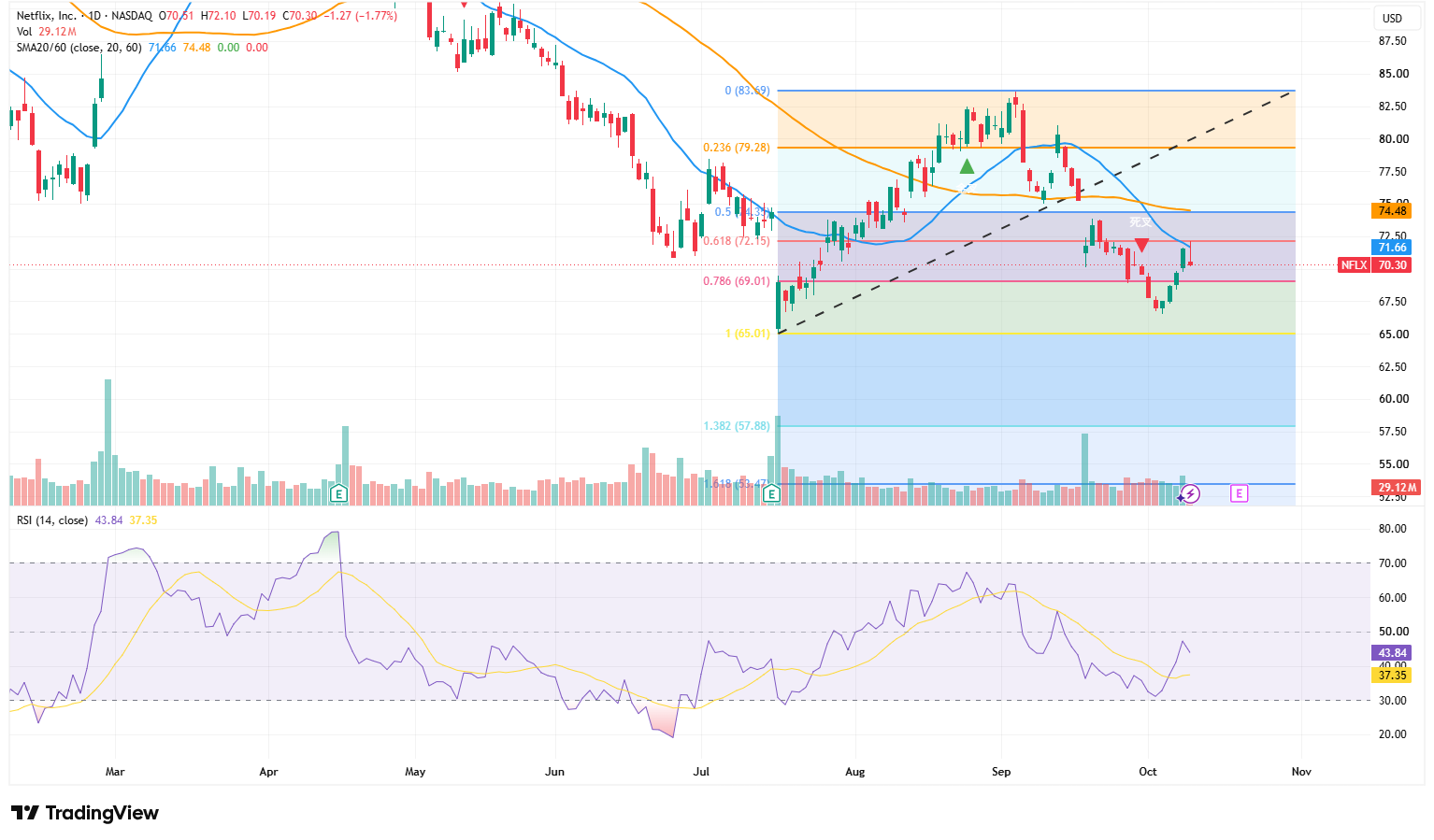
Source: TradingView
From the daily chart, Netflix's stock price recently closed at $70.30, remaining below its 20-day moving average of $71.66 and 60-day moving average of $74.48. The 20-day moving average has crossed below the 60-day moving average, indicating a weak short-term trend; the previously formed ascending trendline has also been broken, showing that the rebound structure from July to September has been damaged.
Currently, the stock price sits between the 0.786 Fibonacci retracement level of $69.01 and the 0.618 retracement level of $72.15. The first short-term resistance zone lies at $71.66–$72.15; if it can consolidate above this level on increased volume, it will have the opportunity to further challenge $74.35–$74.50. After breaking out of that region, the upper target can look toward $79.28. Conversely, if the stock encounters resistance near $72 again, weak consolidation may persist.
To the downside, focus first on support at $69. If this level is lost, the stock could retest $66–$67, with key support located at the previous low of $65.01. If earnings fall short of expectations and lead to a valid breakdown below $65, the stock may seek support toward the Fibonacci extension level of $57.88 in the next phase.
RSI currently stands at 43.84, above its smoothed signal line of 37.35, indicating that recovery momentum after being oversold is strengthening; however, because it remains below 50, bulls have not yet regained control.
Recommended Articles


