


SpaceX's Terafab Will Be Bigger Than Any Building on Earth. Here's When Investors Will Profit.
Key Points
Semiconductors present a key growth challenge for AI companies.
Space Exploration Technologies wants to avoid third-party reliance by producing its own chips.
- 10 stocks we like better than Space Exploration Technologies ›
When it comes to AI, it's hard to overstate the importance of semiconductors.
"Semiconductors are the fundamental enabling technology of AI," stresses the Semiconductor Industry Association. "Chips provide the base hardware layer underpinning modern AI systems and comprise a significant portion of the overall value in a modern AI server."
Missed Nvidia in 2009? This Rare Signal Is Flashing Again. In 2009, a "Double Down" signal flashed for a little-known chipmaker called Nvidia. For the first time in years, that same "Total Conviction" signal is flashing for a company 1/100th the size of Nvidia. Continue »
It's not just industry groups that recognize the importance of semiconductors. CEOs of AI companies have been adamant about the need for more chips -- particularly GPUs -- to sustain industry growth.
"Increasing compute is the literal key to increasing revenue," says Sam Altman, CEO of OpenAI. "This rapid progress is ultimately driven by the amount of available computation," adds Dario Amodei, CEO of Anthropic. In the coming years, Amodei believes rapid AI adoption could "strain the capabilities of the semiconductor industry."
In short, for AI companies to continue rapid growth rates, a massive increase in chip production will be necessary. If an AI company can't source chips, its growth runway is severely threatened.
To counter this, Space Exploration Technologies (NASDAQ: SPCX) has decided to pursue its own semiconductor factories. In partnership with Tesla (NASDAQ: TSLA) -- which will also need large numbers of AI chips to power its robotics and self-driving technologies -- SpaceX is expected to spend more than $100 billion to scale its so-called Terafab chip facility.
Reuters reports:
The vertically integrated, 100 million-square-foot Terafab plant will make, package, and test advanced logic and memory chips under one roof, producing processors needed to power Tesla's Optimus robots and Cybercabs, as well as high-power chips to run SpaceX's space-based data centers. A May filing showed SpaceX has proposed an initial investment of $55 billion to build the Terafab, with the total amount rising to $119 billion if extra phases are completed.
SpaceX lost around $5 billion in 2025. Last quarter, losses totaled $541 million. With massive amounts of capital expenditures expected in the years ahead, when can investors actually expect to benefit from SpaceX's Terafab ambitions? The answer might surprise you.
SpaceX needs Terafab to make its stock price make sense
According to SpaceX's IPO prospectus, more than 90% of the company's long-term growth opportunity relates exclusively to AI. If the company can't scale its AI business, it will be exceptionally hard to justify its current $2 trillion valuation.
Semiconductors have emerged as a key constraint to AI growth. Wafer prices are on the rise, and competition for chips remains rampant -- hence SpaceX's aggressive ambition to establish its own manufacturing capabilities.
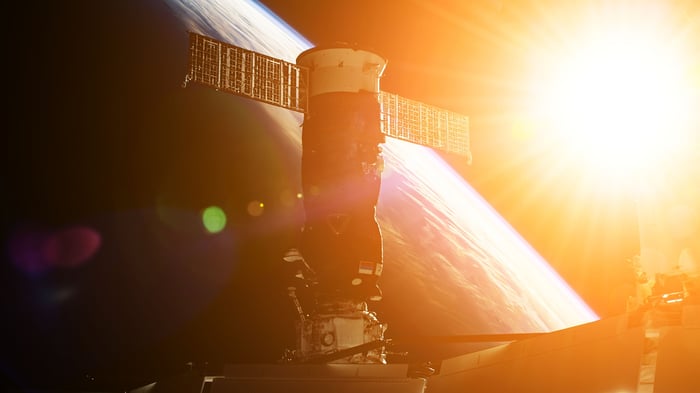
Image source: Getty Images.
According to UBS, SpaceX is expected to spend $1 trillion in capital expenditures over the next five years, with 20% dedicated to Terafab. Construction of the site is expected to begin this December. The first phase of the project is expected to come online sometime in 2028, though future delays are possible.
Scaling the facility could continue for another decade or more. When complete, the 100 million-square-foot facility would be the largest building on Earth.
When up and running, Terafab will not only secure AI chip supply for SpaceX and Tesla but also likely lower costs. If completed on time, investors should expect cost savings to appear in 2029, though it may be another year or two before they become meaningful.
More importantly, both companies will have a clearer path toward executing on key growth opportunities once Terafab begins commercial production. SpaceX will use the production heavily in both terrestrial and orbital data centers. Tesla, meanwhile, will need the chips for its robotaxis and Optimus robots.
Investors shouldn't expect meaningful Terafab contributions until 2029 at the earliest, with the project generating a major drag on cash flows in the meantime. And the project is a "must" for SpaceX's long-term growth ambitions. Without Terafab, SpaceX's growth runway is in doubt, and thus the company's current valuation.
Should you buy stock in Space Exploration Technologies right now?
Before you buy stock in Space Exploration Technologies, consider this:
The Motley Fool Stock Advisor analyst team just identified what they believe are the 10 best stocks for investors to buy now… and Space Exploration Technologies wasn’t one of them. The 10 stocks that made the cut could produce monster returns in the coming years.
Consider when Netflix made this list on December 17, 2004... if you invested $1,000 at the time of our recommendation, you’d have $375,240!* Or when Nvidia made this list on April 15, 2005... if you invested $1,000 at the time of our recommendation, you’d have $1,403,292!*
Now, it’s worth noting Stock Advisor’s total average return is 932% — a market-crushing outperformance compared to 211% for the S&P 500. Don't miss the latest top 10 list, available with Stock Advisor, and join an investing community built by individual investors for individual investors.
See the 10 stocks »
*Stock Advisor returns as of October 1, 2026.
Ryan Vanzo has no position in any of the stocks mentioned. The Motley Fool has positions in and recommends Tesla. The Motley Fool has a disclosure policy.
Recommended Articles


