


The SpaceX IPO Could Be the Biggest in History. Here's What Investors Should Know Before It Lists
Key Points
SpaceX filed its IPO paperwork earlier this month and plans to trade on the Nasdaq as SPCX.
The connectivity segment, anchored by Starlink, generated about 61% of the company's 2025 revenue and is its only profitable segment.
The biggest IPOs in history have a track record of underperforming after their debut.
- These 10 stocks could mint the next wave of millionaires ›
Elon Musk's rocket and satellite company, SpaceX, filed to go public earlier this month, setting the stage for what could become the largest initial public offering (IPO) in history. In a prospectus released on May 20, the company said it plans to list its Class A shares on the Nasdaq under the ticker SPCX, with a debut that could arrive as soon as next month.
The figures being floated are staggering. SpaceX is reportedly targeting a valuation around $1.75 trillion, and there have been reports that the number could push above $2 trillion.
Will AI create the world's first trillionaire? Our team just released a report on the one little-known company, called an "Indispensable Monopoly" providing the critical technology Nvidia and Intel both need. Continue »
The company could raise roughly $75 billion -- more than double the record set by Saudi Aramco's 2019 listing, and the biggest IPO ever by money raised. A valuation near $2 trillion would also make SpaceX one of the most valuable public companies in the world, though still well behind the most valuable, Nvidia, which now sits above $5 trillion.
But a record-setting headline and a great investment aren't the same thing. Before chasing the debut, investors may want to weigh two questions: what the filing actually reveals about the business, and what history says about IPOs this large.
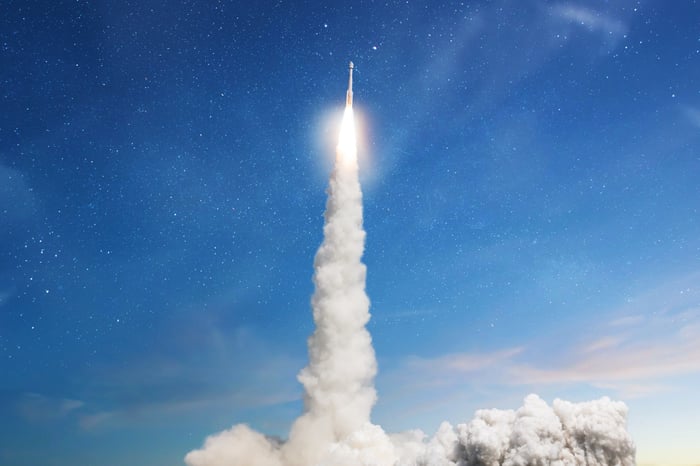
Image source: Getty Images.
One profitable business, two that aren't
The prospectus offers the first real look at SpaceX's finances, and the picture is more complicated than the company's reputation might suggest. Revenue reached about $18.7 billion in 2025, up 33% from the year before. Yet SpaceX lost $4.9 billion on a net basis -- a sharp reversal from roughly $791 million in net income a year earlier.
That swing comes down to how the company is now built. The filing breaks SpaceX into three segments, and only one of them makes money. The connectivity business, anchored by the Starlink satellite internet service, brought in $11.4 billion last year, or about 61% of total revenue, along with about $4.4 billion in operating profit. Starlink has scaled quickly, reaching about 10.3 million subscribers across 164 markets by the end of the first quarter -- approximately double its count a year earlier.
With this said, Starlink's average monthly revenue per user has been sliding as it pushes into lower-priced markets abroad, falling from around $99 in 2023 to about $66 by the first quarter of 2026.
Meanwhile, the other two segments lean on Starlink's cash. The space business -- the rocket launch operation that made the company famous -- generated about $4 billion but lost money, largely because developing the next-generation Starship rocket consumed about $3 billion. And the newest piece, an artificial intelligence (AI) segment that arrived when SpaceX absorbed Musk's xAI in February, posted a $6.4 billion operating loss on just $3.2 billion in revenue. That AI unit is what ultimately pushed the company's overall financials into the red.
And the losses don't appear to be easing. In the first quarter of 2026, SpaceX's net loss came to $4.28 billion, nearly matching its loss for all of last year.
Also worth noting, through the dual-class share structure laid out in the filing, Musk would keep voting control of the company even after it goes public.
A humbling history for the biggest debuts
Even setting the losses aside, valuation is arguably the harder problem.
Near $2 trillion, buyers would be paying one of the steepest valuations ever assigned to a company that doesn't yet turn a profit and whose one money-maker is watching its per-user revenue shrink.
Further, SpaceX's own prospectus lists the unproven Starship program as its very first risk factor -- a reminder that much of the long-term story still rides on technology that hasn't proven itself at scale.
And history offers additional reason for caution. The largest IPOs have a habit of disappointing the investors who buy in at the open. Saudi Aramco went public in 2019 at a valuation near $1.7 trillion, and its shares still trade below their listing price more than six years later. Further, Alibaba arrived in 2014 as the largest U.S. IPO of its era, and its stock has virtually gone nowhere in the decade-plus since.
The problem usually isn't the company -- it's that a deal this hyped tends to price in years of success up front, leaving little cushion if reality runs even slightly behind.
None of this makes SpaceX a bad business. Starlink is one of the more impressive companies built this decade, and SpaceX's hold on the launch market is undeniable. But at this price, buyers would be paying in full for a future that still has a lot left to prove. For now, the more patient move may be to let SpaceX list, watch how it performs as a public company for a quarter or two, then decide.
Sure, the largest IPO in history will make for a memorable headline. Whether it makes for a good entry point, however, is a separate question.
Where to invest $1,000 right now
When our analyst team has a stock tip, it can pay to listen. After all, Stock Advisor’s total average return is 986%* — a market-crushing outperformance compared to 208% for the S&P 500.
They just revealed what they believe are the 10 best stocks for investors to buy right now, available when you join Stock Advisor.
See the stocks »
*Stock Advisor returns as of May 26, 2026.
Daniel Sparks and his clients have no position in any of the stocks mentioned. The Motley Fool has positions in and recommends Nvidia. The Motley Fool recommends Alibaba Group. The Motley Fool has a disclosure policy.
Recommended Articles


