


USD/CHF (USDCHF) Drops on Oct 2: Was It the Dollar, Rates, or Data?
USD/CHF (USDCHF) is down 0.52% at Oct 2 07:55(ET), now at $0.82628, with a 7-day down of 0.27%.
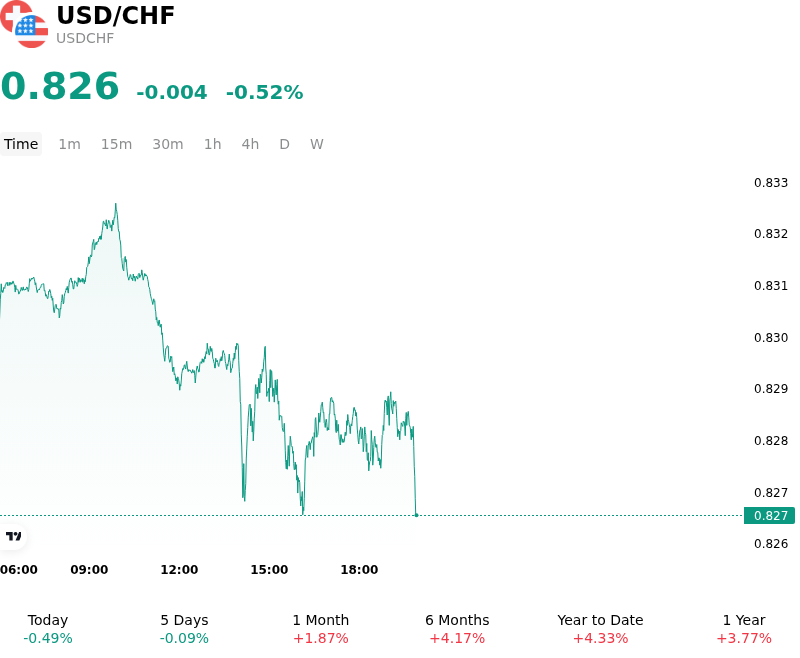
What is driving USD/CHF (USDCHF)’s stock price down today?
The pullback in USDCHF was primarily driven by a repricing of Federal Reserve monetary policy expectations alongside renewed demand for the Swiss franc amid heightened fixed-income market volatility.
Softer-than-anticipated U.S. Personal Consumption Expenditures inflation figures led market participants to significantly dial back expectations for an immediate rate hike by the Federal Reserve. The decline in near-term tightening odds weighed on the U.S. dollar, triggering profit-taking on long dollar positions following its recent rally to multi-month highs. Additionally, a slight retreat in U.S. Treasury yields from recent multi-decade peaks reduced the yield advantage for the greenback as traders adjusted positioning ahead of upcoming U.S. labor market data.
Conversely, the Swiss franc outperformed broad market peers as global sovereign bond volatility and mounting fiscal concerns in major economies prompted institutional investors to seek defensive assets. Switzerland’s strong fiscal backdrop and low public debt profile distinguished the currency from peers struggling with fiscal pressures in Europe. Increased market volatility also triggered a partial unwinding of franc-funded carry trades, providing additional technical support to CHF.
At the same time, the Swiss National Bank’s policy stance focused on preserving price stability, coupled with resilient export-driven economic growth, reinforced baseline support for the franc. While structural yield differentials between the U.S. and Switzerland continue to support the dollar over a broader macro horizon, intraday capital flows favored the franc as market participants rebalanced portfolios following the shift in U.S. rate expectations.
Technical Analysis of USD/CHF (USDCHF)
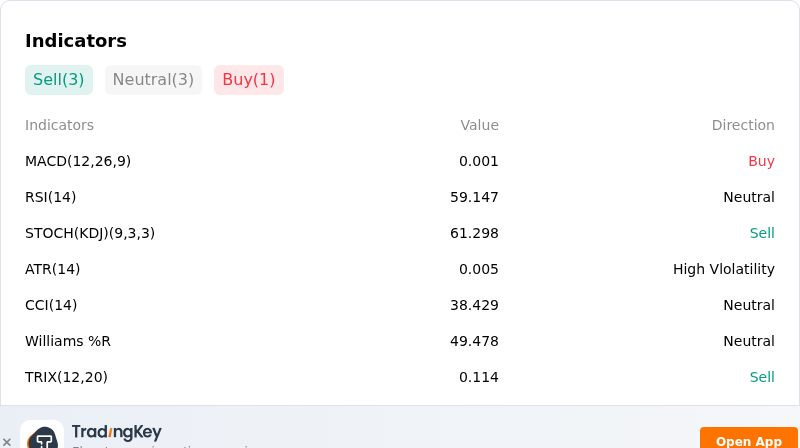
Technically, USD/CHF (USDCHF) shows a MACD (12,26,9) value of 0.001, indicating a buy signal. The RSI at 60.787 suggests neutral condition and the Williams %R at 45.030 suggests neutral condition. Please monitor closely.
More details about USD/CHF (USDCHF)
Recent Events and Risks:
- Easing Federal Reserve Rate Hike Expectations: Recent softer-than-expected US Personal Consumption Expenditures (PCE) inflation data led market participants to sharply scale back odds of an October Fed rate increase to under 30%, dampening US Dollar yield support and placing immediate downside pressure on USD/CHF.
- Global Bond Volatility and Carry-Trade Unwind: Surging global fixed-income market volatility and Treasury yield dislocations have triggered a rapid unwinding of CHF-funded carry trades, driving broad-based buying of the Swiss Franc across major currency pairs.
- US Fiscal Deficit Anxiety and Safe-Haven Capital Rotation: Escalating investor concern over long-term US fiscal instability and national debt expansion has spurred safe-haven capital flows into the Swiss Franc, which benefits from Switzerland's low debt-to-GDP ratio relative to other developed nations.
- Swiss National Bank Intervention Threats: Explicit warnings from Swiss National Bank officials that they remain prepared to actively intervene in foreign exchange markets to curb extreme currency volatility create asymmetric downside risks for USD/CHF long positions.
Recommended Articles


