

This Ridiculously Cheap Warren Buffett Stock Could Make You Richer
Key Points
A key focus for Warren Buffett is to buy businesses that grow over time.
The Oracle of Omaha's goal is to benefit from business growth, which normally translates into a higher share price over time.
Buffett bought this growth-oriented business after a deep sell-off, and so can you.
- 10 stocks we like better than Pool ›
Warren Buffett is about to step down as the CEO of Berkshire Hathaway. However, that doesn't mean you should stop paying attention to the investments he's made in the last couple of years.
In fact, his approach is to hold for the long term, so some of his recent trades are still playing out. This one still looks ridiculously cheap. If you buy and hold, investing like Buffett, it could help make you richer in the future. Here's what you need to know.
Where to invest $1,000 right now? Our analyst team just revealed what they believe are the 10 best stocks to buy right now. Continue »
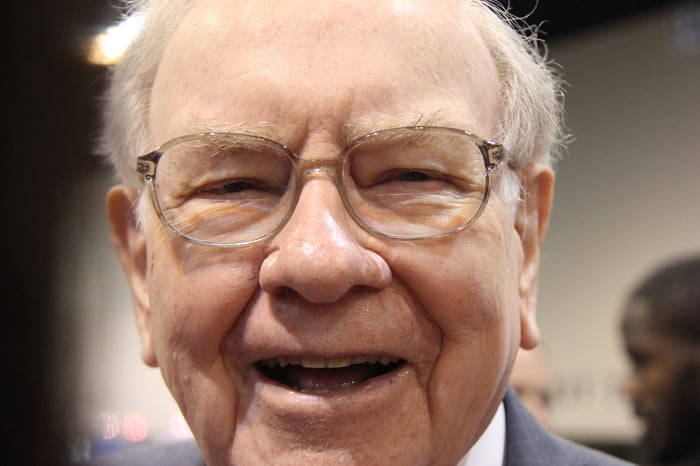
Image source: The Motley Fool.
What does Warren Buffett do?
Warren Buffett has never specifically explained his investment approach. What he has provided is a broad framework and numerous hints about the finer points. The big picture, however, is actually pretty informative. Buffett likes to buy well-run businesses while they are attractively valued, if not downright cheap. He then holds them for the long term, allowing him to benefit from the business's growth over time.
There is one small problem with this approach. Buying a stock when it is out of favor is something of a contrarian approach. In fact, Buffett is famous for stepping in when others on Wall Street are scared. For example, he invested in Bank of America as the pain from the Great Recession was still a fresh memory. A more recent example of buying when others were selling was his purchase of retailer Pool Corp (NASDAQ: POOL).
Pool's stock rose dramatically during the coronavirus pandemic, but is now down nearly 60% from those highs. Fearful would be an understatement when it comes to the way Pool is viewed by investors. The stock is starting to look ridiculously cheap -- its roughly 2.1% dividend yield is near the highest levels of the decade and roughly four times what it was when the stock was at its zenith not too long ago.
Looking at more traditional valuation metrics, Pool's price-to-sales ratio is 1.7x versus a five-year average of nearly 2.7x. Its price-to-earnings ratio is roughly 22x compared to a long-term average of around 26x. And the price-to-book value ratio is 6.5x, which is significantly below the five-year average of 11.6x. The run-up during the pandemic biases the averages higher, but Pool definitely looks like it is currently cheap.
Pool's future was pulled forward
The pandemic was an interesting period to consider, given Pool's specialty in selling pool supplies. While it is, at its core, just a retail stock, the pool industry is unique in an important way. It all boils down to one fact: If you don't maintain a pool, it becomes a disgusting mess in your backyard. So every new pool that gets built increases the customer base for Pool Corp.
New customers were the driving force during the pandemic, because people stuck at home started building new pools to entertain themselves and their families. In typical Wall Street fashion, investors extrapolated a temporary spike in demand into the distant future. When the world learned to live with COVID-19, interest rates rose (effectively making it more costly to build a pool), and demand for new pools fell off. Pool's stock cratered.
The truth is that the spike in pool construction likely pulled forward future demand. Therefore, it could take a few years before supply and demand balance out, and the dynamics around pool construction return to equilibrium. However, every pool that got built during that period still needs to be maintained. That demand isn't going away, which is why it is worth noting that roughly two-thirds of Pool's business is tied to maintaining existing pools.
The company's income statement is going to be impacted by pool construction and renovation rates over the short term. There's no way around that. However, there is a clear growth bias in the business because of the nature of the pool market it serves. More pools result in more demand for pool supplies. If you think in decades and not days, you might want to follow Buffett into Pool Corp's stock.
Be prepared to hold Pool for years
Buffett's focus on owning companies for the long term is vital here. Pool Corp stock isn't going to rebound overnight. It is more likely to be a slow and steady climb as Wall Street begins to recognize the growth bias inherent in the company's niche offering. However, given how cheap the stock looks today, if you don't mind taking a contrarian stance, it could be a great Buffett stock for you to buy -- and hold -- today.
Should you buy stock in Pool right now?
Before you buy stock in Pool, consider this:
The Motley Fool Stock Advisor analyst team just identified what they believe are the 10 best stocks for investors to buy now… and Pool wasn’t one of them. The 10 stocks that made the cut could produce monster returns in the coming years.
Consider when Netflix made this list on December 17, 2004... if you invested $1,000 at the time of our recommendation, you’d have $505,695!* Or when Nvidia made this list on April 15, 2005... if you invested $1,000 at the time of our recommendation, you’d have $1,080,694!*
Now, it’s worth noting Stock Advisor’s total average return is 962% — a market-crushing outperformance compared to 193% for the S&P 500. Don't miss the latest top 10 list, available with Stock Advisor, and join an investing community built by individual investors for individual investors.
See the 10 stocks »
*Stock Advisor returns as of December 17, 2025.
Bank of America is an advertising partner of Motley Fool Money. Reuben Gregg Brewer has no position in any of the stocks mentioned. The Motley Fool has positions in and recommends Berkshire Hathaway. The Motley Fool has a disclosure policy.
Recommended Articles


