




New Twist in Fed Chair Race! Warsh Re-evaluated by Market, Hassett's "Sure Thing" Halo Fades
TradingKey - The race for the next Federal Reserve chair is intensifying, as Kevin Hassett's once-dominant lead has narrowed significantly. Former Fed Governor Kevin Warsh has regained market favor, catalyzed by recent remarks from President Trump.
Latest prediction market data indicates that Hassett's odds of becoming the next Fed chair have plummeted from a high of over 80%, briefly falling behind Warsh.
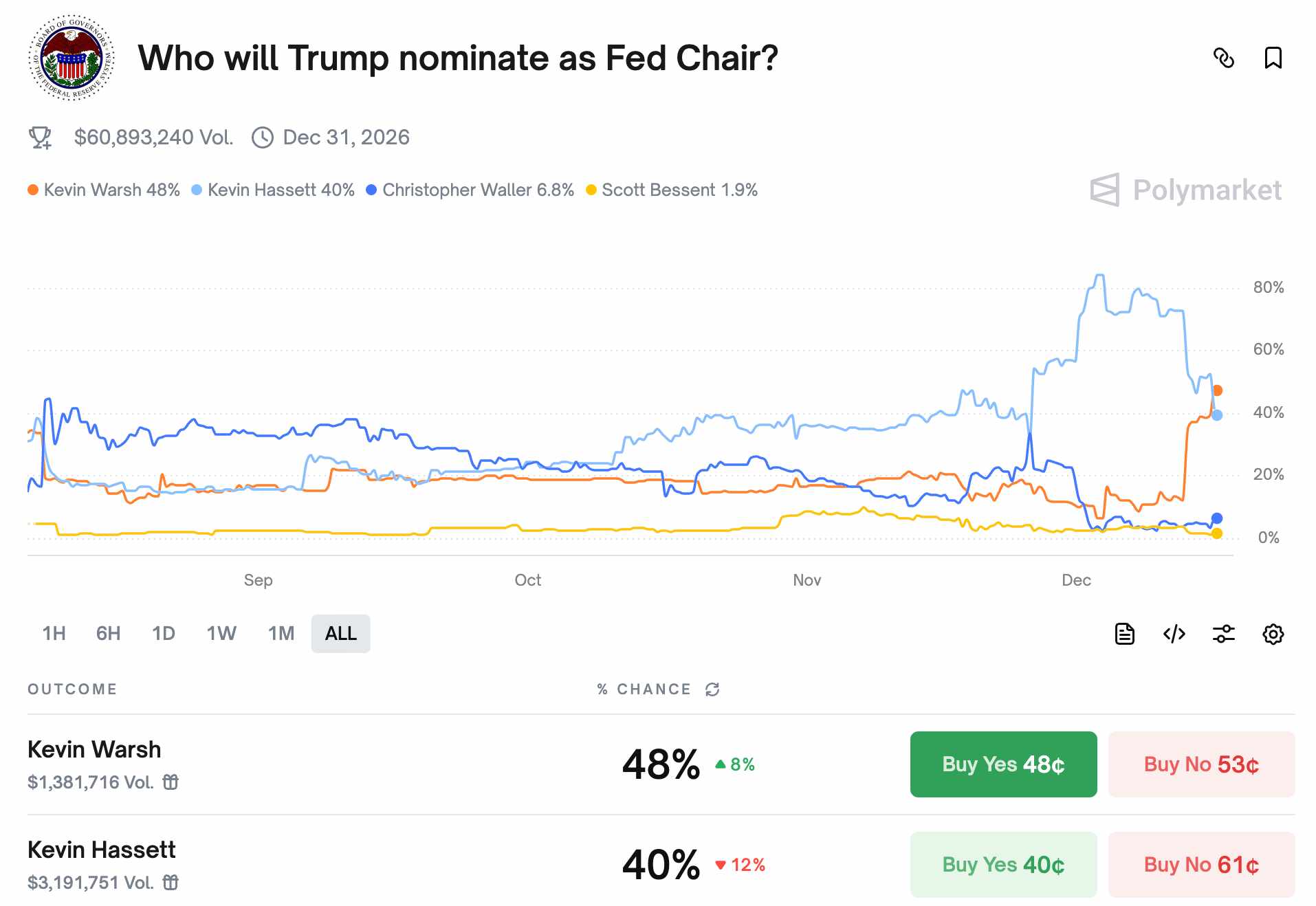
[Warsh briefly overtook Hassett, Source: polymarket.com]
This shift primarily stems from Trump's most recent public statements. In a media interview, Trump explicitly listed both Warsh and Hassett as his two primary candidates, stating, "Both Kevins are great."
According to informed sources, Trump met with Warsh for 45 minutes at the White House last Wednesday. During the meeting, Trump pressed Warsh on whether he could be trusted to support interest rate cuts if appointed Fed chair, to which Warsh gave an affirmative response. Trump believes the next Fed chair should consult with him on interest rate settings, a viewpoint he has repeatedly emphasized as "at least consultation."
Trump, on one hand, desires communication between the new chair and the White House. On the other, he has clearly expressed a preference for lower interest rates, repeatedly stating his hope that the federal funds rate will drop to 1% or even lower within a year.
Trump's long-standing criticism of current Fed Chair Jerome Powell, specifically regarding the slow pace of rate cuts, has been a key factor in his selection criteria for a new leader.
Hassett was initially considered a frontrunner partly due to his long-standing relationship with the Trump administration and his distinct economic views. He has, in interviews and public appearances, stressed that the Fed should have greater scope for rate cuts to boost economic growth, provided the data supports such action. Furthermore, he has attempted to alleviate market concerns about potential erosion of the central bank's independence under his leadership.
Nevertheless, markets and some policy circles remain concerned about Hassett's close political ties. Some insiders believe that if the bond market perceives the new chair as overly compliant with the president, it could trigger worries about policy independence during future inflationary spikes, potentially leading to higher long-term yields. This presents a non-negligible risk factor for the market.
In contrast, Warsh's background as a former Fed Governor and his extensive experience in central bank policy are emerging as key competitive advantages. During his tenure as a Fed Governor, Warsh participated in critical interest rate and liquidity decisions. If Warsh supports a path of rate cuts, he might adopt a more balanced strategy concerning balance sheet operations and monetary policy independence. For example, he could advocate for moderate rate cuts while emphasizing a robust reduction in the balance sheet size. This "rate cuts and balance sheet reduction in parallel" strategy is viewed by some institutions as a possible policy combination.
Moreover, JPMorgan CEO Jamie Dimon has privately affirmed Warsh's capabilities, a stance viewed by the market as a significant signal of support for Warsh's potential appointment.
Overall, Trump's public statements regarding candidates and his clear expectations for monetary policy are reshaping market expectations about the future direction of the Federal Reserve's policies. Regardless of the eventual selection, central bank independence, the interest rate path, and adjustments to market expectations will be the core focal points for macro financial markets in the coming months.
Recommended Articles


