




Ethereum Price Forecast: ETH nudges higher amid ETF outflows, steady retail demand
- Ethereum defends $2,400 support as bulls eye a short-term breakout toward $2,500.
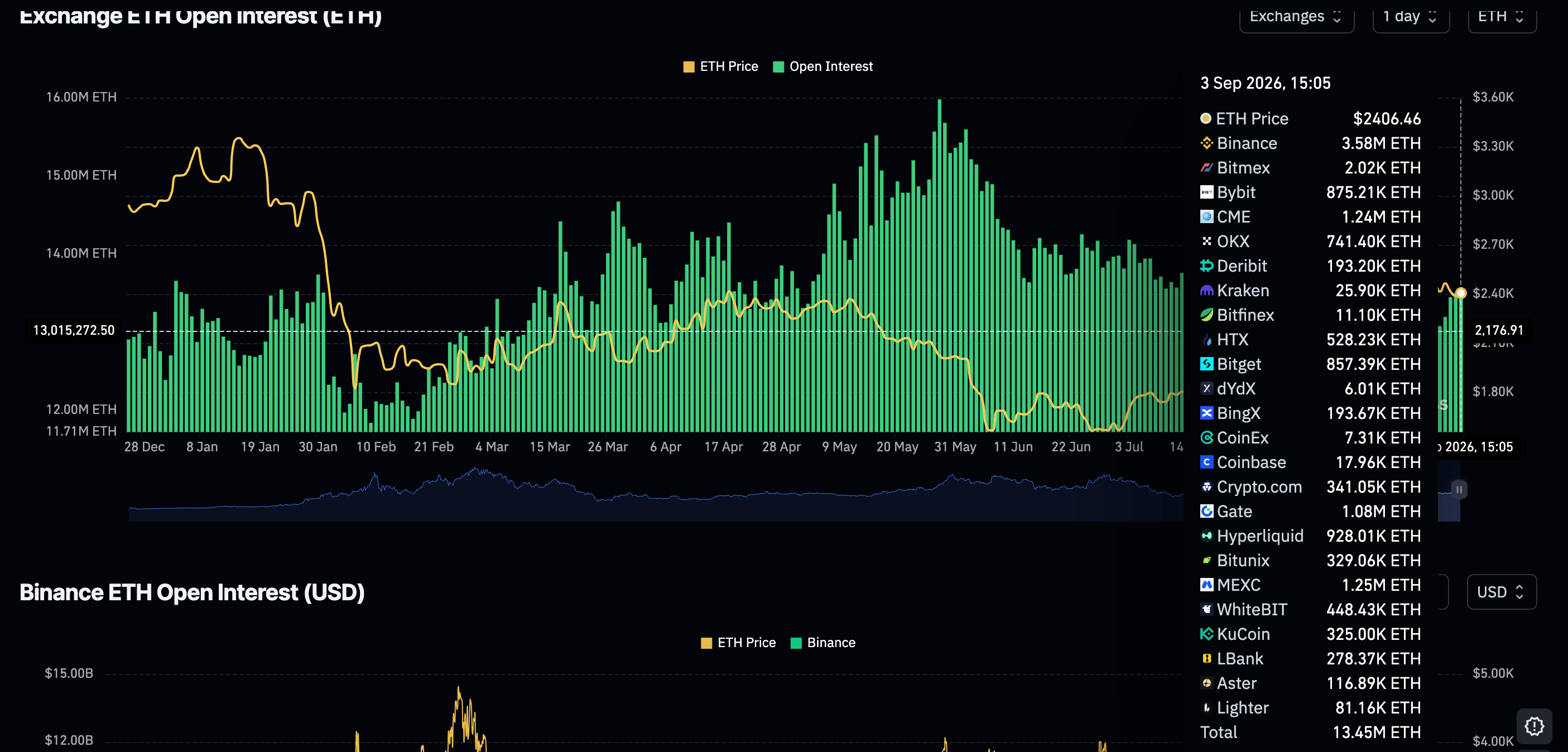
- Ethereum derivatives market holds steady, with futures Open Interest at 13.45 million ETH.
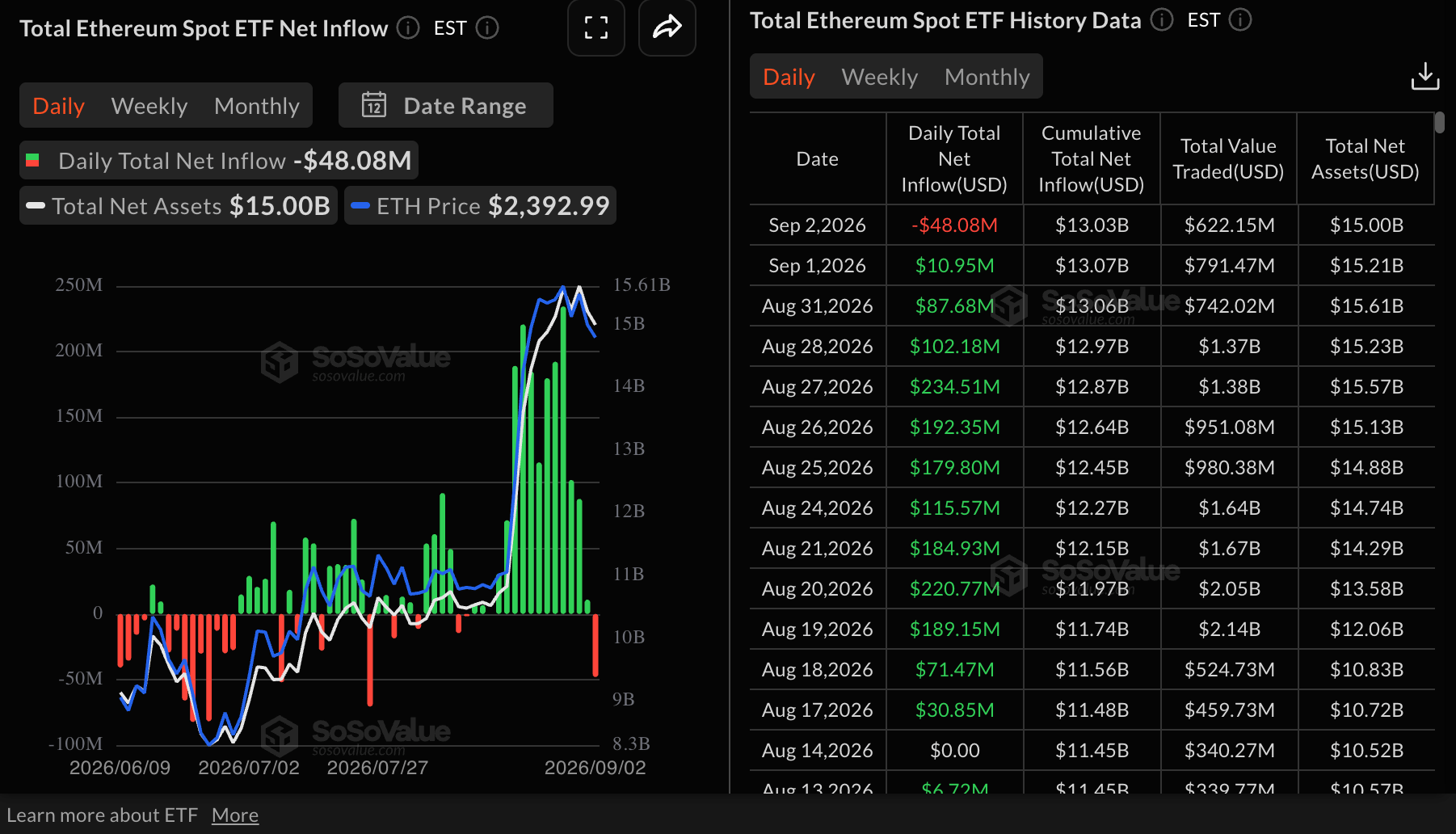
- US-listed spot ETH ETFs recorded $48 million in outflows on Wednesday, ending a 12-day streak of inflows and weighing on price action.
Ethereum (ETH) extends gains above $2,400 on Thursday as investors return to the market, following renewed tensions between the United States (US) and Iran in the Middle East, which had triggered doldrums in the broader cryptocurrency market since last week.
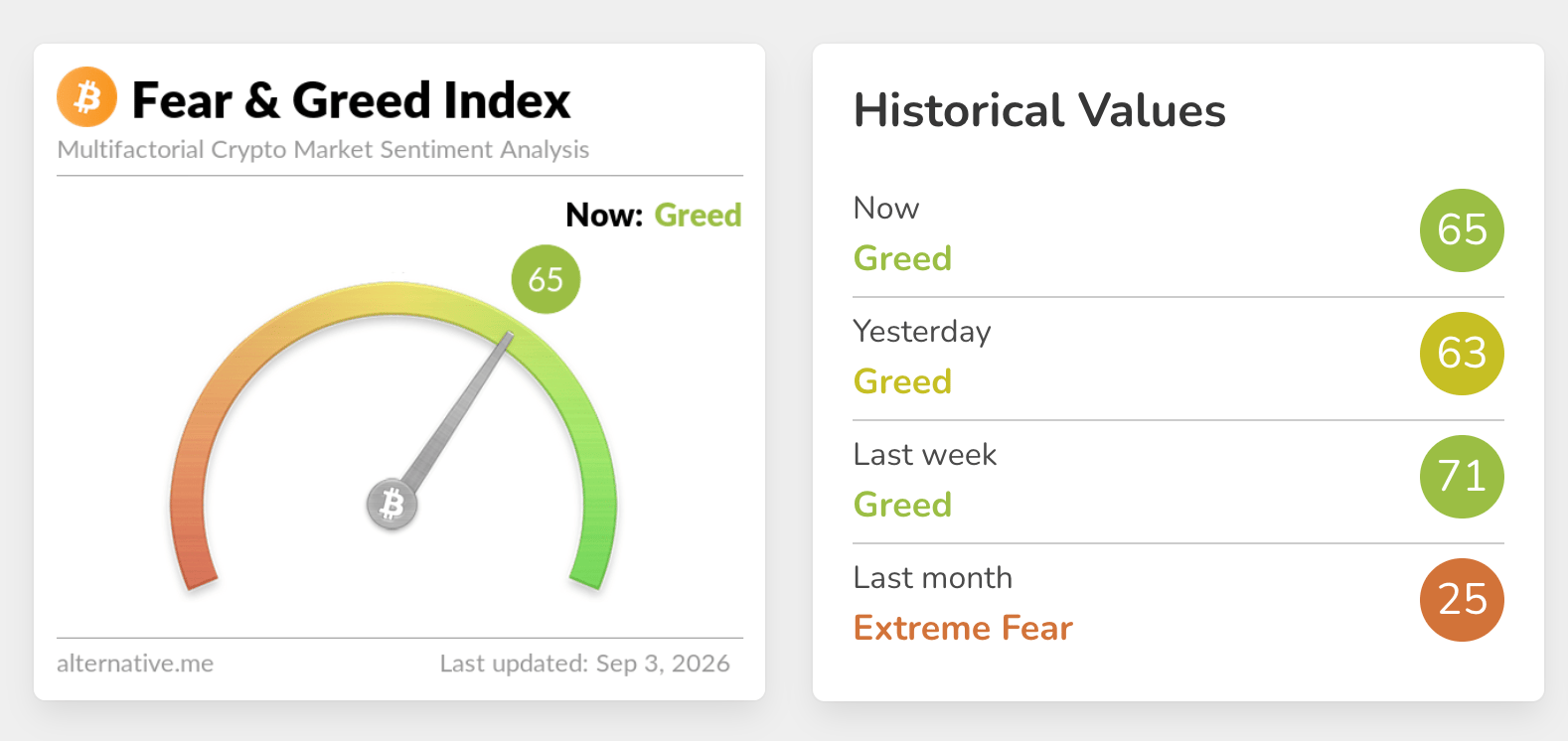
The largest smart contract token’s uptick builds on support at $2,400 and steady positive market sentiment, as reflected in the Fear & Greed Index. The index sits at 65 in the Greed territory, up only marginally from 63 the previous day. Sustained positive market sentiment could keep investors interested in buying risk assets, raising the odds of an extended recovery.
Ethereum sees ETF outflows
US-listed Ethereum spot ETF outflows recorded $48 million in outflows on Wednesday, ending 12 days of consecutive inflows. Despite the sudden bearish turn, cumulative inflows remain positive at $13 billion, while net assets under management average $15 billion. Steady inflows are required to support price increases.
Expanding the scope shows that Ethereum derivatives remain steady, with perpetual Open Interest (OI) averaging 13.45 million ETH on Thursday, up only slightly from 12.44 million ETH. This follows a steady increase in OI to 12.93 million ETH on August 20 and shows retail investors have not withdrawn support despite the recent drawdown from highs of $2,566 last month.
Technical analysis: Ethereum bulls reinforce short-term support
Ethereum trades at $2,407, extending its advance firmly above the main Exponential Moving Averages (EMAs), suggesting a broadly bullish near-term structure with layered trend support. The Relative Strength Index (RSI) at 62 holds in positive territory without reaching overbought extremes, while the Moving Average Convergence Divergence (MACD) indicator stands below its recent peaks with a negative reading, hinting at waning upside momentum but not yet undermining the constructive bias as long as price remains above these EMAs.
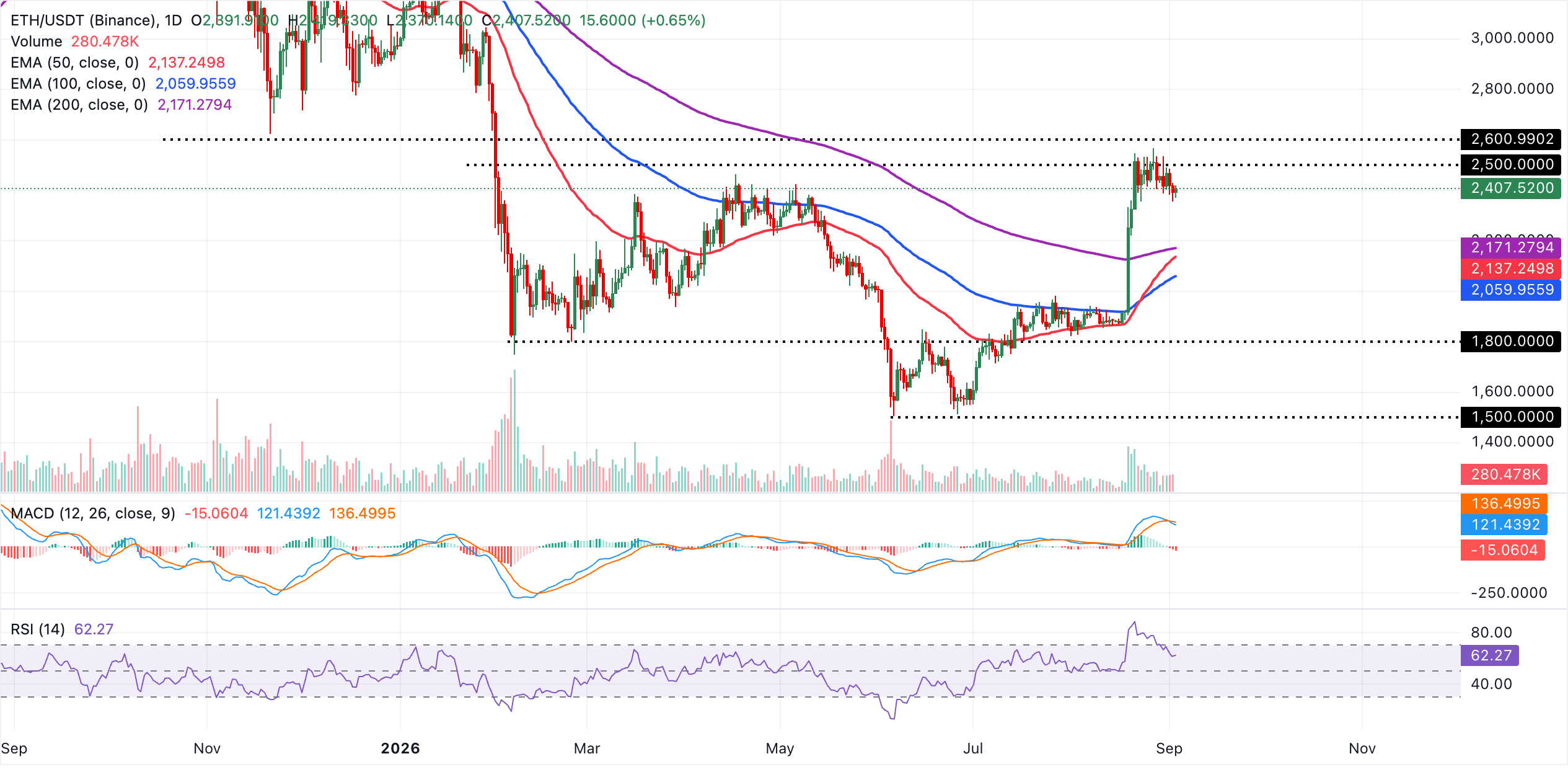
Immediate support lies slightly below the current pivot region around $2,407, where buyers are defending the latest breakout. Below that, the clustered EMA zone between the 200-day EMA at $2,171 and the 50-day EMA at $2,137 reinforces a medium-term demand band, with deeper support emerging at the 100-day EMA near $2,060. As long as ETH holds above this stacked moving-average floor, any pullbacks are likely to be treated as corrective within the broader uptrend, leaving the topside open for further gains once momentum stabilizes.
(The technical analysis of this story was written with the help of an AI tool. Know more.)
Ethereum FAQs
Ethereum is a decentralized open-source blockchain with smart contracts functionality. Its native currency Ether (ETH), is the second-largest cryptocurrency and number one altcoin by market capitalization. The Ethereum network is tailored for building crypto solutions like decentralized finance (DeFi), GameFi, non-fungible tokens (NFTs), decentralized autonomous organizations (DAOs), etc.
Ethereum is a public decentralized blockchain technology, where developers can build and deploy applications that function without the need for a central authority. To make this easier, the network leverages the Solidity programming language and Ethereum virtual machine which helps developers create and launch applications with smart contract functionality.
Smart contracts are publicly verifiable codes that automates agreements between two or more parties. Basically, these codes self-execute encoded actions when predetermined conditions are met.
Staking is a process of earning yield on your idle crypto assets by locking them in a crypto protocol for a specified duration as a means of contributing to its security. Ethereum transitioned from a Proof-of-Work (PoW) to a Proof-of-Stake (PoS) consensus mechanism on September 15, 2022, in an event christened “The Merge.” The Merge was a key part of Ethereum's roadmap to achieve high-level scalability, decentralization and security while remaining sustainable. Unlike PoW, which requires the use of expensive hardware, PoS reduces the barrier of entry for validators by leveraging the use of crypto tokens as the core foundation of its consensus process.
Gas is the unit for measuring transaction fees that users pay for conducting transactions on Ethereum. During periods of network congestion, gas can be extremely high, causing validators to prioritize transactions based on their fees.
Recommended Articles


