




Strategy Cash Pivot Lifts Bitcoin Hyper Narrative
What to Know:
- Strategy’s reduced 2025 $BTC yield targets and its $1.44B cash reserve underscore the volatility of pure corporate Bitcoin exposure.
- Capital is rotating away from single-stock Bitcoin proxies and toward direct Bitcoin ecosystem plays, especially Layer-2 infrastructure with fee and activity capture.
- Bitcoin Hyper integrates Bitcoin’s security with SVM throughput to deliver sub-second smart contracts and low-fee DeFi, gaming, and payments.
- As Bitcoin Layer-2 competition heats up, networks offering strong tooling, low latency, and aligned economic incentives may outperform passive $BTC treasury strategies.
Strategy’s move to slash its 2025 profit and $BTC yield targets to build a $1.44B cash reserve is a blunt reminder of how violent Bitcoin treasury cycles can be, even for professional managers.
When a flagship listed proxy for $BTC suddenly prioritizes cash over coin, it forces you to reassess risk.
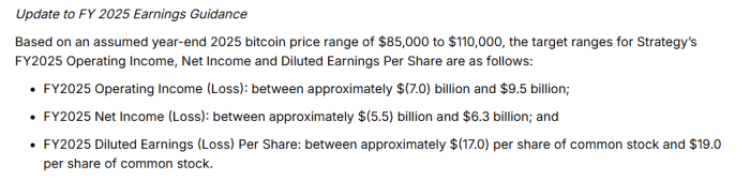
For traders who’ve been using Strategy shares as a levered Bitcoin bet, that pivot underlines a structural problem: you’re still exposed to a single company’s capital-allocation decisions.
Earnings calls, dilution, debt covenants and regulatory scrutiny can hit your Bitcoin play even if $BTC itself trades sideways or higher.
That’s why more capital is quietly rotating from corporate treasuries and listed stocks toward infrastructure and ecosystem exposure.
Instead of asking whether one boardroom will stay max long $BTC, investors are asking which rails will capture fees, users and activity as Bitcoin matures beyond digital gold.In that rotation, Bitcoin Hyper ($HYPER) is emerging as one of the higher-beta ideas on the radar: a Bitcoin Layer 2 that integrates the Solana Virtual Machine (SVM) to deliver sub-second execution and high-throughput smart contracts on top of Bitcoin’s settlement layer.
For traders seeking upside without tying everything to a single stock, it’s a very different proposition from owning Strategy.
Why Bitcoin Ecosystem Bets Are Replacing Single-Stock Proxies
Strategy’s balance-sheet shift highlights a basic reality: listed companies are constrained by shareholders, auditors and macro cycles. They can’t run 100% Bitcoin exposure indefinitely without occasionally de-risking, even if their brand is built on being all in on $BTC.
At the same time, Bitcoin itself still settles around 7 transactions per second on L1, with fees frequently spiking into several dollars during congestion.
That bottleneck has kept most DeFi, gaming and NFT experimentation on chains like Ethereum, Solana and Base, while Bitcoin remains underused capital sitting in cold storage.Bitcoin Hyper attempts to unlock Bitcoin’s idle trillions, but with a very specific approach: pairing Bitcoin settlement with an SVM-powered execution layer.
For investors moving away from corporate proxies, these kinds of rails are increasingly how they try to capture long-term ecosystem upside rather than quarterly treasury decisions. For a deeper dive into how this works in practice, see what Bitcoin Hyper is planning in our guide.
Bitcoin Hyper’s SVM Layer 2 Pitch to Bitcoin Holders
Where Bitcoin Hyper gets interesting is the architecture. It uses Bitcoin L1 purely as the settlement and security root, while a real-time SVM Layer 2 handles high-speed execution.
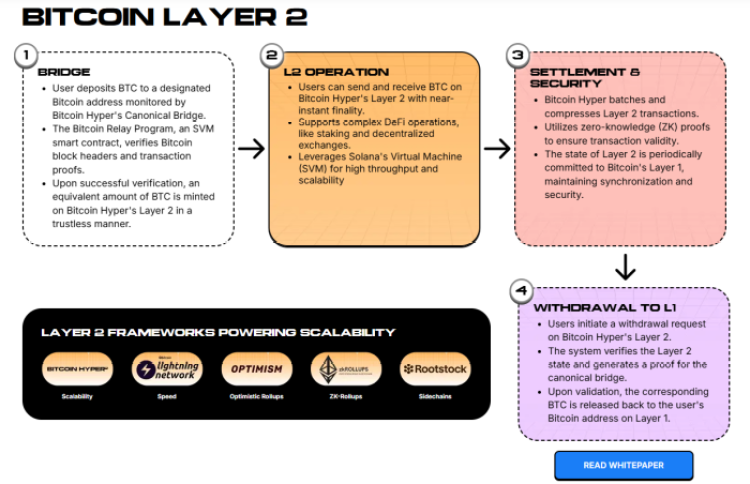
Blocks finalize in sub-second intervals, with transactions costing a tiny fraction of a cent, targeting performance that the team claims can exceed Solana’s own throughput under load.
That SVM integration matters because it imports Solana’s developer tooling and parallel execution model straight into the Bitcoin orbit.
Rust-based smart contracts, SPL-compatible tokens adapted for this L2, and familiar SDKs give builders a fast path to port DeFi, NFT and gaming primitives without reinventing everything for a bespoke VM.On-chain, the system relies on a single trusted sequencer that batches transactions and periodically anchors state to
Bitcoin. A decentralized canonical bridge manages $BTC transfers in and out of the Layer 2, allowing wrapped $BTC to move into high-speed environments for swaps, lending, staking and in-game economies, then settle back to L1 when needed.
The market seems to be paying attention. The Bitcoin Hyper presale has raised $28.8M, with tokens at $0.013365, signaling early conviction that a Solana-grade execution layer attached to Bitcoin’s security could capture meaningful user and fee flow over time.
Learn how to buy $HYPER before the chance is gone.
Whale investors have invested heavily:
- $274K whale $HYPER purchase
- $379K whale $HYPER purchase
- $500K whale $HYPER purchase
That interest comes in part due to $HYPER’s price potential: our $HYPER price prediction shows it could go from $0.013365 to $0.08625 by the end of 2026, delivering 545% potential gains to current investors.
For yield hunters, $HYPER also bakes in staking, with rewards tied to community and governance participation and a 7-day vesting window for presale stakers.If Strategy’s cash hoard is a bet on surviving the next volatility wave, Bitcoin Hyper is a bet that the next wave drives more activity, not just more hoarding.
Consider if $HYPER fits your thesis before joining the presale.
This article is for informational purposes only and does not constitute financial, investment, or trading advice; always do your own research.
Authored by Aaron Walker for NewsBTC – https://www.newsbtc.com/strategy-bitcoin-cash-reserve-boosts-bitcoin-hyper-layer-2
Recommended Articles


