


The SpaceX IPO Is History in the Making: Is It a Day-1 Buy or a "Wait-and-See" Story?
Key Points
Investors are looking for ways to get in on the SpaceX IPO.
The company's fundamentals are a mixed bag right now.
If the stock enters the public markets at its reported valuation, the stock will trade at an extreme premium.
- These 10 stocks could mint the next wave of millionaires ›
History will be written this month with the SpaceX initial public offering (IPO). It is expected to be the largest IPO in history in terms of both valuation and capital raised, immediately putting the space and artificial intelligence (AI) company as one of the largest megacap stocks in the world.
Does that mean you should buy the stock on the day of its IPO? Or should smart investors take a "wait and see" approach with this blockbuster IPO? Here's what the data says is the intelligent move.
Will AI create the world's first trillionaire? Our team just released a report on the one little-known company, called an "Indispensable Monopoly" providing the critical technology Nvidia and Intel both need. Continue »
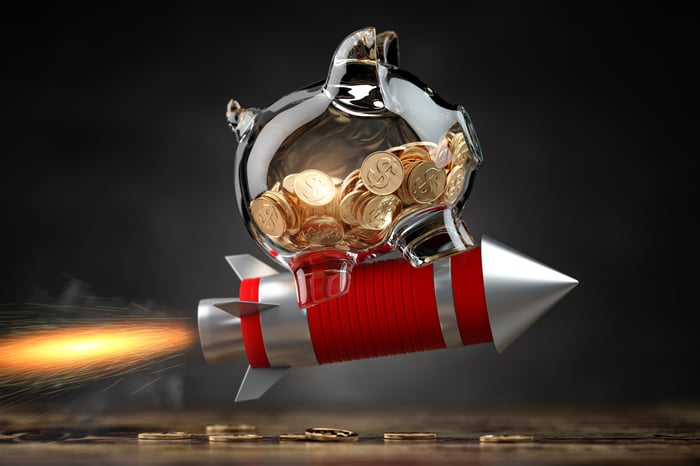
Image source: Getty Images.
A complex fundamental story
Over the past few years, SpaceX has transformed from a rocket launch company into a sprawling conglomerate offering a range of services and projects. The space segment -- which mainly includes launching payloads into orbit and other space-related missions -- hit $4 billion in revenue in 2025, although it currently operates at a loss because of the development of the larger Starship rocket.
Where the profits come in is the connectivity division, housing the fast-growing Starlink satellite internet service. It generated $11.4 billion in revenue in 2025, up from $7.6 billion in 2024, with $4.4 billion in operating income. This is a fantastic business with a long runway for growth.
Right now, Starlink has just over 10 million subscribers and is expanding into direct-to-device satellite internet and new geographies around the world. Expect further growth from Starlink in the years ahead.
A less-flattering part of SpaceX's business story is its AI initiatives from the acquisition of another Musk-controlled entity, xAI (which also controls the platform formerly known as Twitter). In 2025, the AI business generated just $3.2 billion in revenue, putting it well behind the premier labs like OpenAI or Anthropic. It also lost $6.4 billion, wiping out all of Starlink's earnings for the year.
Musk's vision determines premium valuation
At the IPO, it is now rumored that SpaceX will be selling shares at an approximate valuation of $1.8 trillion. This gives it a nice round number when looking at its 2025 revenue of $18.7 billion. A $1.8 trillion market cap would put the stock at a trailing price-to-sales ratio (P/S) of 100, making SpaceX one of, if not the most expensive, large-cap companies in existence today.
You cannot make a logical argument that SpaceX should be valued at $1.8 trillion based on its 2025 figures. Value comes from trusting Musk's vision to build a vertically integrated AI and space flight company. He aims to greatly scale up the Starlink business by shuttling tons of satellites (literally) into space with the giant Starship vehicle under testing. In the long run, he wants to connect his AI endeavors with spaceflight by building AI data centers in orbit to reduce computing costs.
This may all seem far-fetched today, but Musk has a long track record of making magic happen. If successful, the company sees an addressable market in the trillions. To be properly valued like a megacap technology provider, SpaceX will have to quickly start generating revenue in the hundreds of billions, like Microsoft, Alphabet, and Amazon. Otherwise, the stock is liable to fall back to Earth, and quickly.
The truth about most IPO stocks
If you are reading this article, the odds are more likely than not that you want to get a piece of that sweet SpaceX stock at the IPO. Demand is off the charts, which is why the company is potentially going to sell $75 billion worth of stock at a P/S ratio of 100.
Odds are also high that the stock will underperform the broader market over the next few years. IPO stocks are almost always priced to perfection so the company can maximize its capital raise. Looking at the historical performance of IPOs shows that returns can look good in the first days of trading, but stocks generally lag the market over the next three years. Three years after an IPO, 64% of stocks are trailing the indexes by more than 10%, while only 29% are outperforming.
Can SpaceX be one of the select few IPO stocks that keep on winning? Maybe. But the odds are stacked against it with its audacious starting P/S ratio of 100, no matter how grand Elon Musk's vision is.
Where to invest $1,000 right now
When our analyst team has a stock tip, it can pay to listen. After all, Stock Advisor’s total average return is 995%* — a market-crushing outperformance compared to 212% for the S&P 500.
They just revealed what they believe are the 10 best stocks for investors to buy right now, available when you join Stock Advisor.
See the stocks »
*Stock Advisor returns as of June 2, 2026.
Brett Schafer has no position in any of the stocks mentioned. The Motley Fool has positions in and recommends Alphabet, Amazon, and Microsoft. The Motley Fool has a disclosure policy.
Recommended Articles


