


June Precious Metals Outlook: Gold May See a Periodic Recovery, Silver Volatility May Still Be the Market Consensus
TradingKey — Since May, the precious metals market has continued its corrective tone. Spot gold rebounded slightly after breaking below the $4,500 level multiple times during the month, representing a significant retracement from its year-to-date highs. Spot silver briefly fell below $75 during the month, with peak-to-trough volatility exceeding 15%.
Heading into June, as some of the factors weighing on the market ease at the margin, the pricing anchor for precious metals is entering a window for structural reassessment.
Profit-taking in US stocks at record highs; precious metals poised to be "spillover" beneficiaries
US stocks have entered a high-level consolidation range after a continuous uptrend since April. On May 20, volatility intensified significantly after the Dow breached the 50,000 mark, with the S&P 500 and the Nasdaq simultaneously entering a consolidation phase after hitting record highs.
As US stock volatility rose and some capital engaged in profit-taking, funds that had previously exited precious metals to chase risk assets began showing signs of partial backflow.
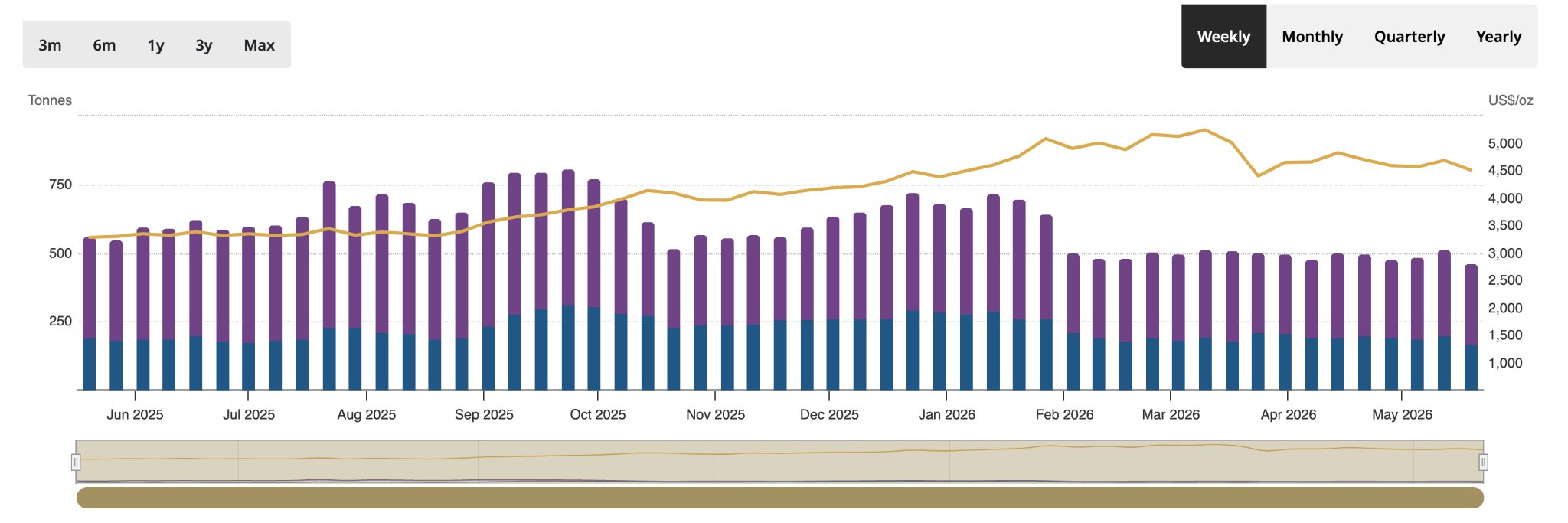
From the perspective of global macro hedging trade structures, net long positions for COMEX gold speculators increased by 4,963 contracts to 100,627 in mid-May, while silver net longs simultaneously rose by 5,254 contracts to 16,195.
The recurrence of the "simultaneous rise in stocks and gold" pattern suggests that capital is not flowing unidirectionally from gold into risk assets; instead, it is starting to be allocated differentially between the two asset classes, providing a demand-side support variable for precious metal prices in June and for the full year. Silver: Volatile Pattern Difficult to Change Amid Macro and Supply Surge
Silver's performance in June is expected to be weaker than gold's. The core suppressing factor remains the pressure from supply-demand dynamics; furthermore, silver's safe-haven appeal is far less recognized by the market than gold's. In extreme circumstances, silver's fundamental safe-haven properties may face failure.
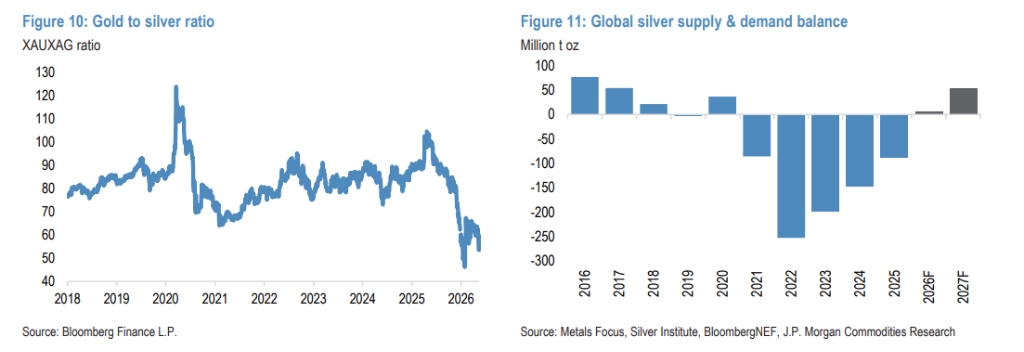
Previously, UBS significantly lowered its forecast for the silver supply-demand deficit, narrowing it from an early-year estimate of approximately 300 million ounces to between 60 and 70 million ounces. The triple factors of weakening solar demand, investment capital outflows, and increased mining supply have combined to suppress the upward momentum of silver prices. Silver's fundamental support is weakening.
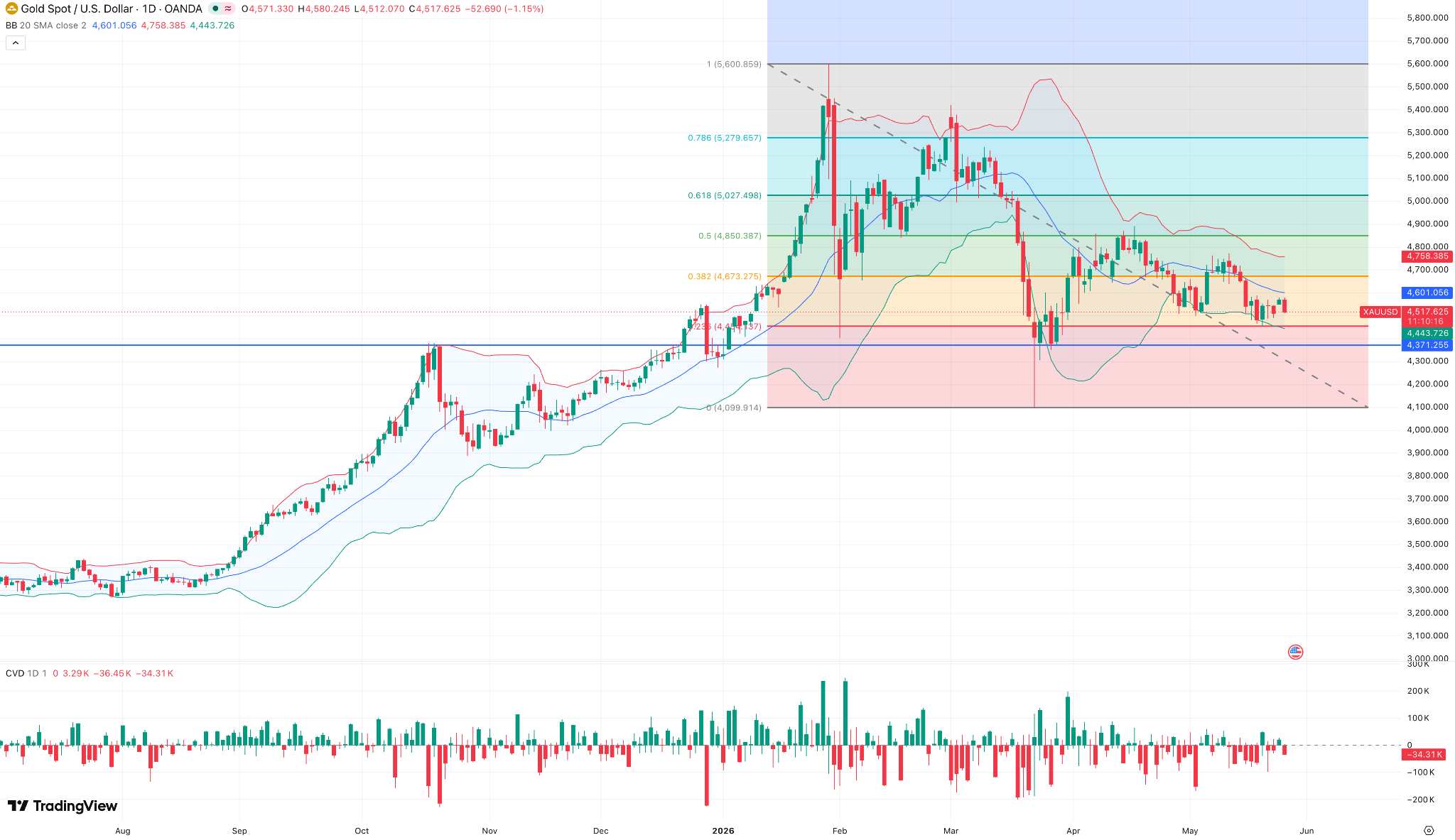
[Silver Bollinger Band range and its key support levels, Source: TradingView]
Technically, key support for spot silver is located near $70.86. If this level is breached, the next long-term support lies within the $61 to $67 range. Rebound resistance is concentrated between $81 and $83, and a breakout would require macro coordination in the form of a weaker dollar or a systemic decline in Treasury yields. In the short term, as the two major suppressing factors—the dollar and Treasury yields—are unlikely to ease simultaneously, silver will likely maintain a wide range of volatility.
From a quantitative perspective, JPMorgan expects the gold-to-silver ratio to rebound to around 75:1, implying that the current level of approximately 58:1 has room for further downward correction.
Short-term speculative capital cleared out; gold's safe-haven status returns.
On May 13, the high yield for the U.S. 30-year Treasury bond auction was set at 5.046%, marking the first time it has firmly held the 5% level since 2007, subsequently climbing as high as 5.13% to reach a fresh ten-month high.
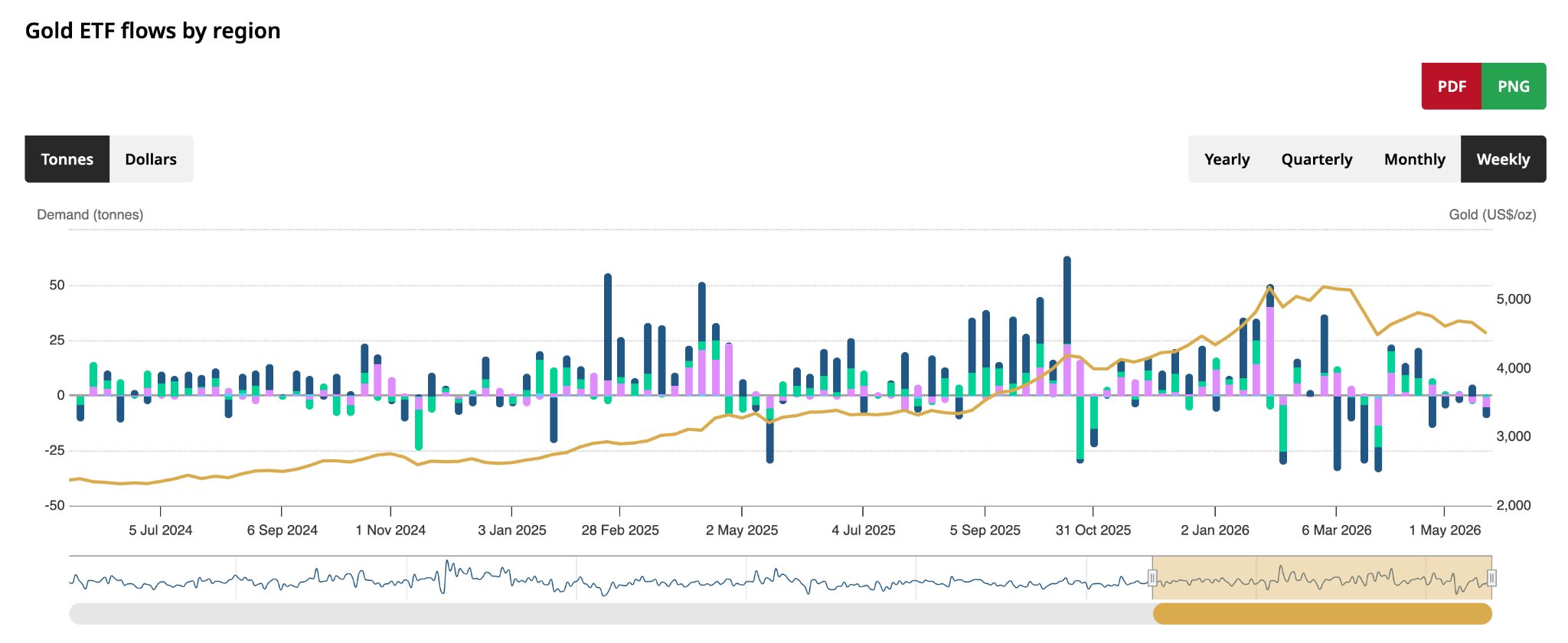
With the 30-year U.S. Treasury yield breaking through 5%, a large volume of short-term capital that had previously bet on "rate cut expectations" was forced to trigger stop-losses, leading to continuous outflows from gold ETFs, with North American markets accounting for the vast majority of those outflows.
The concentrated clearing of short-term capital has optimized the positioning structure of gold. As some "hot money" exits, gold has returned more purely to a pricing framework based on inflation hedging and long-term allocation attributes.
Notably, gold's "safe-haven" status is being suppressed in the current macro environment. According to TradingKey analysis, if tensions ease substantially, there may be further room for gold and silver prices to recover; however, if the geopolitical deadlock persists, it could continue to push up oil prices and U.S. Treasury yields, exerting downward pressure on gold and silver.
As the June negotiation process moves forward, the systemic selling pressure that previously forced capital out has not vanished, but the floor for gold prices is being repeatedly solidified through earlier adjustments.
Cooling Oil Prices Could Be the Key Factor for a Breakthrough in Precious Metals
Market institutions noted that when the situation in the Strait of Hormuz eventually cools down, current macro gold headwinds—including high real interest rates and a strong US dollar—will effectively ease, and gold prices are likely to bottom out and rebound.
In a scenario where the Strait of Hormuz remains closed for longer and energy prices stay higher for a more sustained period, market concerns will shift from "inflation without recession" to "stagflation," at which point the macro hedging logic for precious metals will undergo a qualitative change.
The impact of falling oil prices on precious metals involves two levels of transmission. First, weaker oil prices will alleviate imported inflationary pressures, thereby weakening the momentum for a sustained rise in Treasury yields and "unshackling" gold. Second, as oil prices retreat, the marginal pressure from the Federal Reserve's hawkish stance will simultaneously ease, and the pricing pivot for the federal funds rate may undergo a moderate correction.
If negotiations proceed smoothly in June and oil prices continue to retreat from their current highs, gold will reach its most significant periodic inflection point of the year. Should negotiations fall back into a deadlock, the short-term pressure on gold will remain difficult to reverse; however, with the Fed’s "higher for longer" interest rate policy largely priced in by the market, the marginal room for further downside is already limited.
Based on institutional forecasts, JPMorgan believes the upward trend in gold is in a "pause rather than a reversal," with its base-case scenario assuming the Strait of Hormuz reopens in June, gold prices challenging the $4,900 to $5,100 range, and a year-end target of $6,000. Goldman Sachs also maintains its year-end target of $5,400, arguing that central bank gold purchases and de-dollarization provide structural support.
Regarding silver, as the five-year deficit cycle nears its end and silver demand for photovoltaics could potentially plummet, the logic for it outperforming gold has basically collapsed, and the gold-to-silver ratio is expected to recover toward 75:1.
Overall, as short-term capital is gradually flushed out, high interest rates are fully priced in, and oil prices begin to retreat marginally, gold has entered a bottoming-out phase, with the probability of an upward move in the second half of the year trending higher. Silver is expected to continue trading in a wide range until the pressure from the US dollar and Treasury yields is lifted, awaiting the repricing of rate-cut expectations or signals of a recovery in industrial demand.
Recommended Articles


