


Not Micron. Not Sandisk. This AI Memory Stock Is the One Wall Street Is Overlooking.
Key Points
Penguin Solutions sells the server, software, and operations behind memory expansion, not just the memory.
Penguin's CXL KV cache server adds about 11 terabytes of memory per machine, so GPUs spend more time computing and less time waiting for data.
The six new AI customers it won last quarter demonstrate there's strong demand for what Penguin offers, but the cyclical nature of the memory market and a degree of customer concentration mean the stock is not without risks.
- Motley Fool Issues Rare "Total Conviction" Buy Alert ›
Nearly every conversation about the surging demand for artificial intelligence (AI) memory this year has gone much the same way. Someone will mention high-bandwidth memory (HBM) -- the chips that are stacked next to Nvidia's (NASDAQ: NVDA) graphics processing units (GPUs) -- and the discussion will jump to Micron Technology. Or someone will bring up flash storage, and the talk will turn to Sandisk. Both companies have been rewarded for their strong positions as manufacturers of commodities that are suddenly in short supply.
But those two companies make the memory. One smaller business determines how that memory gets arranged inside servers, and it is solving a problem the chipmakers cannot solve alone.
Missed AI’s "Act 1"? Act 2 Could Be 15x Bigger. Most investors think they missed the AI boat because they didn't buy Nvidia in 2005. But according to our analysts, we’re only at the end of "Act 1"—the R&D phase. "Act 2" is the global rollout. Continue »
That company is Penguin Solutions (NASDAQ: PENG), a Fremont, California, outfit that most investors have never heard of -- partly because it changed its name from SMART Global Holdings two years ago. It has built memory modules for decades. What it is doing now is different, and the market has not caught up.
Penguin Solutions is attacking the memory wall
Here is the problem Penguin works on in plain terms. When an AI model sets out to answer a question, it has to remember everything that was said previously in the conversation. That running memory is held in something called the KV cache, and today, that mostly lives in the GPU's own memory, which is expensive and scarce. As conversations get longer and AI agents run for hours instead of seconds, that memory fills up. As a result, it can take memory chips and drives longer to feed the processors all the data that they require, and while a GPU is waiting for data, it sits idle. Engineers call this the memory wall.
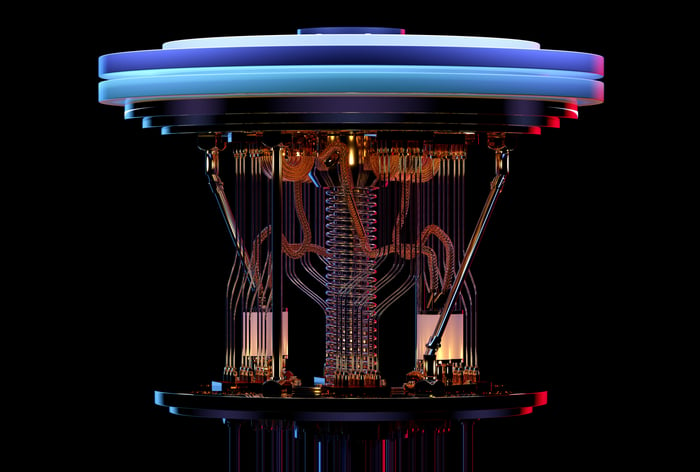
Image source: Getty Images.
Penguin's answer is a server built around a technology called CXL, which lets a machine bolt on extra memory the way you might add an extra hard drive to a desktop computer. In September, the company showed a KV cache server that packs 3 terabytes of standard DDR5 memory plus up to eight 1-terabyte CXL add-in cards, for a total of roughly 11 terabytes per machine. The idea is to park the AI's working memory next to GPUs instead of inside them, allowing those expensive chips to spend more time computing and less time waiting for data. Penguin is also developing a next-generation memory product with Marvell Technology, and it told investors in October that it is still putting money into new CXL products because bookings are strengthening.
What makes Penguin's offerings hard to copy is that it does not just sell the cards. It designs the server, writes the software that manages it, and increasingly runs the whole facility. Its ClusterWareAI software now detects and fixes GPU performance problems without a human in the loop. That matters because its buyers are often new cloud providers with the capital and the allocation of Nvidia processors required, but not the operations staff.
The customers tell the story
Those customers are the second reason to pay attention. In its fiscal fourth quarter, Penguin signed six new AI infrastructure customers, four of them so-called neoclouds, the specialized compute providers renting GPU capacity to AI labs. One of them hired Penguin to deploy and run a 36,000-GPU facility in Norway backed by a $10 billion compute contract from an AI lab. Another, a publicly traded neocloud with more than $3 billion in signed contracts, chose Penguin for deployment and round-the-clock operations. A South Korean technology company's cloud venture picked it to build out a cloud centered around Nvidia's GB300 (Grace Blackwell Ultra) platforms.
Remember, though, Penguin is still a memory company at heart, and the memory market is highly cyclical. In October, memory and AI-linked stocks experienced a steep sell-off, and Penguin itself is down over 30% from the peak it reached in early October. To me, this marks a buying opportunity. Penguin's integrated memory segment roughly doubled last year due to data center demand, but that surge can reverse when supply catches up to demand. The company also depends on a handful of large customers and on components it does not control, which is why it spent part of the year lining up new supply agreements.
The stock is overlooked in the way that matters: Investors see "memory" and think "commodity maker" when the company is actually building the plumbing that allows AI inference to scale. For any investor who already owns the obvious memory names, it could be worthwhile to open a small position in a company that's the pick-and-shovel play behind them. Just remember that Penguin is still partly a cyclical stock, so size your stake accordingly.
Should you buy stock in Penguin Solutions right now?
Before you buy stock in Penguin Solutions, consider this:
The Motley Fool Stock Advisor analyst team just identified what they believe are the 10 best stocks for investors to buy now… and Penguin Solutions wasn’t one of them. The 10 stocks that made the cut could produce monster returns in the coming years.
Consider when Netflix made this list on December 17, 2004... if you invested $1,000 at the time of our recommendation, you’d have $334,793!* Or when Nvidia made this list on April 15, 2005... if you invested $1,000 at the time of our recommendation, you’d have $1,257,420!*
Now, it’s worth noting Stock Advisor’s total average return is 874% — a market-crushing outperformance compared to 209% for the S&P 500. Don't miss the latest top 10 list, available with Stock Advisor, and join an investing community built by individual investors for individual investors.
See the 10 stocks »
*Stock Advisor returns as of November 3, 2026.
Micah Zimmerman has no position in any of the stocks mentioned. The Motley Fool has positions in and recommends Marvell Technology, Micron Technology, Nvidia, and Penguin Solutions. The Motley Fool has a disclosure policy.
Recommended Articles


