


Cerebras Systems Stock Soars 68% in Blockbuster IPO: What Investors Should Know
Key Points
The artificial intelligence (AI) chipmaker’s initial public offering was the largest IPO in 2026 so far.
Cerebras closed Thursday with a standard market cap of just under $67 billion.
Newer customers include some big names: OpenAI, the maker of ChatGPT, Amazon, and Meta Platforms.
- 10 stocks we like better than Cerebras Systems ›
On Thursday, Cerebras Systems (NASDAQ: CBRS) soared 68.2% in its debut on the Nasdaq stock exchange. The artificial intelligence (AI) chipmaker's initial public offering was the largest IPO in 2026 so far. That title, however, may be lost if Elon Musk's SpaceX goes public this year, as widely expected.
Here's what investors should know.
Will AI create the world's first trillionaire? Our team just released a report on the one little-known company, called an "Indispensable Monopoly" providing the critical technology Nvidia and Intel both need. Continue »
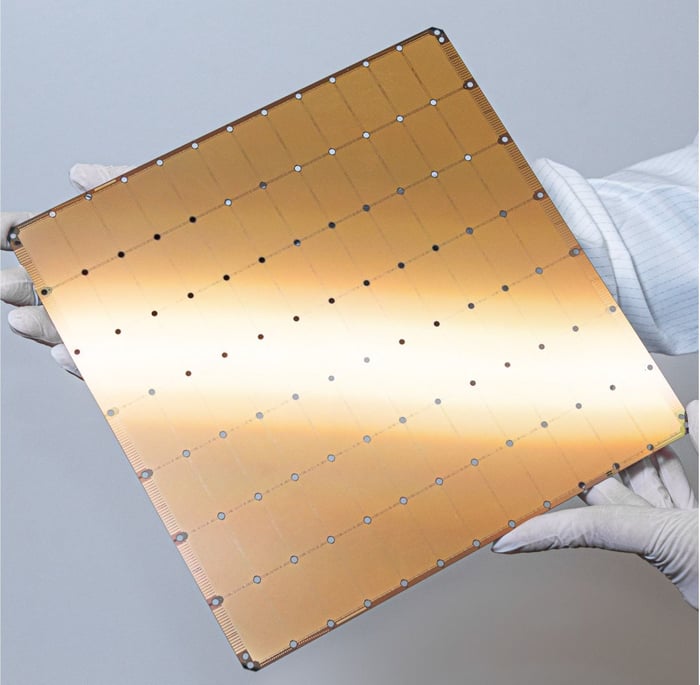
Cerebras' wafer-scale AI chip. Image source: Cerebras Systems.
Cerebras Systems IPO
Cerebras stock offering price was $185, with shares opening at $350, indicating powerful demand for the stock. Shares closed on Thursday at $311.07, up 68.2% from the IPO price.
The company raised about $5.55 billion by selling 30 million shares at the IPO price.
Based on 215.23 million shares outstanding, Cerebras closed Thursday with a standard market cap of just under $67 billion. (215.23 million x $311.07)
What does Cerebras Systems do?
Cerebras Systems is a fast-growing artificial intelligence chipmaker whose customers include ChatGPT maker OpenAI, Amazon, and Meta Platforms. It's been widely touted as a competitor to AI chip leader Nvidia (NASDAQ: NVDA) – and it does, indeed, look like it could prove to be a formidable rival.
The company touts that its wafer-scale AI chips (a full silicon wafer is used to make one gigantic chip) are much faster than all competitors' chips – including Nvidia's – for AI inferencing. Inferencing is the deployment of an AI application. It's the second major step in the AI process, following training. The global AI inference market is expected to grow faster than the AI training market over the long term, making it particularly attractive.
The company's AI supercomputers include the CS-2 and CS-3 (Cerebras System 2 and 3, respectively), which are powered by the WSE-3 (Wafer-Scale Engine 3) AI processor. Customers can buy these systems for use on their own premises or rent access via the company's pay-as-you-go cloud offerings.
Revenue is growing fast, but the company is not profitable from an operating basis
Cerebras' revenue surged from $24.6 million in 2022 to $78.7 million in 2023 and to $290.3 million in 2024, representing a more than tenfold increase over three years, according to its Securities and Exchange Commission (SEC) filing. In 2025, its revenue increased to $510 million, up 76% year over year. This growth was driven by 69% in hardware and 99% in cloud and other services.
How does 2025's annual revenue and growth compare to that of Nvidia?
In its fiscal year 2026 (ended Jan. 25), Nvidia's revenue was $215.9 billion, up 65%. So, Cerebras grew annual revenue a little faster than Nvidia did, but this was a much more difficult feat for Nvidia, given its much larger size. Nvidia's revenue was 423 times that of Cerebras.
As I wrote in my April Cerebras article when the company filed for an IPO:
While it reported a loss from operations of $145.9 million in 2025, this was due to significant research and development spending. Its 2025 R&D expenditure was 48% of its annual sales. 2025 net income was positive, but only because of a significant positive "net, other income" stemming primarily from "a change in fair value and extinguishment of forward contract liability.
A big positive: In 2025, Cerebras' operating cash flow was negative $10.1 million, so it was not far from break-even on a cash from operations basis.
How does Cerebras' market cap compare to other semiconductor stocks?
Cerebras' stock could continue to climb for a while, potentially boosting its market cap. But for context, here's how its $67 billion market cap at Thursday's market close compares to the market caps of the five largest chip stocks:
- Nvidia: $5.7 trillion
- Taiwan Semiconductor Manufacturing (TSMC): $2.2 trillion
- Broadcom: $2.1 trillion
- Micron Technology: $875 million
- Advanced Micro Devices (AMD): $733 million
Cerebras stock looks poised to be included in 2 key market indexes
Cerebras stock looks poised to be included in the S&P 500 and Nasdaq-100 indexes. On the S&P 500, the smallest stock has a market cap of $4.7 billion, as of May 14. On the latter index, the smallest stock has a market cap of $13.0 billion.
The addition to a major stock market index provides a tailwind for a stock because mutual funds and exchange-traded funds (ETFs) based on that index must buy its shares.
A stock worth at least watching
I'll close on the same note as I closed my April Cerebras article: "In short, all signs point to Cerebras Systems stock as worth considering for investment -- at the very least, worth watching."
Should you buy stock in Cerebras Systems right now?
Before you buy stock in Cerebras Systems, consider this:
The Motley Fool Stock Advisor analyst team just identified what they believe are the 10 best stocks for investors to buy now… and Cerebras Systems wasn’t one of them. The 10 stocks that made the cut could produce monster returns in the coming years.
Consider when Netflix made this list on December 17, 2004... if you invested $1,000 at the time of our recommendation, you’d have $472,205!* Or when Nvidia made this list on April 15, 2005... if you invested $1,000 at the time of our recommendation, you’d have $1,384,459!*
Now, it’s worth noting Stock Advisor’s total average return is 999% — a market-crushing outperformance compared to 208% for the S&P 500. Don't miss the latest top 10 list, available with Stock Advisor, and join an investing community built by individual investors for individual investors.
See the 10 stocks »
*Stock Advisor returns as of May 14, 2026.
Beth McKenna has positions in Nvidia. The Motley Fool has positions in and recommends Amazon, Broadcom, Meta Platforms, Micron Technology, Nvidia, and Taiwan Semiconductor Manufacturing. The Motley Fool has a disclosure policy.
Recommended Articles


