


This Is Warren Buffett's Favorite Index Fund, and It Could Turn $200 per Month Into $1 Million
Key Points
For years, Warren Buffett has highly recommended investing in an S&P 500 index fund.
Over time, this passive investment could turn a couple hundred dollars per month into over $1 million.
However, there's a major drawback investors should consider before buying -- an S&P 500 index fund aims to track the market, rather than beat it.
- These 10 stocks could mint the next wave of millionaires ›
There are few investors whose words carry as much weight as Warren Buffett. The stock market legend is famous for offering advice throughout his decades-long career, helping everyday investors build lifelong wealth.
While Buffett may be known for his stock-picking ability, his advice for others is surprisingly simple. There's one index fund he heavily recommends, and it could help you build a portfolio worth $1 million or more while barely lifting a finger.
Will AI create the world's first trillionaire? Our team just released a report on the one little-known company, called an "Indispensable Monopoly" providing the critical technology Nvidia and Intel both need. Continue »
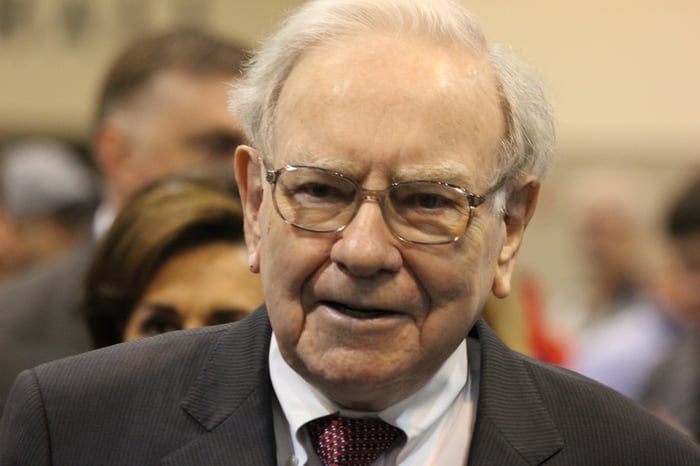
Image source: The Motley Fool.
Buffett's No. 1 recommended investment
For investors seeking to build long-term wealth with minimal effort, Buffett highly recommends buying an S&P 500 index fund. In fact, in Berkshire Hathaway's 2020 shareholder meeting, Buffett went so far as to say that it's "the best thing" for most investors.
He also backed up his advice in 2008 with a $1 million bet that an S&P 500 index fund could outperform a group of five actively managed hedge funds. After 10 years, his investment had earned total returns of around 126%. The five hedge funds averaged returns of just 36%, and even the highest-earning fund only earned total returns of around 88%.
There are a few reasons why an S&P 500 index fund is such a solid choice:
- It offers stellar diversification: Most experts recommend investing in at least 25 stocks across multiple industries to properly diversify your portfolio. Each S&P 500 index fund holds around 500 stocks across every sector of the market, offering ample diversification that can help limit risk during periods of market volatility.
- It boasts a century's worth of history: Past performance doesn't predict future returns, but the S&P 500's extensive history of surviving turbulence can offer investors some peace of mind. The index itself has not only pulled through every recession, crash, and bear market it's ever faced, but it's also earned positive total returns over decades despite volatility.
- It's a hands-off investment: An S&P 500 index fund performs best when given as much uninterrupted time as possible to grow. This means investors never need to worry about buying or selling at just the right moment, and because all of the stocks in the fund are already chosen, this investment requires much less research than buying individual stocks.
An S&P 500 index fund is such a stable investment that, historically, it's proven harder for long-term investors to lose money with one than to earn money.
According to analysis from Crestmont Research, every single 20-year period in the S&P 500's history has ended in positive total returns. In other words, if you were to buy an S&P 500 index fund at any point in the last century and hold it for 20 years, you'd have made money.
Reaching millionaire status
With enough time, it's possible to earn $1 million or more with an S&P 500 index fund. However, it may require a bit more effort compared to higher-earning investments like growth funds or individual stocks.
Because an S&P 500 index fund aims to track the market, it can't beat the market. For investors seeking a passive investment that offers long-term stability, the lower earnings might be a worthwhile trade-off. That said, even seemingly minor differences in total returns can add up over time.
The S&P 500 itself has earned an average rate of return of around 10% per year, historically. If you were to invest $200 per month, here's how that could compound over time, depending on whether you're earning a 10% average annual return or a slightly higher 12% average annual return:
| Number of Years | Total Portfolio Value: 10% Avg. Annual Return | Total Portfolio Value: 12% Avg. Annual Return |
|---|---|---|
| 20 | $137,000 | $173,000 |
| 25 | $236,000 | $320,000 |
| 30 | $395,000 | $579,000 |
| 35 | $650,000 | $1,036,000 |
| 40 | $1,062,000 | $1,841,000 |
Data source: Author's calculations via investor.gov.
An S&P 500 index fund can still perform exceptionally well given enough time. But to reach that $1 million mark, you'll need to either invest for several decades or contribute several hundred dollars per month.
Higher-earning investments like growth funds can be more volatile, so it's up to each individual investor to decide whether the higher potential earnings are worth the risk. But if you're comfortable with average returns, an S&P 500 index fund can be a fantastic choice for stability, reliability, and consistent long-term earnings.
Where to invest $1,000 right now
When our analyst team has a stock tip, it can pay to listen. After all, Stock Advisor’s total average return is 994%* — a market-crushing outperformance compared to 199% for the S&P 500.
They just revealed what they believe are the 10 best stocks for investors to buy right now, available when you join Stock Advisor.
See the stocks »
*Stock Advisor returns as of April 20, 2026.
Katie Brockman has no position in any of the stocks mentioned. The Motley Fool has positions in and recommends Berkshire Hathaway. The Motley Fool has a disclosure policy.
Recommended Articles


