

Retail Investors Are Getting Cautious: Is That Actually a Contrarian Buy Signal?

Source The Motley Fool

Key Points

  • There has been a pronounced shift in retail investor behavior since the Iran war began a month ago.

  • Retail investors are pulling back, selling and not buying.

  • Is it time for investors to "be greedy when others are fearful"?

  • 10 stocks we like better than S&P 500 Index ›

Retail investors have been highly engaged over the past three years, driving forward the 2023-2025 bull market.

According to research last year from JPMorgan Chase, retail investing flows jumped by 50% from 2023, the start of the bear market, through early 2025.

Will AI create the world's first trillionaire? Our team just released a report on the one little-known company, called an "Indispensable Monopoly" providing the critical technology Nvidia and Intel both need. Continue »

The trend continued throughout a volatile 2025, as retail investors aggressively bought the dip at levels not seen since the 2020 pandemic, according to research from Bespoke Investment Group.
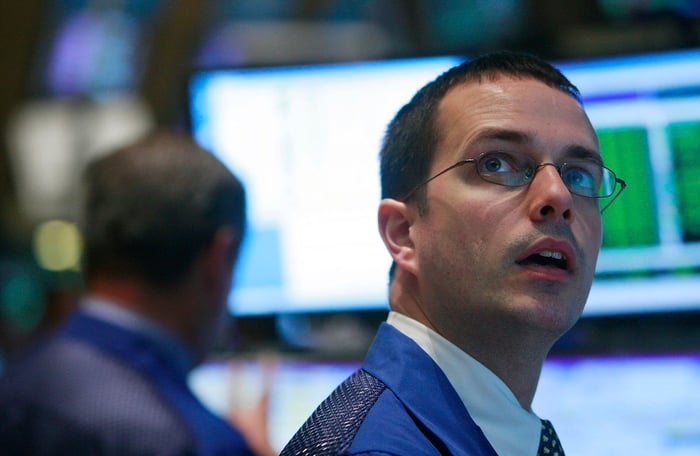
A trader looking up at data on a screen.

Image source: Getty Images.

The prevailing logic was that bold policy pronouncements on things like tariffs would be walked back or not fully implemented, and markets would bounce back. Some analyses suggest that retail traders were on to this more than institutional investors, who tend to be more cautious.

Retail investors pull back

But something seems to have flipped with retail investors in recent weeks. They have become more cautious, fearing longer-term negative effects of the war in Iran and geopolitical tensions affecting macroeconomics and markets. That has resulted in a dip in buying the dip, according to research.

JPMorgan Chase strategists reported a 30% drop in retail trading activity for the week of March 12. And for the week of March 19, retail flows fell to $3 billion, well below the 12-month average of $6.8 billion. Overall, according to CNBC, retail stock purchases are 30% lower than before the war in Iran began.

And Vanda Research found that retail investors were net sellers of stocks on March 23, the first time they had seen that since November 2023.

During this retail pullback, markets have been plummeting. The S&P 500 (SNPINDEX: ^GSPC) and Nasdaq Composite (NASDAQINDEX: ^IXIC) are each down about 4% since the war started, as of April 2.

There could be some rebalancing by pension funds back into equities at the end of March. When markets fall like they have, pensions rebalance back to their mandate ranges, and that would likely mean some stock buying. But when will retail investors buy back in en masse?

There is greater uncertainty about the war's impacts, as many see it as something that cannot be easily unilaterally reversed or modified, which may be why investors are reluctant to dive back in. Further, it could have knock-on effects, potentially leading to higher oil and gas prices, higher inflation, and perhaps delayed interest rate cuts.

The CME Fedwatch poll of interest rate traders, which in December had polled for two cuts in 2026, is now predicting the possibility of rate increases. By December 2026, almost 64% of interest rate traders expect rates to remain at 3.5% to 3.75%, while 31% expect them to be higher, in the 3.75% to 4% range. And 5% project rates are to be 50 basis points higher than they are now by December. Only a minuscule 0.2% anticipate rates to be down to 3.25 to 3.5% by the end of the year.

"Be greedy when others are fearful"

Clearly, investors are spooked right now, but as former Berkshire Hathaway CEO Warren Buffett famously said, "You want to be greedy when others are fearful. You want to be fearful when others are greedy."

Buffett, the noted contrarian, has clearly been more on the fearful side the past few years, selling assets and stockpiling cash. He has since retired, but it will be interesting to see what successor Greg Abel will do now when others are fearful.

It is impossible to know where markets will go from here or how long the malaise will last. But as a long-term investor, if you see an opportunity to buy good stocks at a discount, it is a good idea to jump on them.

When you see a company like Nvidia (NASDAQ: NVDA) with massive earnings power and market dominance in the middle of an AI supercycle, down 10% year to date and trading at 21 times earnings, it should get your attention.

The same goes for Microsoft (NASDAQ: MSFT), down 25% and trading at 20 times forward earnings, or Amazon (NASDAQ: AMZN), down 13% and trading at 25 times forward earnings. If you see proven winners who are dominant in their markets and still generating robust revenue increases available at lower-than-average P/E ratios, they are stocks to consider right now.

But many great values can be found outside of megacap tech stocks. The key is to be selective, watch P/E ratios and valuation metrics, and be cautious. Look for stocks of companies with strong cash flows, consistently steady earnings, and competitive advantages or market leadership.

Should you buy stock in S&P 500 Index right now?

Before you buy stock in S&P 500 Index, consider this:

The Motley Fool Stock Advisor analyst team just identified what they believe are the 10 best stocks for investors to buy now… and S&P 500 Index wasn’t one of them. The 10 stocks that made the cut could produce monster returns in the coming years.

Consider when Netflix made this list on December 17, 2004... if you invested $1,000 at the time of our recommendation, you’d have $515,294!* Or when Nvidia made this list on April 15, 2005... if you invested $1,000 at the time of our recommendation, you’d have $1,077,442!*

Now, it’s worth noting Stock Advisor’s total average return is 914% — a market-crushing outperformance compared to 184% for the S&P 500. Don't miss the latest top 10 list, available with Stock Advisor, and join an investing community built by individual investors for individual investors.

See the 10 stocks »

*Stock Advisor returns as of April 3, 2026.

JPMorgan Chase is an advertising partner of Motley Fool Money. Dave Kovaleski has no position in any of the stocks mentioned. The Motley Fool has positions in and recommends Amazon, Berkshire Hathaway, JPMorgan Chase, Microsoft, and Nvidia. The Motley Fool has a disclosure policy.

Disclaimer: For information purposes only. Past performance is not indicative of future results.
placeholder
Bitcoin To Anchor America Party—’Fiat Is Hopeless,’ Says Elon MuskMusk Pitches Bitcoin As Pillar Of America Party
Author  Bitcoinist
Jul 07, 2025
Musk Pitches Bitcoin As Pillar Of America Party
placeholder
Bitcoin briefly loses 2025 gains as crypto plunges over the weekend.Bitcoin experienced a sharp decline this weekend, briefly erasing its 2025 gains and dipping below its year-opening value of $93,507. The cryptocurrency fell to a low of $93,029 on Sunday, representing a 25% drop from its all-time high in October. Although it has rebounded slightly to around $94,209, the pressures on the market remain significant. The downturn occurred despite the reopening of the U.S. government on Thursday, which many had hoped would provide essential support for crypto markets. This year initially appeared promising for cryptocurrencies, particularly after the inauguration of President Donald Trump, who has established the most pro-crypto administration thus far. However, ongoing political tensions—including Trump's tariff strategies and the recent government shutdown, lasting a historic 43 days—have contributed to several rapid price pullbacks for Bitcoin throughout the year. Market dynamics are also being influenced by Bitcoin whales—investors holding large amounts of Bitcoin—who have been offloading portions of their assets, consequently stalling price rallies even as positive regulatory developments emerge. Despite these sell-offs, analysts from Glassnode argue that this behavior aligns with typical patterns seen among long-term investors during the concluding stages of bull markets, suggesting it is not indicative of a mass exodus. Notably, Bitcoin is not alone in its struggles, as Ethereum and Solana have also recorded declines of 7.95% and 28.3%, respectively, since the start of the year, while numerous altcoins have faced even steeper losses. Looking ahead, questions linger regarding the viability of the four-year cycle thesis, particularly given the increasing institutional support and regulatory frameworks now in place in the crypto landscape. Matt Hougan, chief investment officer at Bitwise, remains optimistic, suggesting a potential Bitcoin resurgence in 2026 driven by the “debasement trade” thesis and a broader trend toward increased adoption of stablecoins, tokenization, and decentralized finance. Hougan emphasized the soundness of the underlying fundamentals, pointing to a positive outlook for the sector in the longer term.
Author  Mitrade
Nov 17, 2025
Bitcoin experienced a sharp decline this weekend, briefly erasing its 2025 gains and dipping below its year-opening value of $93,507. The cryptocurrency fell to a low of $93,029 on Sunday, representing a 25% drop from its all-time high in October. Although it has rebounded slightly to around $94,209, the pressures on the market remain significant. The downturn occurred despite the reopening of the U.S. government on Thursday, which many had hoped would provide essential support for crypto markets. This year initially appeared promising for cryptocurrencies, particularly after the inauguration of President Donald Trump, who has established the most pro-crypto administration thus far. However, ongoing political tensions—including Trump's tariff strategies and the recent government shutdown, lasting a historic 43 days—have contributed to several rapid price pullbacks for Bitcoin throughout the year. Market dynamics are also being influenced by Bitcoin whales—investors holding large amounts of Bitcoin—who have been offloading portions of their assets, consequently stalling price rallies even as positive regulatory developments emerge. Despite these sell-offs, analysts from Glassnode argue that this behavior aligns with typical patterns seen among long-term investors during the concluding stages of bull markets, suggesting it is not indicative of a mass exodus. Notably, Bitcoin is not alone in its struggles, as Ethereum and Solana have also recorded declines of 7.95% and 28.3%, respectively, since the start of the year, while numerous altcoins have faced even steeper losses. Looking ahead, questions linger regarding the viability of the four-year cycle thesis, particularly given the increasing institutional support and regulatory frameworks now in place in the crypto landscape. Matt Hougan, chief investment officer at Bitwise, remains optimistic, suggesting a potential Bitcoin resurgence in 2026 driven by the “debasement trade” thesis and a broader trend toward increased adoption of stablecoins, tokenization, and decentralized finance. Hougan emphasized the soundness of the underlying fundamentals, pointing to a positive outlook for the sector in the longer term.
placeholder
Gold rises on softer US Dollar, traders await Trump's address on Iran warGold price (XAU/USD) extends the rally to near $4,775 during the early Asian session on Thursday. The precious metal surges amid a weakening US Dollar (USD) and cooling geopolitical tensions in the Middle East.
Author  FXStreet
Yesterday 01: 20
Gold price (XAU/USD) extends the rally to near $4,775 during the early Asian session on Thursday. The precious metal surges amid a weakening US Dollar (USD) and cooling geopolitical tensions in the Middle East.
placeholder
Silver Price Forecast: XAG/USD falls to near $72.00 amid fading safe-haven demandSilver price (XAG/USD) continues to lose ground after registering tiny losses in the previous day, trading around $72.90 during the Asian hours on Thursday. The safe-haven demand for the precious metal fades amid rising optimism over Middle East peace.
Author  FXStreet
23 hours ago
Silver price (XAG/USD) continues to lose ground after registering tiny losses in the previous day, trading around $72.90 during the Asian hours on Thursday. The safe-haven demand for the precious metal fades amid rising optimism over Middle East peace.
placeholder
Gold retreats sharply from two-week top/$4,800 as Trump’s Iran comments boost USDGold (XAU/USD) witnessed an intraday turnaround from the $4,800 mark, or a fresh two-week high set earlier this Thursday, and for now, seems to have snapped a four-day winning streak amid resurgent US Dollar (USD) demand.
Author  FXStreet
Yesterday 07: 03
Gold (XAU/USD) witnessed an intraday turnaround from the $4,800 mark, or a fresh two-week high set earlier this Thursday, and for now, seems to have snapped a four-day winning streak amid resurgent US Dollar (USD) demand.
goTop
quote