




Should You Own a Home in Retirement?
Key Points
You may appreciate the stability of homeownership in retirement, especially if your house is paid off.
Renting could be an easier way to lock in your total housing costs.
When you rent, you don't have to deal with surprise repairs that could wreck your budget.
- The $23,760 Social Security bonus most retirees completely overlook ›
Housing is a lot of people's largest recurring expense. This may hold true during your working years as well as retirement.
Paying off your mortgage in time for retirement could make housing easier to manage later in life. That way, you don't have a monthly payment to your lender to fit into your budget. You only have to deal with the peripheral costs of homeownership.
Where to invest $1,000 right now? Our analyst team just revealed what they believe are the 10 best stocks to buy right now, when you join Stock Advisor. See the stocks »
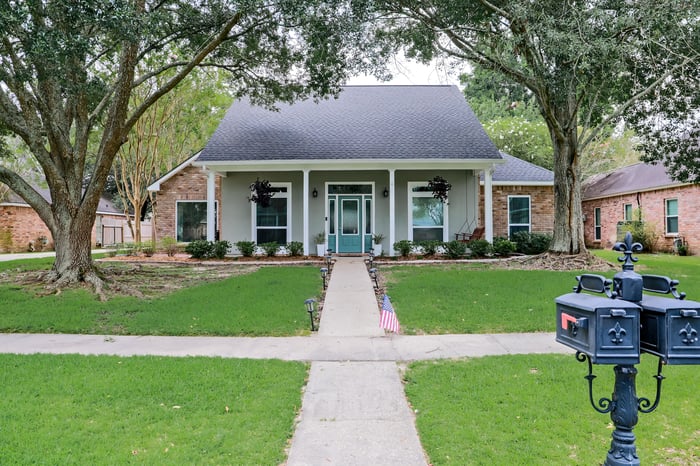
Image source: Getty Images.
Those costs could be substantial, though. So it's not a given that owning a home in retirement is your best bet.
The upside of owning a home in retirement
Perhaps the biggest benefit of owning a home in retirement is the stability. When you rent, your landlord could opt to not renew your lease once it ends.
Owning a paid-off home can be especially valuable in retirement, especially if you have a lot of equity in that property. While it's generally not a great idea to plan to borrow against your home equity in retirement, it's an option you could fall back on in a pinch.
Plus, if your home doesn't have a mortgage attached to it, that's one less payment to worry about.
The downside of owning a home in retirement
Despite the stability and option to tap equity, owning a home isn't necessarily your best bet as a retiree. And the reason boils down to the many unknown costs that can come with homeownership.
You may be able to factor your property taxes, insurance, and, if applicable, HOA fees into your retirement budget. But maintenance and repair costs can easily add up -- and drain your retirement savings.
Let's say that between withdrawals from your nest egg and your Social Security checks, you have an annual retirement income of $60,000. That may be enough to cover your expenses in general. But what if you end up needing a $12,000 home repair one year? Suddenly, you're looking at spending one-fifth of your income for that fix.
When you rent a home, you lock in your total housing costs for the duration of your lease. And while your costs could rise once your lease expires, if you're able to sign a long-term lease, you might enjoy more financial stability than what homeownership allows for.
It's a personal choice
Of course, there are reasons to own a home in retirement outside of the financial end of things. You may have an emotional attachment to the house you raised your kids in. You may love your neighborhood and its amenities.
The point, therefore, is to recognize that while owning a home in retirement has many benefits, there are some financial drawbacks to consider -- namely, that a single large repair could upend your budget. If you're going to own a home as a retiree, make sure to have some emergency savings specifically earmarked for home repairs. That way, you won't be left scrambling to cover the cost.
The $23,760 Social Security bonus most retirees completely overlook
If you're like most Americans, you're a few years (or more) behind on your retirement savings. But a handful of little-known "Social Security secrets" could help ensure a boost in your retirement income.
One easy trick could pay you as much as $23,760 more... each year! Once you learn how to maximize your Social Security benefits, we think you could retire confidently with the peace of mind we're all after. Join Stock Advisor to learn more about these strategies.
View the "Social Security secrets" »
The Motley Fool has a disclosure policy.
Recommended Articles


